










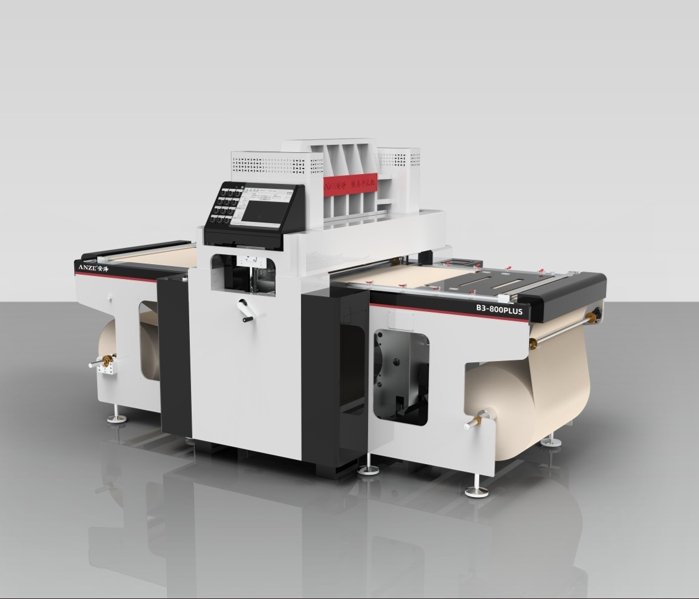
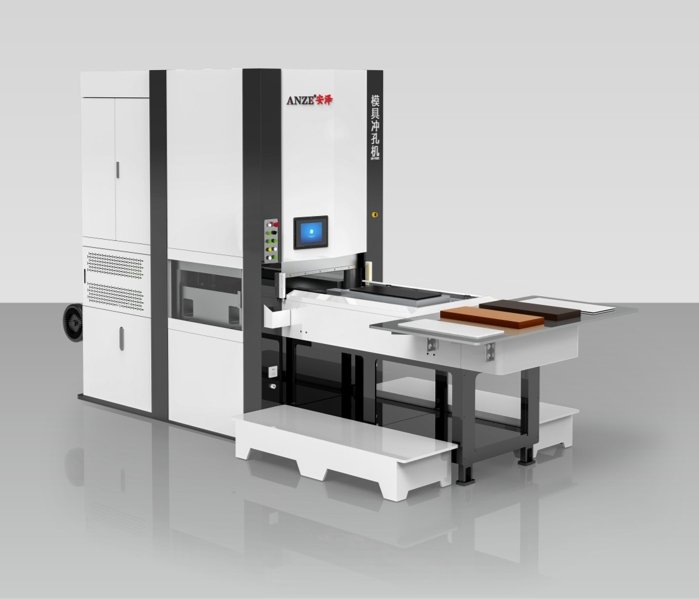
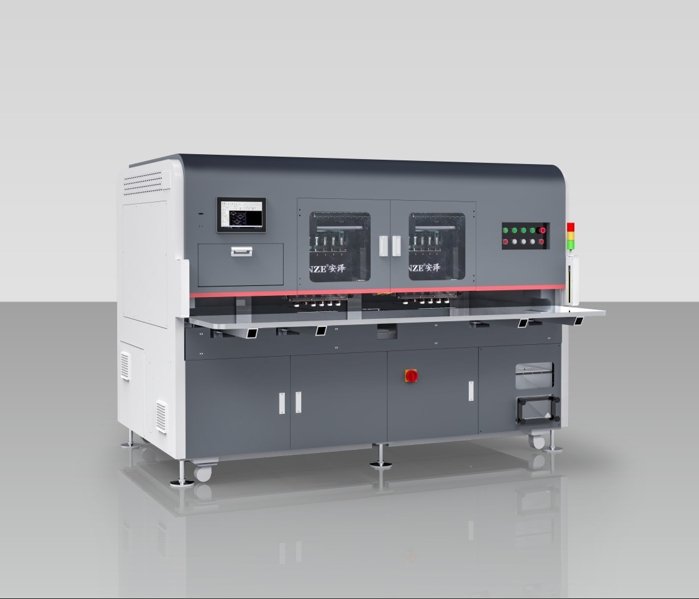
Why Leather Stretching Is a Critical Problem in High-Speed Leather Perforation Machine Operations
In modern leather processing, especially in industries such as automotive interiors, furniture upholstery, and fashion manufacturing, high-speed production is essential. Rotary punching systems and advanced máquina perforadora de cuero technologies enable high throughput—but they also introduce a critical challenge:
👉 Leather stretching during the feeding process
Stretching can cause:
- Hole spacing inconsistency
- Pattern distortion
- Misalignment in perforation
- Product rejection
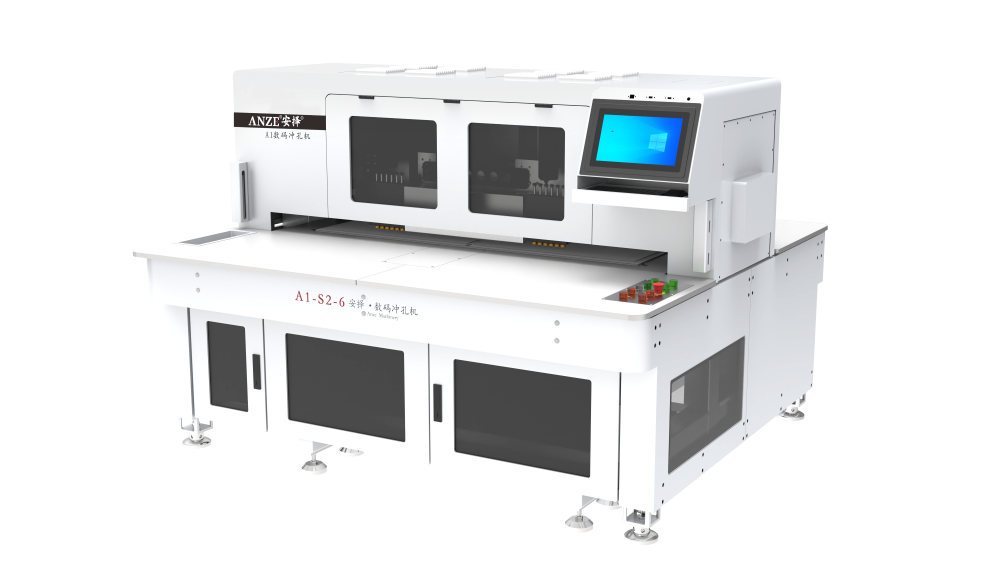
This issue becomes even more severe when operating a Máquina perforadora de cuero CNC at high speeds or when processing long, continuous leather rolls.
With over 20 years of experience, Anze has developed advanced engineering solutions to eliminate stretching and maintain precision.
This article provides a comprehensive technical guide on how to prevent leather stretching in high-speed rotary punching systems.
1. What Causes Leather Stretching in Leather Perforation Machine Feeding Systems
1.1 Material Properties of Leather
Leather is inherently flexible and elastic:
- Estructura de fibra natural
- Variable density
- Sensitivity to tension
Unlike rigid materials, leather can deform easily under stress.
1.2 High-Speed Feeding Dynamics
In high-speed rotary systems:
- Rapid movement creates inertia
- Sudden acceleration causes tension spikes
- Continuous feeding amplifies errors
1.3 Friction Between Rollers and Material
Improper friction control leads to:
- Slippage
- Uneven traction
- Localized stretching
1.4 Inconsistent Tension Distribution
Without proper control:
- Some areas are overstretched
- Others remain slack
2. Why Leather Stretching Is a Serious Problem in CNC Perforating Leather Machine Applications
2.1 Impact on Hole Spacing Accuracy
Stretching directly affects:
- Distance between holes
- Pattern consistency
2.2 Visual Defects in Finished Products
In applications like automotive seats:
- Patterns appear distorted
- Quality perception decreases
2.3 Structural Integrity Risks
Excessive stretching weakens material:
- Reduced durability
- Increased risk of tearing
3. Key Principles to Prevent Leather Stretching in Leather Perforation Machine Systems
To eliminate stretching, four critical factors must be controlled:
- Feeding precision
- Tension management
- Material fixation
- Motion synchronization
4. High-Precision Feeding Systems in Leather Perforation Machine Design
4.1 Servo-Controlled Feeding Mechanism
Modern systems use:
- servomotores
- Closed-loop feedback
- High-resolution encoders
This ensures precise material movement.
4.2 Incremental Feeding Control
Instead of continuous pulling:
- Material is fed in controlled steps
- Reduces tension spikes
5. Advanced Tension Control Technology
5.1 Multi-Zone Tension Control
Anze systems divide feeding into zones:
- Entry zone
- Processing zone
- Exit zone
Each zone is independently controlled.
5.2 Real-Time Tension Monitoring
Sensors continuously measure tension and adjust instantly.
6. Anti-Slip Feeding Mechanisms in Leather Perforation Machine Systems
6.1 High-Friction Roller Design
Optimized rollers:
- Provide stable grip
- Prevent slippage
6.2 Vacuum Adsorption Tables
Vacuum systems:
- Hold material in place
- Eliminate movement during punching
6.3 Clamping Systems
Mechanical clamps ensure:
- Secure positioning
- Zero drift
7. Synchronization Between Feeding and Punching in CNC Perforating Leather Machine
7.1 Motion Coordination
Feeding and punching must be perfectly synchronized:
- No delay
- No overshoot
7.2 Timing Optimization
Precise timing prevents:
- Material pulling during punching
- Positioning errors
8. Material Handling Strategies to Prevent Stretching
8.1 Pre-Tension Adjustment
Apply controlled pre-tension:
- Stabilizes material
- Prevents sudden deformation
8.2 Relaxation Zones
Allow material to relax before processing.
8.3 Edge Alignment Systems
Ensure straight feeding path.
9. Role of CNC Control in Leather Perforation Machine Precision
9.1 Intelligent Algorithms
Software optimizes:
- Feeding speed
- Tension distribution
- Punching sequence
9.2 Error Compensation
Automatically corrects:
- Stretch-induced deviation
- Mechanical inaccuracies
10. Mechanical Design Factors That Influence Stretching
10.1 Machine Rigidity
A stable structure reduces vibration and movement.
10.2 Precision Guides and Rails
Ensure smooth and accurate motion.
10.3 Balanced Mechanical Components
Reduce dynamic instability.
11. Application Case: Automotive Seat Leather
Automotive applications demand:
- Perfect pattern alignment
- No stretching distortion
Anze’s leather perforation machine solutions ensure consistent results even at high speed.
12. Common Mistakes That Cause Leather Stretching
Avoid:
- Excessive feeding speed
- Poor tension control
- Low-quality machines
- Lack of calibration
13. Comparison: Traditional vs Advanced Leather Perforation Machine Feeding Systems
| Feature | Traditional System | Anze System |
|---|---|---|
| Tension Control | Limited | Avanzado |
| Feeding Accuracy | Moderate | Alto |
| Stretching Risk | Alto | Minimal |
| Automation | Bajo | Alto |
14. Why Choose a Professional Leather Perforation Machine Manufacturer
A reliable fabricante de máquinas perforadoras de cuero provides:
- Advanced feeding technology
- Customized solutions
- Technical expertise
15. Future Trends in Leather Perforation Machine Feeding Technology
- AI-based tension control
- Smart sensors
- Fully automated production lines
Eliminating Leather Stretching with Advanced Leather Perforation Machine Technology
Leather stretching during high-speed feeding is a complex problem—but one that can be solved with the right technology.
By combining:
- Precision servo feeding
- Advanced tension control
- Intelligent CNC systems
- Stable mechanical design
Anze’s leather perforation machine solutions enable manufacturers to achieve:
- Perfect hole spacing
- Consistent patterns
- High production efficiency
For industries that demand precision and quality, preventing leather stretching is not optional—it is essential.
Gracias a nuestro equipo experimentado y cualificado, conocemos a fondo las características de todo tipo de materiales y las tecnologías de procesamiento, lo que nos permite personalizar máquinas perforadoras de cuero según las necesidades del cliente. ¡No dude en contactarnos si tiene alguna consulta! WhatsApp: +86 180 0298 0031
¿Cómo instalar y mantener la máquina?
Algunos modelos se envían ensamblados de fábrica. Los equipos de gran tamaño se embalan en varias piezas y se suministra un manual de instalación. Todos los equipos incluyen manuales de usuario en chino e inglés.
Los clientes pueden enviar a alguien a la fábrica de Anze para recibir formación, o bien nosotros enviamos expertos técnicos para impartir capacitación en sus instalaciones.
¿Cuáles son los requisitos del entorno de trabajo de la máquina?
El Máquina perforadora de cuero CNC La máquina debe fijarse sobre una mesa estable y el entorno debe mantenerse limpio y ordenado para evitar el contacto con polvo, electricidad estática, humedad y virutas que puedan provocar fallos en las piezas.
¿Cómo son sus políticas de posventa?
Contamos con un equipo de posventa experimentado, servicio en línea las 24 horas y un sistema posventa completo. Soporte de capacitación de fábrica, soporte técnico por video disponible para dar servicio a la maquinaria en el extranjero, soporte en línea, ingenieros.
¿Está disponible para una invitación improvisada?
Por supuesto, estaremos encantados de que visite nuestra empresa y de que mantengamos una comunicación personal para impulsar negocios mutuos.
¿Cuál es el plazo de entrega?
El plazo de entrega varía según la cantidad del pedido y la personalización, generalmente entre 7 y 10 días hábiles. Si se trata de un pedido de una máquina perforadora de cuero personalizada, el plazo es de 1 a 2 meses.