










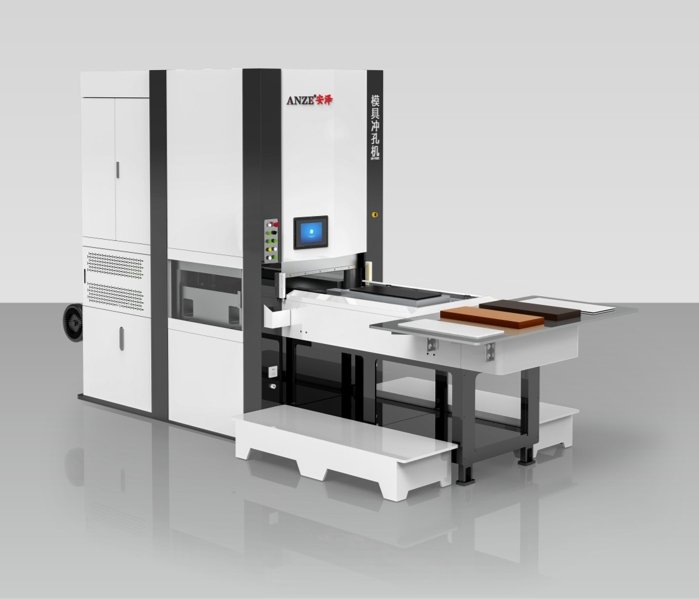
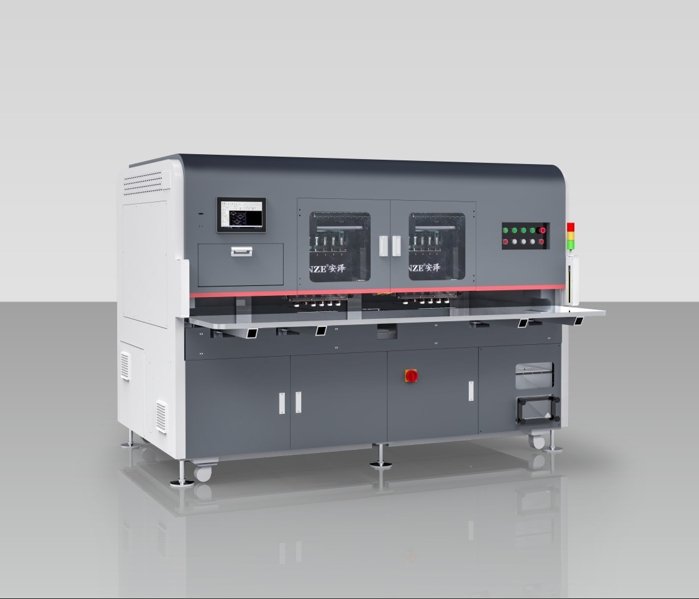
Why Leather Stretching Is a Critical Problem in High-Speed Leather Perforation Machine Operations
In modern leather processing, especially in industries such as automotive interiors, furniture upholstery, and fashion manufacturing, high-speed production is essential. Rotary punching systems and advanced 革穿孔機 technologies enable high throughput—but they also introduce a critical challenge:
👉 Leather stretching during the feeding process
Stretching can cause:
- Hole spacing inconsistency
- パターン歪み
- Misalignment in perforation
- Product rejection
This issue becomes even more severe when operating a CNC穿孔革加工機 at high speeds or when processing long, continuous leather rolls.
With over 20 years of experience, Anze has developed advanced engineering solutions to eliminate stretching and maintain precision.
This article provides a comprehensive technical guide on how to prevent leather stretching in high-speed rotary punching systems.
1. What Causes Leather Stretching in Leather Perforation Machine Feeding Systems
1.1 Material Properties of Leather
Leather is inherently flexible and elastic:
- Natural fiber structure
- Variable density
- Sensitivity to tension
Unlike rigid materials, leather can deform easily under stress.
1.2 High-Speed Feeding Dynamics
In high-speed rotary systems:
- Rapid movement creates inertia
- Sudden acceleration causes tension spikes
- Continuous feeding amplifies errors
1.3 Friction Between Rollers and Material
Improper friction control leads to:
- Slippage
- Uneven traction
- Localized stretching
1.4 Inconsistent Tension Distribution
Without proper control:
- Some areas are overstretched
- Others remain slack
2. Why Leather Stretching Is a Serious Problem in CNC Perforating Leather Machine Applications
2.1 Impact on Hole Spacing Accuracy
Stretching directly affects:
- Distance between holes
- Pattern consistency
2.2 Visual Defects in Finished Products
In applications like automotive seats:
- Patterns appear distorted
- Quality perception decreases
2.3 Structural Integrity Risks
Excessive stretching weakens material:
- Reduced durability
- Increased risk of tearing
3. Key Principles to Prevent Leather Stretching in Leather Perforation Machine Systems
To eliminate stretching, four critical factors must be controlled:
- Feeding precision
- Tension management
- Material fixation
- Motion synchronization
4. High-Precision Feeding Systems in Leather Perforation Machine Design
4.1 Servo-Controlled Feeding Mechanism
Modern systems use:
- Servo motors
- Closed-loop feedback
- High-resolution encoders
This ensures precise material movement.
4.2 Incremental Feeding Control
Instead of continuous pulling:
- Material is fed in controlled steps
- Reduces tension spikes
5. Advanced Tension Control Technology
5.1 Multi-Zone Tension Control
Anze systems divide feeding into zones:
- Entry zone
- Processing zone
- Exit zone
Each zone is independently controlled.
5.2 Real-Time Tension Monitoring
Sensors continuously measure tension and adjust instantly.
6. Anti-Slip Feeding Mechanisms in Leather Perforation Machine Systems
6.1 High-Friction Roller Design
Optimized rollers:
- Provide stable grip
- Prevent slippage
6.2 Vacuum Adsorption Tables
Vacuum systems:
- Hold material in place
- Eliminate movement during punching
6.3 Clamping Systems
Mechanical clamps ensure:
- Secure positioning
- Zero drift
7. Synchronization Between Feeding and Punching in CNC Perforating Leather Machine
7.1 Motion Coordination
Feeding and punching must be perfectly synchronized:
- No delay
- No overshoot
7.2 Timing Optimization
Precise timing prevents:
- Material pulling during punching
- Positioning errors
8. Material Handling Strategies to Prevent Stretching
8.1 Pre-Tension Adjustment
Apply controlled pre-tension:
- Stabilizes material
- Prevents sudden deformation
8.2 Relaxation Zones
Allow material to relax before processing.
8.3 Edge Alignment Systems
Ensure straight feeding path.
9. Role of CNC Control in Leather Perforation Machine Precision
9.1 Intelligent Algorithms
Software optimizes:
- 給餌速度
- Tension distribution
- Punching sequence
9.2 Error Compensation
Automatically corrects:
- Stretch-induced deviation
- Mechanical inaccuracies
10. Mechanical Design Factors That Influence Stretching
10.1 Machine Rigidity
A stable structure reduces vibration and movement.
10.2 Precision Guides and Rails
Ensure smooth and accurate motion.
10.3 Balanced Mechanical Components
Reduce dynamic instability.
11. Application Case: Automotive Seat Leather
Automotive applications demand:
- Perfect pattern alignment
- No stretching distortion
アンゼの leather perforation machine solutions ensure consistent results even at high speed.
12. Common Mistakes That Cause Leather Stretching
Avoid:
- Excessive feeding speed
- Poor tension control
- Low-quality machines
- Lack of calibration
13. Comparison: Traditional vs Advanced Leather Perforation Machine Feeding Systems
| Feature | Traditional System | Anze System |
|---|---|---|
| Tension Control | Limited | 高度な |
| Feeding Accuracy | Moderate | High |
| Stretching Risk | High | Minimal |
| Automation | Low | High |
14. Why Choose a Professional Leather Perforation Machine Manufacturer
A reliable 皮革穿孔機メーカー provides:
- Advanced feeding technology
- Customized solutions
- Technical expertise
15. Future Trends in Leather Perforation Machine Feeding Technology
- AI-based tension control
- Smart sensors
- Fully automated production lines
Eliminating Leather Stretching with Advanced Leather Perforation Machine Technology
Leather stretching during high-speed feeding is a complex problem—but one that can be solved with the right technology.
By combining:
- Precision servo feeding
- Advanced tension control
- Intelligent CNC systems
- Stable mechanical design
アンゼの leather perforation machine solutions enable manufacturers to achieve:
- Perfect hole spacing
- Consistent patterns
- High production efficiency
For industries that demand precision and quality, preventing leather stretching is not optional—it is essential.
経験豊富で熟練したチームを擁し、あらゆる素材の特性や加工技術に精通しております。お客様のニーズに合わせて、革用パンチング(穴あけ)機をカスタマイズすることも可能です。ご質問などがございましたら、お気軽にお問い合わせください! WhatsApp: +86 180 0298 0031
機械の設置と保守はどのように行いますか?
一部のモデルは工場で組み立てられた状態で出荷されます。大型機器は複数の部品に分けて梱包され、設置マニュアルが付属します。すべての機器には、中国語と英語の取扱説明書が同梱されています。
お客様がAnze(アンゼ)の工場へ担当者を派遣して研修を受けていただくことも、当社が技術専門家を派遣して現地で研修を行うことも可能です。
機械の稼働環境要件は何ですか?
ザ CNCレザーパンチングマシン 安定したテーブルに設置し、ほこり、静電気、湿気、切りくずとの接触を避けるために、環境を清潔に整頓してください。これにより、部品の故障を防ぐことができます。.
アフターサービスポリシーはどのようなものですか?
経験豊富なアフターサービスチームが24時間オンラインで対応し、万全のアフターサービス体制を整えています。工場でのトレーニングサポート、海外での機械サービスに対応できるビデオ技術サポート、オンラインサポート、エンジニアが対応いたします。.
急なお誘いにも対応できますか?
もちろんでございます。弊社の訪問を歓迎いたします。対面でのコミュニケーションを通じて、相互のビジネスを推進しましょう。.
配達時間はいつですか?
リードタイムは、注文数量とカスタマイズによって異なり、通常7〜10営業日です。カスタムレザーパンチングマシンのご注文の場合は、1〜2ヶ月かかります。.