










Last Updated on 2025-11-01 by Anzeige
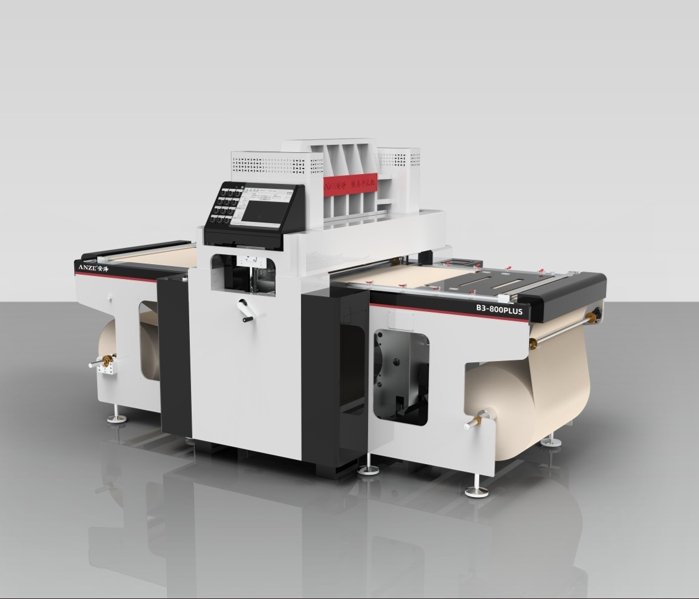
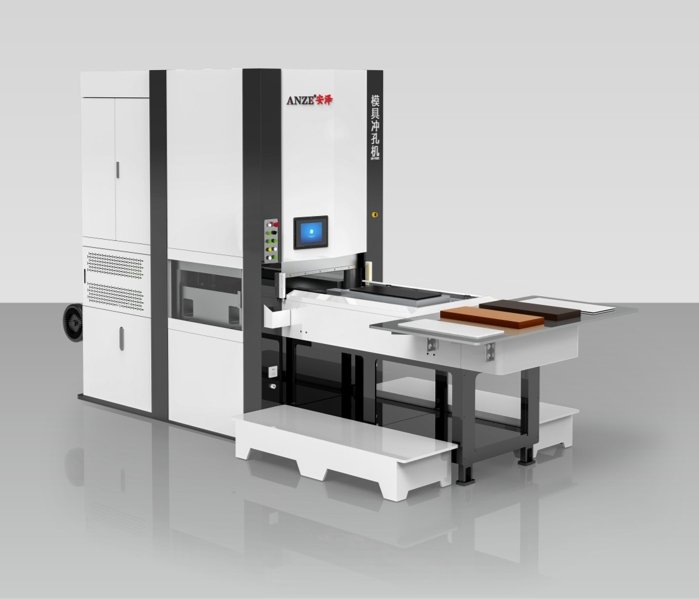
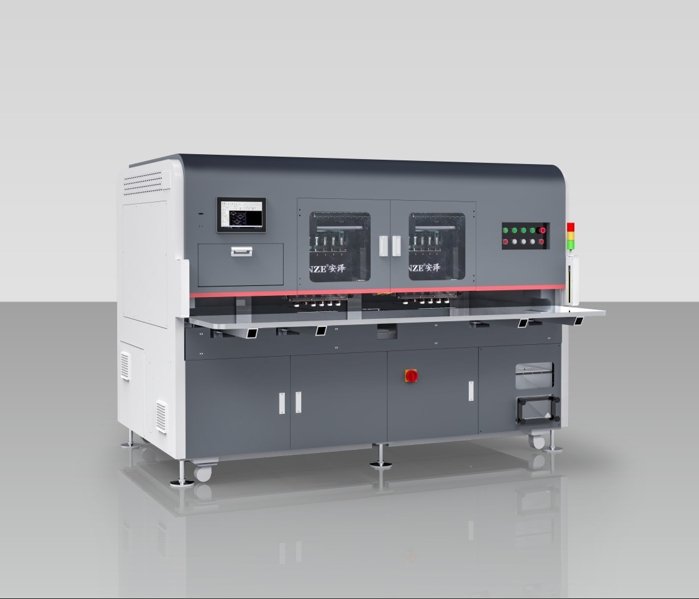
In modernen Autoinnenräumen harmonieren akustische Leistung, Ästhetik und Präzisionstechnik perfekt miteinander. Einer der komplexesten Bestandteile, an denen diese Faktoren zusammenlaufen, ist die Lautsprechergrill Leder — die perforierte Lederoberfläche, die den Auto-Lautsprecher abdeckt. Diese Oberfläche muss nicht nur Schall mit minimaler Verzerrung durchlassen, sondern auch Luxustextur, Haltbarkeit und visuelle Uniformität beibehalten. Im Mittelpunkt dieses Prozesses steht die Lederperforiermaschine, ein spezialisiertes System, das entwickelt wurde, um hochpräzise Perforationsmuster auf Lederoberflächen für den Automobilinnenraum zu liefern.
Anzeige, a professional perforating leather machine manufacturer with more than 20 years of design and manufacturing experience, has become a global leader in developing advanced systems for automotive leather perforation — including seats, door trims, dashboard panels, and speaker grille applications. With over 20 high-performance machine models, Anze provides customized perforation solutions that meet the rigorous standards of global automotive OEMs.
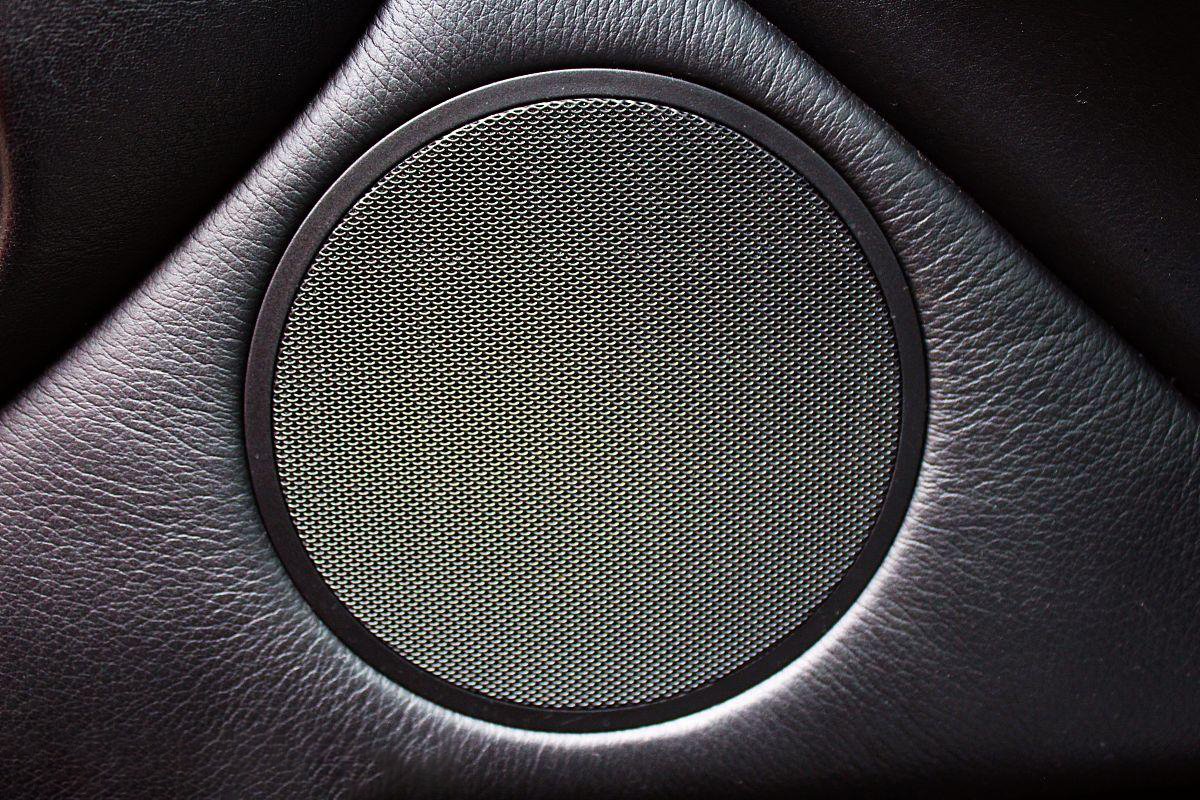
1. The Role of Leather Perforation in Automotive Speaker Grilles
Automotive speaker grille perforation serves both functional and aesthetic purposes.
Acoustic Transparency:
The perforation pattern directly affects sound transmission. A properly engineered perforation layout minimizes sound diffusion and maintains high-fidelity output from in-car audio systems.Heat Dissipation & Ventilation:
Perforated leather supports air flow and helps prevent local heat buildup around speaker zones.Design Consistency:
Perforated leather enhances the overall luxury appeal, providing a seamless, unified design language across the interior.
Thus, the precision of a perforating leather machine determines the balance between acoustics, texture, and visual harmony.
2. Understanding the Perforating Leather Machine
A Lederperforiermaschine is an automated industrial system that uses mechanical or laser-driven punching tools to create uniform holes or micro-patterns in leather materials.
2.1. Key Components
Servo-Driven Feed System:
Controls material movement with micrometer accuracy.Punching Head or Laser System:
Executes the perforation pattern according to digital control.Vacuum Table:
Stabilizes soft leather during perforation to prevent shifting.CNC Controller:
Manages hole density, spacing, and alignment.Vision Calibration Module:
Ensures pattern accuracy, compensating for natural leather irregularities.
2.2. Machine Variants
Mechanical Perforating Leather Machine – Ideal for thick or natural leather.
Laser Perforating Leather Machine – Suitable for synthetic or coated leathers.
Hybrid Perforating Machine – Combines mechanical punching and digital laser finishing for complex textures.
Anze’s latest generation machines incorporate CNC motion control, AI-based defect correction, Und multi-zone suction platforms to guarantee consistent quality and acoustic performance.
3. The Science Behind Acoustic Perforation
Acoustic transparency depends on hole diameter, pattern distribution, Und open area ratio (OAR). For speaker grille leather, typical hole diameters range from 0.8 mm to 1.5 mm, with an OAR between 10–20%.
| Parameter | Typischer Bereich | Acoustic Effect |
|---|---|---|
| Lochdurchmesser | 0.8 – 1.5 mm | Affects high-frequency transparency |
| Hole Pitch | 2.0 – 3.5 mm | Controls air flow and tonal clarity |
| Open Area Ratio | 10–20% | Determines loudness and texture uniformity |
| Pattern Shape | Circular / Hexagonal | Influences dispersion and visual symmetry |
Der Lederperforiermaschine must maintain ±0.05 mm tolerance to achieve optimal sound balance while preventing visual distortion on curved speaker grille surfaces.
4. Perforation Techniques for Automotive Speaker Leather
4.1. Rotary Die Perforation
Utilizes rotating dies with patterned pins.
Suitable for high-speed production of uniform holes.
Ideal for synthetic or thin leather materials.
4.2. CNC Punch Perforation
Servo-controlled punching with programmable patterns.
Allows multi-zone hole density variation.
Preferred for natural leather to reduce tearing.
4.3. Laser Micro-Perforation
Uses high-precision laser beams to burn microholes.
Offers extreme precision and flexibility for fine acoustic tuning.
Best for speaker covers requiring customized sound dispersion.
Each of these methods requires careful parameter tuning — punch pressure, feed rate, Und vacuum suction — to avoid leather deformation or discoloration.
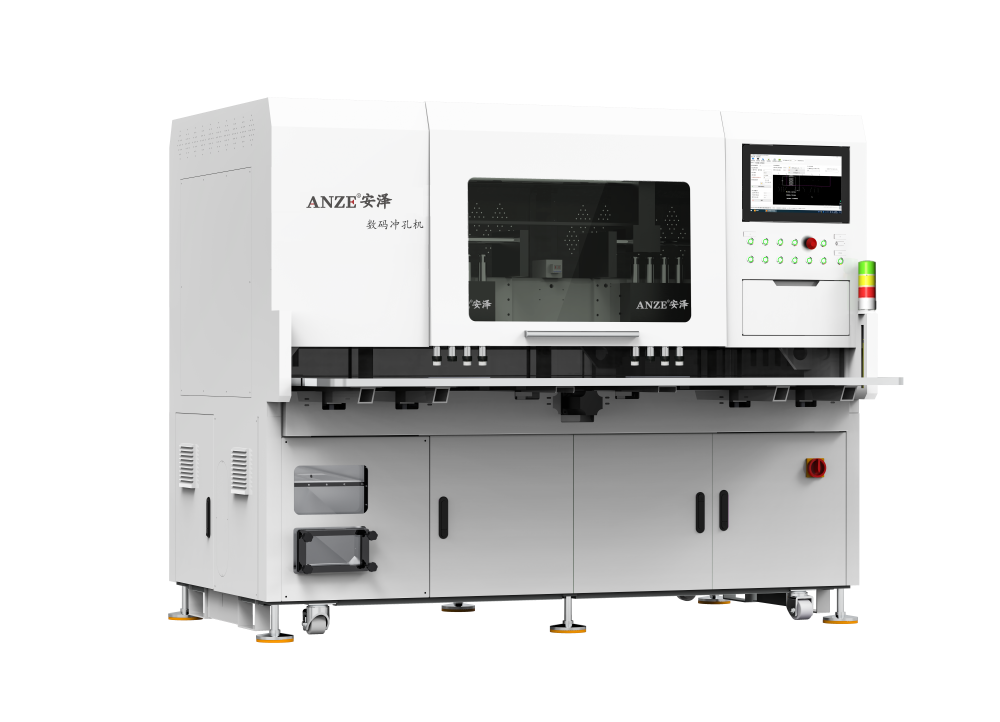
5. Process Workflow Using Anze’s Perforating Leather Machine
Material Preparation
Leather sheets are cleaned, humidified, and flattened.
Surface grain direction and elasticity are recorded.
Pattern Programming
Engineers import CAD-based designs into the machine control system.
Perforation density and zones are defined.
Test Calibration
A short trial run ensures hole spacing, diameter, and acoustic OAR meet the required tolerance.
Full-Scale Perforation
CNC-controlled punching or laser modules execute perforation.
Real-time vision inspection corrects drift or deviation.
Post-Processing
Dust removal, heat treatment, and surface sealing maintain cleanliness and durability.
Samples undergo acoustic and tensile testing.
Anze’s machines integrate closed-loop feedback control, ensuring that every hole aligns precisely — critical for acoustic-grade speaker leather.
6. Engineering Considerations and Quality Control
6.1. Material Variability
Natural leather varies in density and elasticity. A smart perforating leather machine automatically adjusts punching force to maintain hole consistency.
6.2. Thermal Management
For laser-based systems, heat buildup can cause edge darkening. Anze’s laser modules include pulse modulation to minimize thermal impact.
6.3. Acoustic Testing
Finished materials undergo frequency response testing to confirm sound transparency across 100 Hz–20 kHz.
6.4. Visual Inspection
AI-assisted cameras scan each sheet to detect hole deviation, burrs, or incomplete perforations.
6.5. Durability Validation
Post-perforation samples are tested for tear strength, flex resistance, and UV color stability per ISO 17075 and SAE J3234 standards.

7. Safety and Maintenance Guidelines
Operating a Lederperforiermaschine requires strict adherence to safety protocols:
Ensure vacuum platform stability before each cycle.
Regularly replace punch heads and dies to prevent burr formation.
Calibrate CNC axes weekly to maintain ±0.05 mm tolerance.
Keep the air filtration system clean to remove perforation debris.
For laser units, inspect optical lenses after every 100 operating hours.
Preventive maintenance extends machine lifespan and ensures continuous acoustic precision.
8. Case Study: Anze’s Perforating Leather Machine in Automotive Speaker Production
8.1. Project Overview
A global automotive OEM required perforated leather for a new premium SUV speaker grille. Key goals were:
Uniform micro-perforation pattern (Ø1.0 mm)
15% open area ratio
No visual distortion or edge discoloration
Acoustic transmission loss <1.5 dB
8.2. Solution
Anze deployed its Model AZ-LP500 CNC perforating leather machine, equipped with:
Dual-head servo punch unit
AI vision alignment system
Active vacuum platform
Real-time acoustic mapping module
8.3. Results
Hole uniformity: ±0.03 mm
Acoustic transparency: 99.2% of base material
Reject rate: <0.5%
Production efficiency improved by 27%
The OEM later standardized Anze’s equipment across multiple global production lines, citing precision, stability, and process repeatability as key advantages.

9. Future Trends in Leather Perforation Technology
9.1. Digital Pattern Modulation
AI-driven systems dynamically adjust perforation density based on acoustic frequency zones, optimizing speaker output.
9.2. Eco-Friendly Production
Anze is researching energy-efficient punching modules and recyclable air filtration systems to reduce environmental impact.
9.3. Hybrid Laser-Mechanical Platforms
Future machines will combine mechanical punching for main holes and laser finishing for micro-tuning — ideal for luxury-grade speaker designs.
10. Why Choose Anze as Your Perforating Leather Machine Partner
With over 20 years of continuous innovation, Anzeige stands among the world’s most trusted perforating leather machine manufacturers.
Key advantages:
Comprehensive product range – over 20 models for different leather thicknesses and patterns.
Global application expertise – automotive seats, door panels, speaker grilles, and interior trim.
Precision manufacturing – CNC control, servo synchronization, and AI correction modules.
Custom solutions – tailored perforation parameters for unique acoustic and aesthetic needs.
After-sales support – calibration, training, and spare parts available worldwide.
Anze continues to redefine precision leather perforation — blending craftsmanship, automation, and acoustic science.
high-quality perforating leather machine ensures every hole is consistent
The evolution of automotive speaker grille leather highlights how technology enhances both functionality and luxury in modern vehicles. A high-quality perforating leather machine ensures every hole is consistent, acoustically balanced, and visually perfect.
By integrating CNC precision, AI inspection, Und acoustic validation, Anzeige provides complete perforation solutions trusted by global automotive manufacturers.
Whether your production requires intricate micro-perforation for acoustic clarity or large-scale decorative perforation for design continuity, Anze’s perforating leather machines offer unmatched precision, performance, and reliability.
Dank unseres erfahrenen und kompetenten Teams sind wir mit allen Materialeigenschaften sowie der Verarbeitungstechnologie bestens vertraut und können Maschinen zur Lederperforation individuell an Ihre Anforderungen anpassen. Bei Fragen stehen wir Ihnen gerne zur Verfügung! WhatsApp: +86 180 0298 0031
Wie wird die Maschine installiert und gewartet?
Einige Modelle werden bereits werksseitig montiert geliefert. Großgeräte werden in mehreren Teilen verpackt und mit einer Montageanleitung geliefert. Alle Geräte sind mit Bedienungsanleitungen in chinesischer und englischer Sprache ausgestattet.
Kunden können Mitarbeiter zur Schulung in das Anze-Werk entsenden, oder wir entsenden technische Experten für eine Schulung vor Ort.
Welche Anforderungen gelten für die Arbeitsumgebung der Maschine?
Der CNC-Lederstanzmaschine Die Maschine sollte auf einem stabilen Tisch befestigt werden, und die Umgebung sollte sauber und ordentlich gehalten werden, um den Kontakt mit Staub, statischer Elektrizität, Feuchtigkeit und Spänen zu vermeiden, die zu Teileausfällen führen könnten.
Wie sehen Ihre Richtlinien für den Kundendienst (After-Sales) aus?
Wir verfügen über ein erfahrenes Kundendienstteam, einen 24-Stunden-Online-Service und ein umfassendes Kundendienstsystem. Wir bieten Werkschulungen, technische Video-Tutorials und Unterstützung für die Wartung von Maschinen im Ausland. Zudem stehen Ihnen unsere Ingenieure zur Verfügung.
Stehen Sie für eine spontane Einladung zur Verfügung?
Selbstverständlich freuen wir uns über Ihren Besuch in unserem Unternehmen und bieten Ihnen die Möglichkeit zu einem persönlichen Gespräch, um die gegenseitigen Geschäftsbeziehungen zu fördern.
Wie lange ist die Lieferzeit?
Die Lieferzeit variiert je nach Bestellmenge und individuellen Anpassungen und beträgt in der Regel 7 bis 10 Werktage. Bei Sonderanfertigungen von Lederstanzmaschinen beträgt die Lieferzeit 1 bis 2 Monate.