










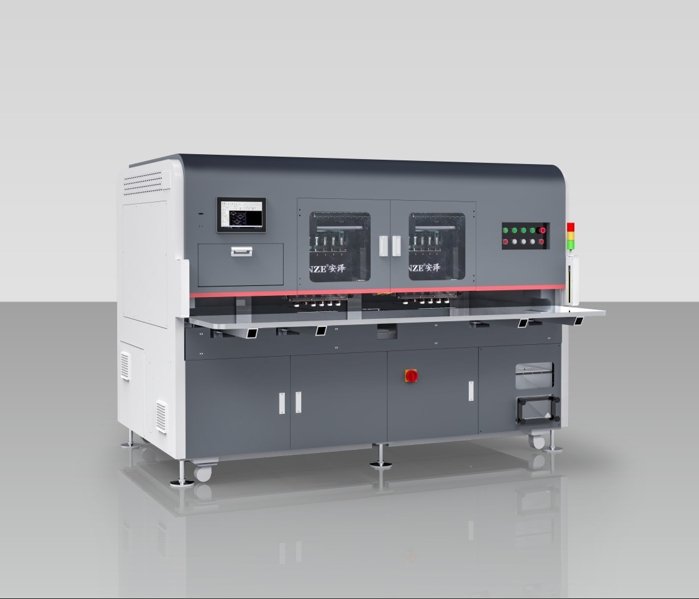
Last Updated on 2025-11-01 by アンゼ
In modern automotive interiors, acoustic performance, aesthetics, and precision engineering coexist in perfect harmony. One of the most intricate components where these factors converge is the speaker grille leather — the perforated leather surface covering car speakers. This surface must not only allow sound to pass through with minimal distortion but also maintain luxury texture, durability, and visual uniformity. At the core of this process lies the 革に穴を開ける機械, a specialized system engineered to deliver high-precision perforation patterns on leather surfaces used in automotive interiors.
アンゼ, a professional perforating leather machine manufacturer with more than 20 years of design and manufacturing experience, has become a global leader in developing advanced systems for automotive leather perforation — including seats, door trims, dashboard panels, and speaker grille applications. With over 20 high-performance machine models, Anze provides customized perforation solutions that meet the rigorous standards of global automotive OEMs.
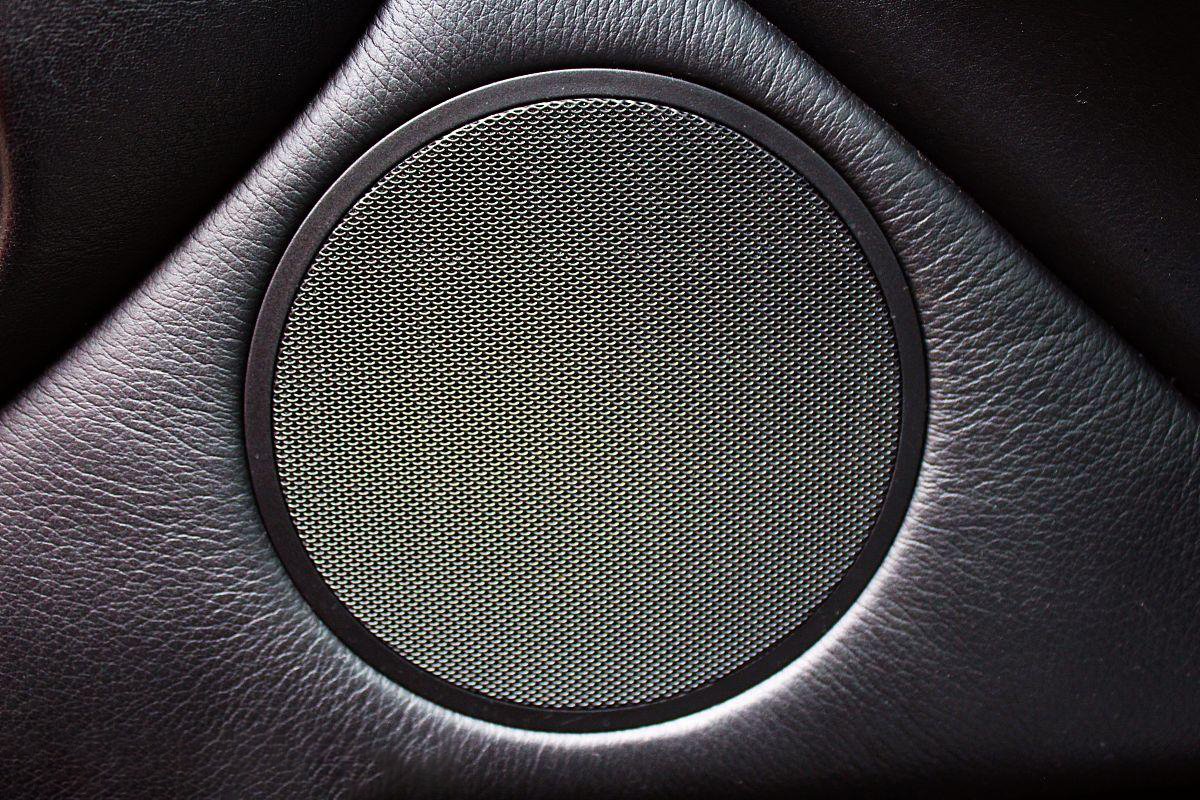
1. The Role of Leather Perforation in Automotive Speaker Grilles
Automotive speaker grille perforation serves both 機能的かつ美的 目的。.
Acoustic Transparency:
The perforation pattern directly affects sound transmission. A properly engineered perforation layout minimizes sound diffusion and maintains high-fidelity output from in-car audio systems.Heat Dissipation & Ventilation:
Perforated leather supports air flow and helps prevent local heat buildup around speaker zones.Design Consistency:
Perforated leather enhances the overall luxury appeal, providing a seamless, unified design language across the interior.
Thus, the precision of a perforating leather machine determines the balance between acoustics, texture, and visual harmony.
2. Understanding the Perforating Leather Machine
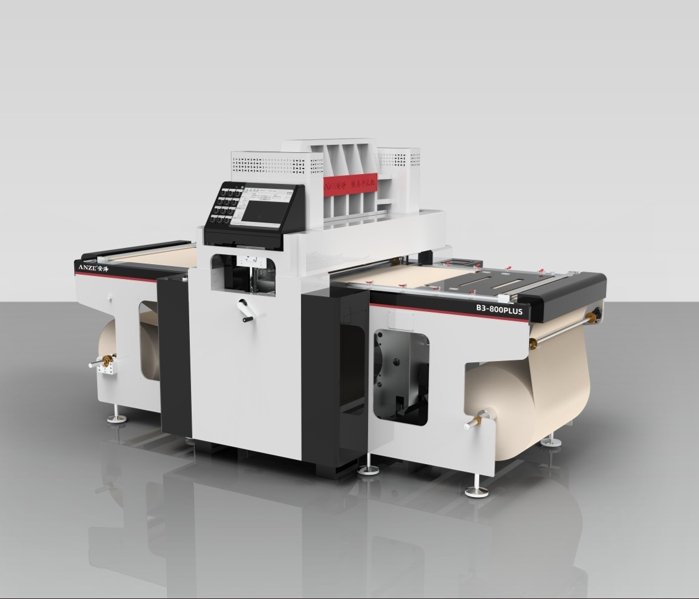
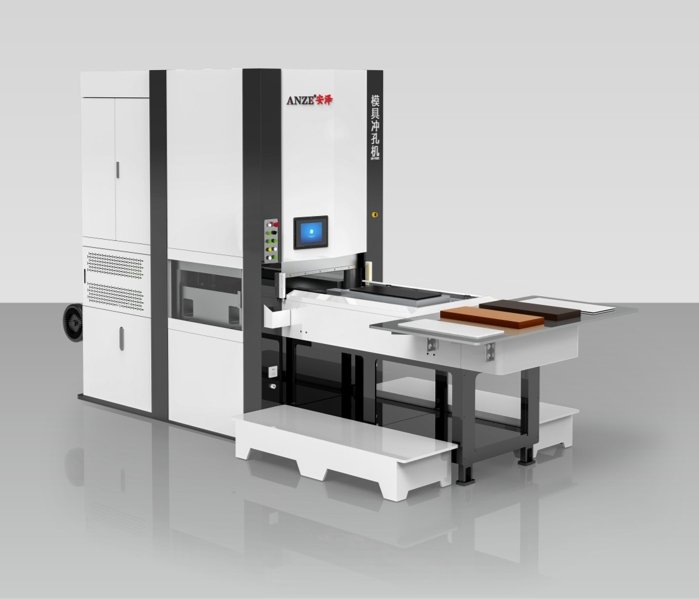
A 革に穴を開ける機械 is an automated industrial system that uses mechanical or laser-driven punching tools to create uniform holes or micro-patterns in leather materials.
2.1. Key Components
Servo-Driven Feed System:
Controls material movement with micrometer accuracy.Punching Head or Laser System:
Executes the perforation pattern according to digital control.Vacuum Table:
Stabilizes soft leather during perforation to prevent shifting.CNC Controller:
Manages hole density, spacing, and alignment.Vision Calibration Module:
Ensures pattern accuracy, compensating for natural leather irregularities.
2.2. Machine Variants
Mechanical Perforating Leather Machine – Ideal for thick or natural leather.
Laser Perforating Leather Machine – Suitable for synthetic or coated leathers.
Hybrid Perforating Machine – Combines mechanical punching and digital laser finishing for complex textures.
Anze’s latest generation machines incorporate CNC motion control, AI-based defect correction, and multi-zone suction platforms to guarantee consistent quality and acoustic performance.
3. The Science Behind Acoustic Perforation
Acoustic transparency depends on hole diameter, pattern distribution, and open area ratio (OAR). For speaker grille leather, typical hole diameters range from 0.8 mm to 1.5 mm, with an OAR between 10–20%.
| パラメータ | 標準範囲 | Acoustic Effect |
|---|---|---|
| 穴の直径 | 0.8 – 1.5 mm | Affects high-frequency transparency |
| Hole Pitch | 2.0 – 3.5 mm | Controls air flow and tonal clarity |
| Open Area Ratio | 10–20% | Determines loudness and texture uniformity |
| Pattern Shape | Circular / Hexagonal | Influences dispersion and visual symmetry |
ザ 革に穴を開ける機械 must maintain ±0.05 mm tolerance to achieve optimal sound balance while preventing visual distortion on curved speaker grille surfaces.
4. Perforation Techniques for Automotive Speaker Leather
4.1. Rotary Die Perforation
Utilizes rotating dies with patterned pins.
Suitable for high-speed production of uniform holes.
Ideal for synthetic or thin leather materials.
4.2. CNC Punch Perforation
Servo-controlled punching with programmable patterns.
Allows multi-zone hole density variation.
Preferred for natural leather to reduce tearing.
4.3. Laser Micro-Perforation
Uses high-precision laser beams to burn microholes.
Offers extreme precision and flexibility for fine acoustic tuning.
Best for speaker covers requiring customized sound dispersion.
Each of these methods requires careful parameter tuning — punch pressure, feed rate, and vacuum suction — to avoid leather deformation or discoloration.
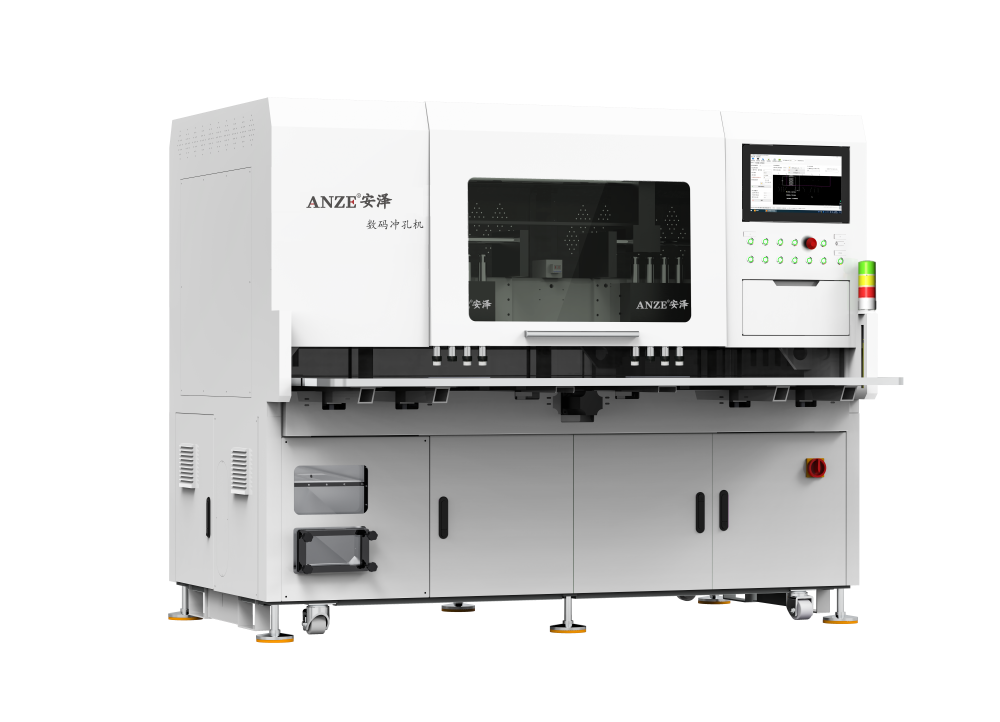
5. Process Workflow Using Anze’s Perforating Leather Machine
Material Preparation
Leather sheets are cleaned, humidified, and flattened.
Surface grain direction and elasticity are recorded.
パターンプログラミング
Engineers import CAD-based designs into the machine control system.
Perforation density and zones are defined.
Test Calibration
A short trial run ensures hole spacing, diameter, and acoustic OAR meet the required tolerance.
Full-Scale Perforation
CNC-controlled punching or laser modules execute perforation.
Real-time vision inspection corrects drift or deviation.
後処理
Dust removal, heat treatment, and surface sealing maintain cleanliness and durability.
Samples undergo acoustic and tensile testing.
Anze’s machines integrate closed-loop feedback control, ensuring that every hole aligns precisely — critical for acoustic-grade speaker leather.
6. Engineering Considerations and Quality Control
6.1. Material Variability
Natural leather varies in density and elasticity. A smart perforating leather machine automatically adjusts punching force to maintain hole consistency.
6.2. Thermal Management
For laser-based systems, heat buildup can cause edge darkening. Anze’s laser modules include pulse modulation to minimize thermal impact.
6.3. Acoustic Testing
Finished materials undergo frequency response testing to confirm sound transparency across 100 Hz–20 kHz.
6.4. Visual Inspection
AI-assisted cameras scan each sheet to detect hole deviation, burrs, or incomplete perforations.
6.5. Durability Validation
Post-perforation samples are tested for tear strength, flex resistance, and UV color stability per ISO 17075 そして SAE J3234 standards.

7. Safety and Maintenance Guidelines
運営 革に穴を開ける機械 requires strict adherence to safety protocols:
確保する vacuum platform stability before each cycle.
Regularly replace punch heads and dies to prevent burr formation.
Calibrate CNC axes weekly to maintain ±0.05 mm tolerance.
Keep the air filtration system clean to remove perforation debris.
For laser units, inspect optical lenses after every 100 operating hours.
Preventive maintenance extends machine lifespan and ensures continuous acoustic precision.
8. Case Study: Anze’s Perforating Leather Machine in Automotive Speaker Production
8.1. Project Overview
A global automotive OEM required perforated leather for a new premium SUV speaker grille. Key goals were:
Uniform micro-perforation pattern (Ø1.0 mm)
15% open area ratio
No visual distortion or edge discoloration
Acoustic transmission loss <1.5 dB
8.2. Solution
アンゼは Model AZ-LP500 CNC perforating leather machine, equipped with:
Dual-head servo punch unit
AI vision alignment system
Active vacuum platform
Real-time acoustic mapping module
8.3. Results
Hole uniformity: ±0.03 mm
Acoustic transparency: 99.2% of base material
Reject rate: <0.5%
Production efficiency improved by 27%
The OEM later standardized Anze’s equipment across multiple global production lines, citing precision, stability, and process repeatability as key advantages.

9. Future Trends in Leather Perforation Technology
9.1. Digital Pattern Modulation
AI-driven systems dynamically adjust perforation density based on acoustic frequency zones, optimizing speaker output.
9.2. Eco-Friendly Production
Anze is researching energy-efficient punching modules そして recyclable air filtration systems to reduce environmental impact.
9.3. Hybrid Laser-Mechanical Platforms
Future machines will combine mechanical punching for main holes and laser finishing for micro-tuning — ideal for luxury-grade speaker designs.
10. Why Choose Anze as Your Perforating Leather Machine Partner
With over 20 years of continuous innovation, アンゼ stands among the world’s most trusted perforating leather machine manufacturers.
Key advantages:
Comprehensive product range – over 20 models for different leather thicknesses and patterns.
Global application expertise – automotive seats, door panels, speaker grilles, and interior trim.
Precision manufacturing – CNC control, servo synchronization, and AI correction modules.
Custom solutions – tailored perforation parameters for unique acoustic and aesthetic needs.
アフターサービス – calibration, training, and spare parts available worldwide.
Anze continues to redefine precision leather perforation — blending craftsmanship, automation, and acoustic science.
high-quality perforating leather machine ensures every hole is consistent
The evolution of automotive speaker grille leather highlights how technology enhances both functionality and luxury in modern vehicles. A high-quality perforating leather machine ensures every hole is consistent, acoustically balanced, and visually perfect.
By integrating CNC precision, AI inspection, and acoustic validation, アンゼ provides complete perforation solutions trusted by global automotive manufacturers.
Whether your production requires intricate micro-perforation for acoustic clarity or large-scale decorative perforation for design continuity, Anze’s perforating leather machines offer unmatched precision, performance, and reliability.
経験豊富で熟練したチームを擁し、あらゆる素材の特性や加工技術に精通しております。お客様のニーズに合わせて、革用パンチング(穴あけ)機をカスタマイズすることも可能です。ご質問などがございましたら、お気軽にお問い合わせください! WhatsApp: +86 180 0298 0031
機械の設置と保守はどのように行いますか?
一部のモデルは工場で組み立てられた状態で出荷されます。大型機器は複数の部品に分けて梱包され、設置マニュアルが付属します。すべての機器には、中国語と英語の取扱説明書が同梱されています。
お客様がAnze(アンゼ)の工場へ担当者を派遣して研修を受けていただくことも、当社が技術専門家を派遣して現地で研修を行うことも可能です。
機械の稼働環境要件は何ですか?
ザ CNCレザーパンチングマシン 安定したテーブルに設置し、ほこり、静電気、湿気、切りくずとの接触を避けるために、環境を清潔に整頓してください。これにより、部品の故障を防ぐことができます。.
アフターサービスポリシーはどのようなものですか?
経験豊富なアフターサービスチームが24時間オンラインで対応し、万全のアフターサービス体制を整えています。工場でのトレーニングサポート、海外での機械サービスに対応できるビデオ技術サポート、オンラインサポート、エンジニアが対応いたします。.
急なお誘いにも対応できますか?
もちろんでございます。弊社の訪問を歓迎いたします。対面でのコミュニケーションを通じて、相互のビジネスを推進しましょう。.
配達時間はいつですか?
リードタイムは、注文数量とカスタマイズによって異なり、通常7〜10営業日です。カスタムレザーパンチングマシンのご注文の場合は、1〜2ヶ月かかります。.