










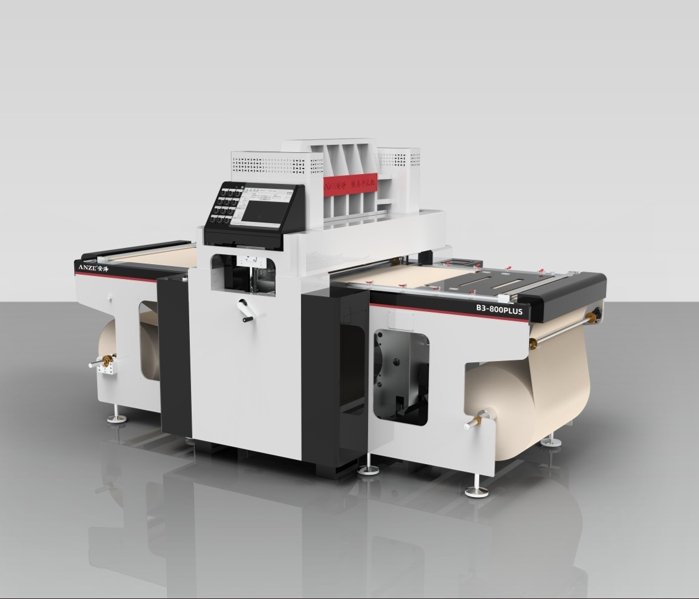
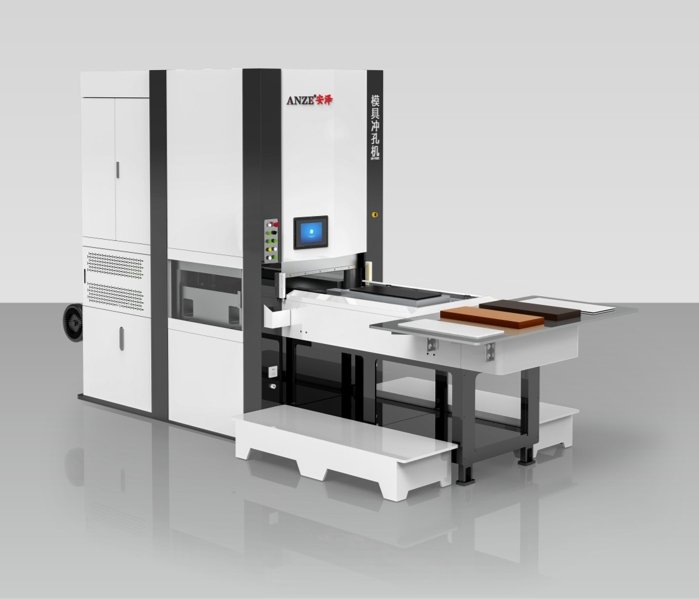
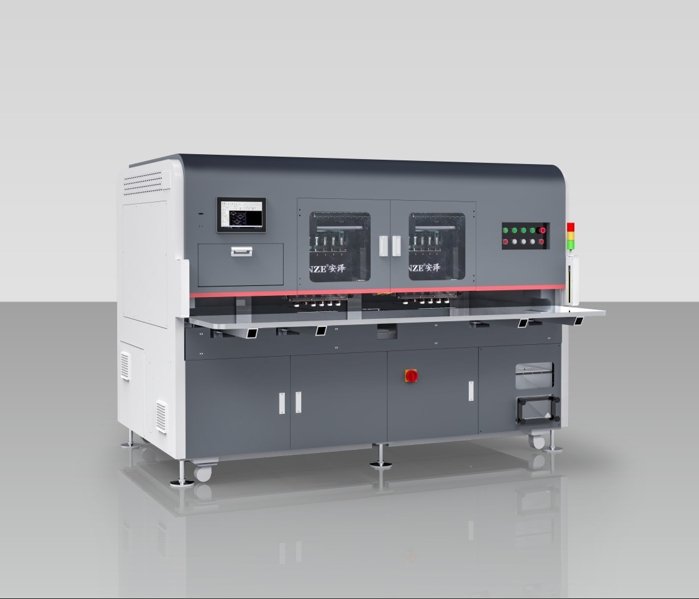
Why Leather Stretching Is a Critical Problem in High-Speed Leather Perforation Machine Operations
In modern leather processing, especially in industries such as automotive interiors, furniture upholstery, and fashion manufacturing, high-speed production is essential. Rotary punching systems and advanced macchina per perforazione della pelle technologies enable high throughput—but they also introduce a critical challenge:
👉 Leather stretching during the feeding process
Stretching can cause:
- Hole spacing inconsistency
- Distorsione del modello
- Misalignment in perforation
- Product rejection
This issue becomes even more severe when operating a Macchina perforatrice per cuoio a controllo numerico at high speeds or when processing long, continuous leather rolls.
With over 20 years of experience, Anze has developed advanced engineering solutions to eliminate stretching and maintain precision.
This article provides a comprehensive technical guide on how to prevent leather stretching in high-speed rotary punching systems.
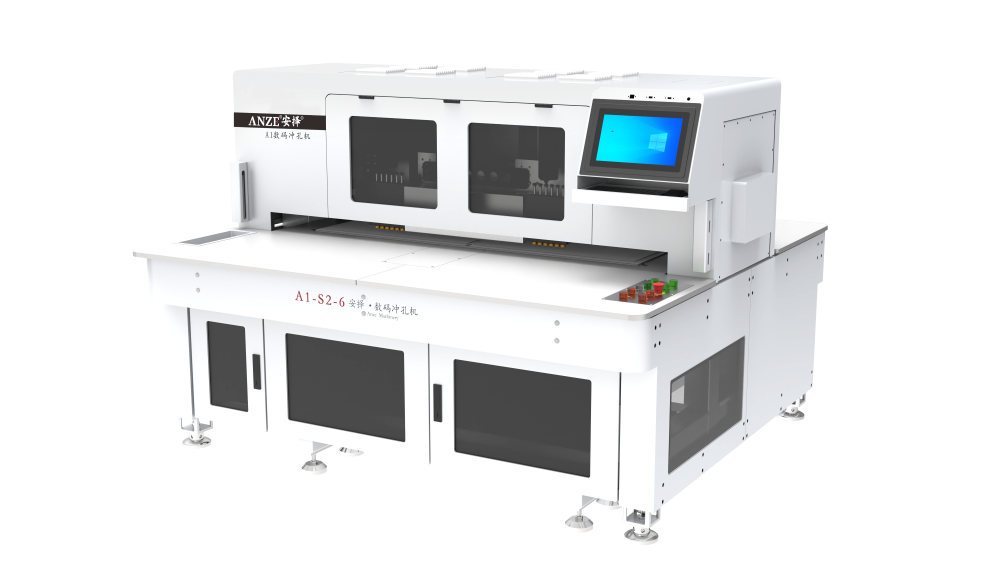
1. What Causes Leather Stretching in Leather Perforation Machine Feeding Systems
1.1 Material Properties of Leather
Leather is inherently flexible and elastic:
- Natural fiber structure
- Variable density
- Sensitivity to tension
Unlike rigid materials, leather can deform easily under stress.
1.2 High-Speed Feeding Dynamics
In high-speed rotary systems:
- Rapid movement creates inertia
- Sudden acceleration causes tension spikes
- Continuous feeding amplifies errors
1.3 Friction Between Rollers and Material
Improper friction control leads to:
- Slippage
- Uneven traction
- Localized stretching
1.4 Inconsistent Tension Distribution
Without proper control:
- Some areas are overstretched
- Others remain slack
2. Why Leather Stretching Is a Serious Problem in CNC Perforating Leather Machine Applications
2.1 Impact on Hole Spacing Accuracy
Stretching directly affects:
- Distance between holes
- Pattern consistency
2.2 Visual Defects in Finished Products
In applications like automotive seats:
- Patterns appear distorted
- Quality perception decreases
2.3 Structural Integrity Risks
Excessive stretching weakens material:
- Reduced durability
- Increased risk of tearing
3. Key Principles to Prevent Leather Stretching in Leather Perforation Machine Systems
To eliminate stretching, four critical factors must be controlled:
- Feeding precision
- Tension management
- Fissaggio del materiale
- Sincronizzazione del movimento
4. High-Precision Feeding Systems in Leather Perforation Machine Design
4.1 Servo-Controlled Feeding Mechanism
Modern systems use:
- Servo motors
- Closed-loop feedback
- High-resolution encoders
This ensures precise material movement.
4.2 Incremental Feeding Control
Instead of continuous pulling:
- Material is fed in controlled steps
- Reduces tension spikes
5. Advanced Tension Control Technology
5.1 Multi-Zone Tension Control
Anze systems divide feeding into zones:
- Entry zone
- Processing zone
- Exit zone
Each zone is independently controlled.
5.2 Real-Time Tension Monitoring
Sensors continuously measure tension and adjust instantly.
6. Anti-Slip Feeding Mechanisms in Leather Perforation Machine Systems
6.1 High-Friction Roller Design
Optimized rollers:
- Provide stable grip
- Prevent slippage
6.2 Vacuum Adsorption Tables
Vacuum systems:
- Hold material in place
- Eliminate movement during punching
6.3 Clamping Systems
Mechanical clamps ensure:
- Secure positioning
- Zero drift
7. Synchronization Between Feeding and Punching in CNC Perforating Leather Machine
7.1 Motion Coordination
Feeding and punching must be perfectly synchronized:
- No delay
- No overshoot
7.2 Timing Optimization
Precise timing prevents:
- Material pulling during punching
- Positioning errors
8. Material Handling Strategies to Prevent Stretching
8.1 Pre-Tension Adjustment
Apply controlled pre-tension:
- Stabilizza il materiale
- Prevents sudden deformation
8.2 Relaxation Zones
Allow material to relax before processing.
8.3 Edge Alignment Systems
Ensure straight feeding path.
9. Role of CNC Control in Leather Perforation Machine Precision
9.1 Intelligent Algorithms
Software optimizes:
- Velocità di alimentazione
- Tension distribution
- Punching sequence
9.2 Error Compensation
Automatically corrects:
- Stretch-induced deviation
- Mechanical inaccuracies
10. Mechanical Design Factors That Influence Stretching
10.1 Machine Rigidity
A stable structure reduces vibration and movement.
10.2 Precision Guides and Rails
Ensure smooth and accurate motion.
10.3 Balanced Mechanical Components
Reduce dynamic instability.
11. Application Case: Automotive Seat Leather
Automotive applications demand:
- Perfect pattern alignment
- No stretching distortion
Anze’s leather perforation machine solutions ensure consistent results even at high speed.
12. Common Mistakes That Cause Leather Stretching
Avoid:
- Excessive feeding speed
- Poor tension control
- Low-quality machines
- Lack of calibration
13. Comparison: Traditional vs Advanced Leather Perforation Machine Feeding Systems
| Feature | Traditional System | Anze System |
|---|---|---|
| Tension Control | Limited | Avanzato |
| Feeding Accuracy | Moderato | Alto |
| Stretching Risk | Alto | Minimal |
| Automation | Basso | Alto |
14. Why Choose a Professional Leather Perforation Machine Manufacturer
Un affidabile produttore di macchine per la perforazione della pelle fornisce:
- Advanced feeding technology
- Customized solutions
- Competenza tecnica
15. Future Trends in Leather Perforation Machine Feeding Technology
- AI-based tension control
- Smart sensors
- Linee di produzione completamente automatizzate
Eliminating Leather Stretching with Advanced Leather Perforation Machine Technology
Leather stretching during high-speed feeding is a complex problem—but one that can be solved with the right technology.
By combining:
- Precision servo feeding
- Advanced tension control
- Intelligent CNC systems
- Stable mechanical design
Anze’s leather perforation machine solutions enable manufacturers to achieve:
- Perfect hole spacing
- Consistent patterns
- High production efficiency
For industries that demand precision and quality, preventing leather stretching is not optional—it is essential.
Grazie a un team esperto e qualificato, conosciamo a fondo le caratteristiche dei materiali e le tecnologie di lavorazione, e siamo in grado di personalizzare le macchine per la perforazione della pelle in base alle esigenze del cliente. Per qualsiasi domanda, non esitate a contattarci! WhatsApp: +86 180 0298 0031
Come installare e mantenere la macchina?
Alcuni modelli vengono spediti assemblati in fabbrica. Le apparecchiature di grandi dimensioni sono confezionate in più parti e viene fornito un manuale di installazione. Tutte le apparecchiature sono dotate di manuali d'uso in cinese e inglese.
I clienti possono inviare qualcuno presso la fabbrica di Anze per imparare o noi inviamo esperti tecnici per fornire formazione in loco.
Quali sono i requisiti dell'ambiente di lavoro della macchina?
Il Punzonatrice per cuoio CNC deve essere fissato su un tavolo stabile e l'ambiente deve essere mantenuto pulito e ordinato per evitare il contatto con la polvere, l'elettricità statica, l'umidità e i trucioli che potrebbero causare guasti alle parti.
Come sono le vostre politiche post-vendita?
Disponiamo di un team esperto di assistenza post-vendita con servizio online 24 ore su 24 e di un sistema di assistenza post-vendita completo. Supporto per l'addestramento in fabbrica, video tecnico disponibile per il servizio di macchinari all'estero. supporto, supporto online, ingegneri.
Siete disponibili per inviti in loco?
Naturalmente diamo il benvenuto a visitare la nostra azienda e ad avere una comunicazione faccia a faccia per far progredire gli affari reciproci.
Quali sono i tempi di consegna?
I tempi di consegna variano a seconda della quantità dell'ordine e della personalizzazione, in genere da 7 a 10 giorni lavorativi. Se si tratta di un ordine di punzonatrice per pelle personalizzata, sono necessari 1-2 mesi.