










In modern leather processing factories, automation has dramatically improved production efficiency, consistency, and product quality. Automotive seat manufacturers, leather upholstery factories, and industrial leather processors increasingly rely on automated leather punching lines to produce high-quality perforated leather for demanding applications.
However, even the most advanced automated systems can occasionally experience a frustrating production problem:
Skipped holes.
A skipped hole occurs when the punching needle fails to create a perforation at the expected position. Instead of a continuous and accurate hole pattern, the finished leather may show:
- Missing holes
- Irregular perforation patterns
- Uneven spacing
- Defective visual appearance
- Rejected finished products
For industries such as automotive interiors, luxury furniture, and premium leather products, even a small number of skipped holes can result in costly material waste and production delays.
Many manufacturers immediately assume that skipped holes are caused by software problems. Others believe the issue comes from mechanical components such as punching needles, servo motors, or timing systems.
The reality is that skipped holes can be caused by multiple factors, including:
- Software communication delays
- CNC control timing errors
- Mechanical synchronization issues
- Punching needle movement problems
- Material feeding instability
- Sensor positioning errors
- Improper machine parameter settings
Como profesional leather perforation machine manufacturer with more than 20 years of experience, Anze has developed more than 20 models of leather punching equipment and provided customized solutions for global customers.
Through years of engineering experience, Anze has developed systematic methods to diagnose and solve skipped-hole problems in automated leather punching lines.
This article explains the causes of skipped holes, how to determine whether the problem is software-related or mechanical, and how advanced máquina perforadora de cuero technology can prevent these issues.
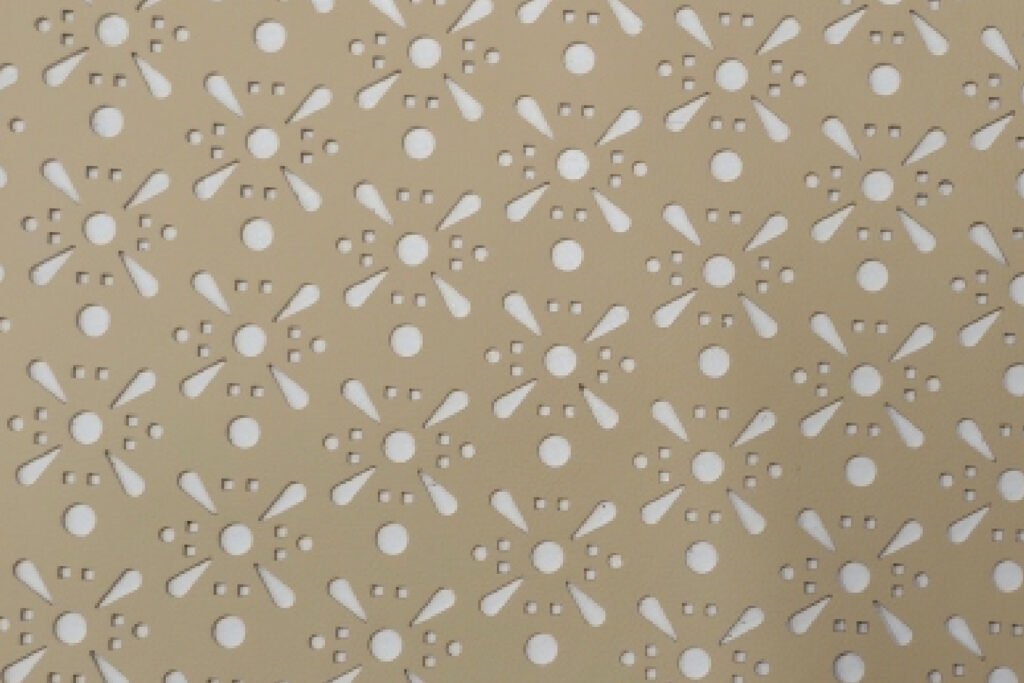
What Are Skipped Holes in Leather Punching Lines?
A skipped hole refers to a missing perforation where the machine should have created a hole according to the programmed pattern.
For example:
A CNC program may require:
- Hole 1
- Hole 2
- Hole 3
- Hole 4
- Hole 5
But the machine produces:
- Hole 1
- Hole 2
- Missing hole
- Hole 4
- Hole 5
The result is an inconsistent perforation pattern.
In applications such as automotive seat covers, this defect is highly visible because leather surfaces often contain large symmetrical patterns.
Why Skipped Holes Are a Serious Problem for Leather Processing Factories
Impact on Product Appearance
Automotive and furniture customers demand perfect visual quality.
Skipped holes can cause:
- Uneven decorative patterns
- Poor alignment
- Reduced premium appearance
Increased Material Waste
Leather is an expensive material.
When defects occur after perforation:
- The entire leather panel may be rejected
- Production costs increase
- Delivery schedules may be affected
Reduced Production Efficiency
Repeated machine stoppages for troubleshooting reduce:
- Machine utilization rate
- Production capacity
- Factory profitability
Therefore, solving skipped-hole problems is essential for efficient leather punching lines.
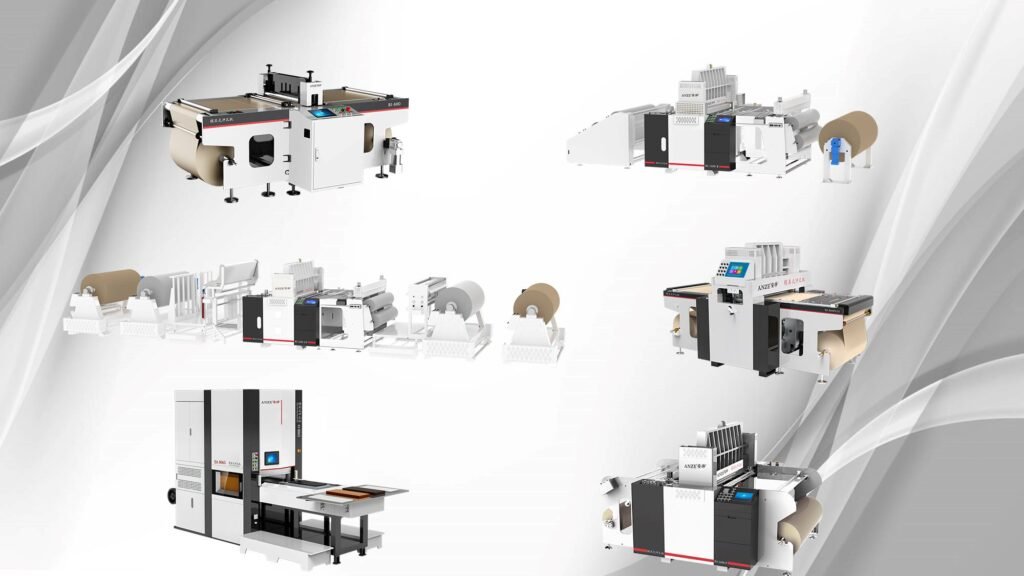
Main Causes of Skipped Holes in Automated Leather Punching Lines
Skipped holes usually come from two major categories:
- Software and control system issues
- Mechanical and timing issues
A professional diagnosis must analyze both areas.
Part 1: Software-Related Causes of Skipped Holes
1. CNC Program Communication Delay
Modern CNC-based máquina perforadora de cuero systems depend on communication between:
- CNC controller
- Servo drives
- Motion control system
- Punching mechanism
If communication is delayed, the punching command may not arrive at the correct moment.
Possible causes include:
- Incorrect communication parameters
- Overloaded controller processing
- Poor synchronization settings
- Outdated software versions
2. Motion Control Processing Lag
A CNC system must coordinate:
- X-axis movement
- Y-axis movement
- Punching action
- Feeding speed
If processing speed cannot match production speed, the machine may:
- Skip commands
- Delay punching action
- Create incorrect hole positions
Anze engineers optimize motion control parameters to ensure stable operation even at high production speeds.
3. Incorrect Acceleration and Deceleration Settings
A common software issue is improper motion parameter configuration.
If acceleration is too aggressive:
- Servo systems may not reach target positions
- Punch timing may become unstable
If acceleration is too slow:
- Production speed decreases unnecessarily
Professional parameter adjustment is required to balance speed and accuracy.
4. Incorrect Punching Frequency Settings
Every CNC perforating leather machine has a maximum recommended punching frequency.
If operators increase speed beyond system capability:
The machine may experience:
- Delayed punching signals
- Missing holes
- Pattern distortion
Anze engineers help customers optimize speed settings according to:
- Material type
- Thickness
- Diseño de patrones
- Production requirements
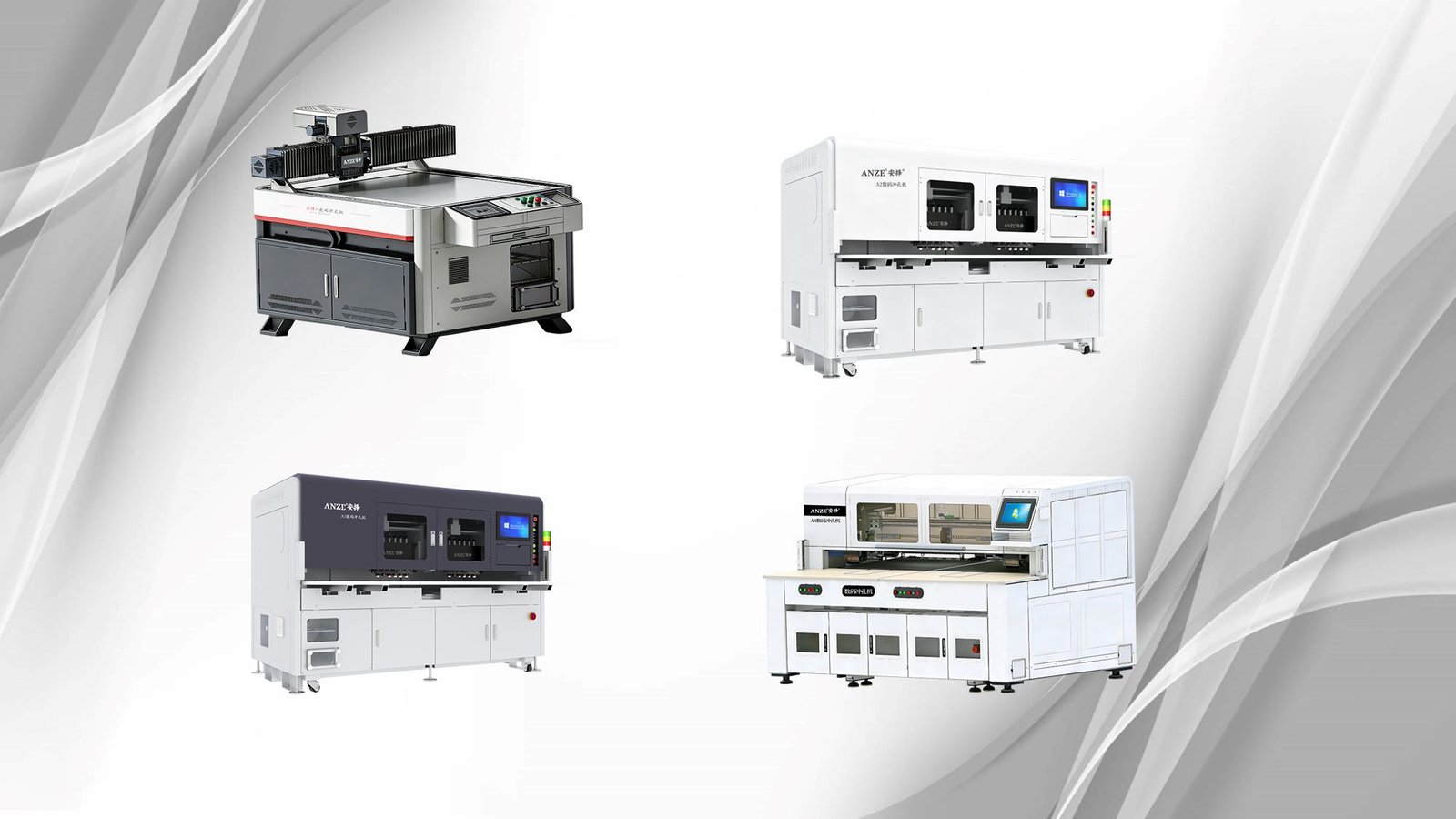
Part 2: Mechanical Causes of Skipped Holes
1. Punching Needle Misalignment
The punching needle is one of the most important components in a leather punching system.
Over time, problems may occur:
- Needle position deviation
- Needle holder looseness
- Improper installation
These issues can cause:
- Partial holes
- Missing holes
- Irregular perforation
2. Needle Movement Resistance
If the punching mechanism experiences excessive resistance:
The needle may fail to complete the punching stroke.
Possible reasons include:
- Dust accumulation
- Lack of lubrication
- Mechanical wear
- Damaged guide components
Anze machines use precision mechanical structures designed to reduce movement resistance.
3. Mechanical Timing Errors
Automated leather punching lines require precise synchronization between:
- Material feeding
- Positioning
- Needle movement
If timing is incorrect:
The needle may punch:
- Too early
- Too late
- Outside the target position
4. Servo Motor Positioning Problems
Servo systems control the precise movement of leather materials.
Possible problems:
- Encoder errors
- Servo calibration issues
- Motor overload
- Position feedback failure
These issues can create apparent “software” problems even though the real cause is mechanical positioning.
How to Determine Whether Skipped Holes Are Caused by Software or Mechanical Problems
Professional troubleshooting follows a systematic process.
Step 1: Check the Pattern Program
Engineers first verify:
- CNC program accuracy
- Pattern file integrity
- Coordinate settings
If the program itself is incorrect, the problem is software-related.
Step 2: Observe Machine Movement
Operators should check:
Does the machine move correctly but fail to punch?
If yes:
The issue may involve:
- Punching mechanism
- Needle movement
- Timing system
Does the machine fail to reach the correct position?
If yes:
The issue may involve:
- Servo system
- Motion control
- Position feedback
Step 3: Test at Lower Speed
A useful diagnostic method is reducing production speed.
If skipped holes disappear at lower speed:
Possible causes include:
- Excessive acceleration
- Control delay
- Mechanical response limitation
Step 4: Inspect Punching Components
Check:
- Needle condition
- Needle installation
- Punching stroke
- Mechanical clearance
A damaged or worn needle can easily create defects.
How Anze Solves Skipped Hole Problems in Leather Punching Lines
Advanced CNC Motion Control
Anze CNC perforating leather machine systems use optimized control technology to synchronize:
- Feeding movement
- Punching position
- Needle action
This reduces timing errors.
Precision Mechanical Structure
Anze machines are designed with:
- High-precision transmission systems
- Stable punching mechanisms
- Accurate positioning components
This ensures consistent operation during long production cycles.
Intelligent Parameter Optimization
Different materials require different settings.
Anze engineers analyze:
- Leather thickness
- Material elasticity
- Pattern density
- Production speed
Then optimize machine parameters accordingly.
Preventing Skipped Holes Through Proper Maintenance
Regular Punching Needle Inspection
Operators should regularly check:
- Needle sharpness
- Needle alignment
- Needle damage
A worn needle can create:
- Dull holes
- Burrs
- Missing perforations
Cleaning the Machine
Leather punching generates:
- Dust particles
- Small leather fibers
- Material debris
Without cleaning, particles may affect:
- Guide rails
- Sensors
- Mechanical movement
Servo System Calibration
Regular calibration helps maintain:
- Position accuracy
- Motion stability
- Long-term reliability
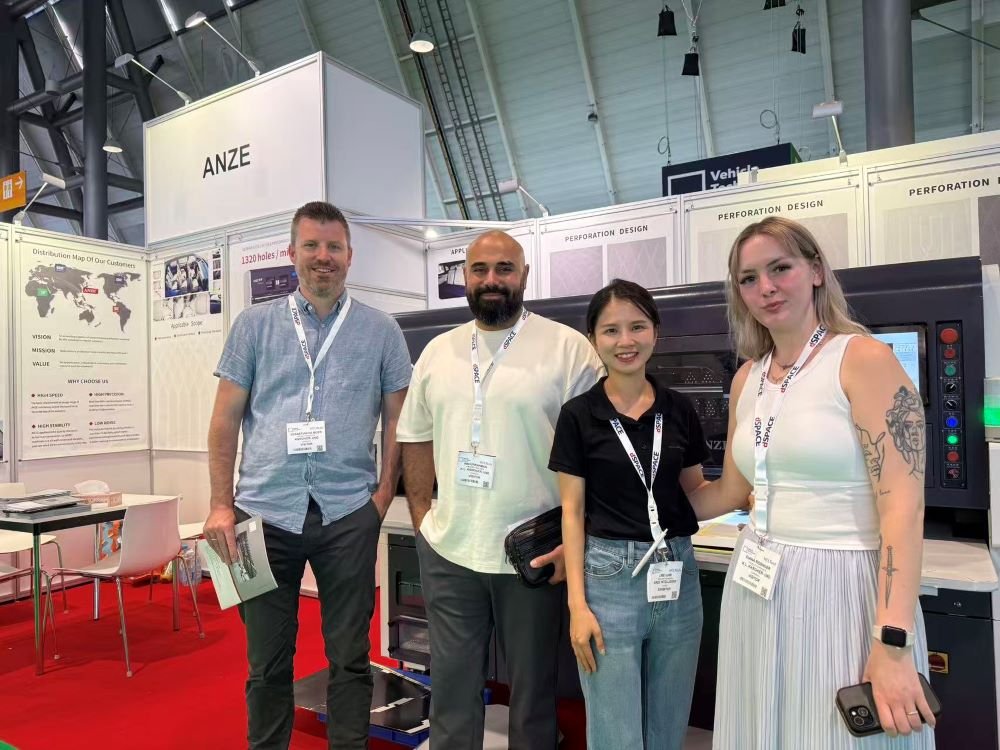
Why Choose Anze as Your Leather Perforation Machine Manufacturer?
With over 20 years of experience, Anze understands the real challenges faced by leather manufacturers.
Our advantages include:
Professional Engineering Team
Anze engineers provide solutions for:
- Hardware problems
- Software optimization
- Production parameter adjustment
More Than 20 Developed Machine Models
Our equipment serves:
- Automotive seat manufacturers
- Leather factories
- Furniture manufacturers
- Automotive modification businesses
- Equipment distributors
Complete Leather Punching Solutions
Anze provides more than machines.
We provide:
- Process consultation
- Pattern solutions
- Installation support
- Operator training
- After-sales service
Applications of Anze Leather Punching Lines
Anze equipment is widely used for:
Interiores de automóviles
Including:
- Car seat covers
- Ventilated seats
- Steering wheel leather
- Door panels
Furniture Upholstery
Including:
- Leather sofas
- Luxury chairs
- Customized furniture
Other Flexible Materials
Including:
- Microfiber leather
- PU leather
- Synthetic materials
- Textile-based materials
Future Development of Automated Leather Punching Technology
The future of leather processing will continue moving toward:
- Higher automation
- Artificial intelligence monitoring
- Smart factory integration
- Real-time quality inspection
Avanzado máquina perforadora de cuero systems will become increasingly important for manufacturers seeking higher efficiency and lower defect rates.
Skipped holes in automated leather punching lines are a complex problem
Skipped holes in automated leather punching lines are a complex problem that may originate from either software delays or mechanical timing issues.
Accurate diagnosis requires professional knowledge of:
- CNC control systems
- Motion synchronization
- Mechanical structures
- Punching technology
- Material behavior
With more than 20 years of experience, Anze provides complete solutions for preventing and solving skipped-hole problems.
Through advanced máquina perforadora de cuero technology, precision engineering, and professional technical support, Anze helps leather processing factories achieve:
- Stable production
- Higher efficiency
- Better quality
- Reduced waste
- Increased competitiveness
As a trusted leather perforation machine manufacturer, Anze continues to develop innovative solutions for automotive interiors, leather processing factories, and global industrial customers.
Gracias a nuestro equipo experimentado y cualificado, conocemos a fondo las características de todo tipo de materiales y las tecnologías de procesamiento, lo que nos permite personalizar máquinas perforadoras de cuero según las necesidades del cliente. ¡No dude en contactarnos si tiene alguna consulta! WhatsApp: +86 180 0298 0031
¿Cómo instalar y mantener la máquina?
Algunos modelos se envían ensamblados de fábrica. Los equipos de gran tamaño se embalan en varias piezas y se suministra un manual de instalación. Todos los equipos incluyen manuales de usuario en chino e inglés.
Los clientes pueden enviar a alguien a la fábrica de Anze para recibir formación, o bien nosotros enviamos expertos técnicos para impartir capacitación en sus instalaciones.
¿Cuáles son los requisitos del entorno de trabajo de la máquina?
El Máquina perforadora de cuero CNC La máquina debe fijarse sobre una mesa estable y el entorno debe mantenerse limpio y ordenado para evitar el contacto con polvo, electricidad estática, humedad y virutas que puedan provocar fallos en las piezas.
¿Cómo son sus políticas de posventa?
Contamos con un equipo de posventa experimentado, servicio en línea las 24 horas y un sistema posventa completo. Soporte de capacitación de fábrica, soporte técnico por video disponible para dar servicio a la maquinaria en el extranjero, soporte en línea, ingenieros.
¿Está disponible para una invitación improvisada?
Por supuesto, estaremos encantados de que visite nuestra empresa y de que mantengamos una comunicación personal para impulsar negocios mutuos.
¿Cuál es el plazo de entrega?
El plazo de entrega varía según la cantidad del pedido y la personalización, generalmente entre 7 y 10 días hábiles. Si se trata de un pedido de una máquina perforadora de cuero personalizada, el plazo es de 1 a 2 meses.