










Last Updated on 2025-12-07 by 안제
1. Introduction to the Sheet Perforation Machine in Modern Manufacturing
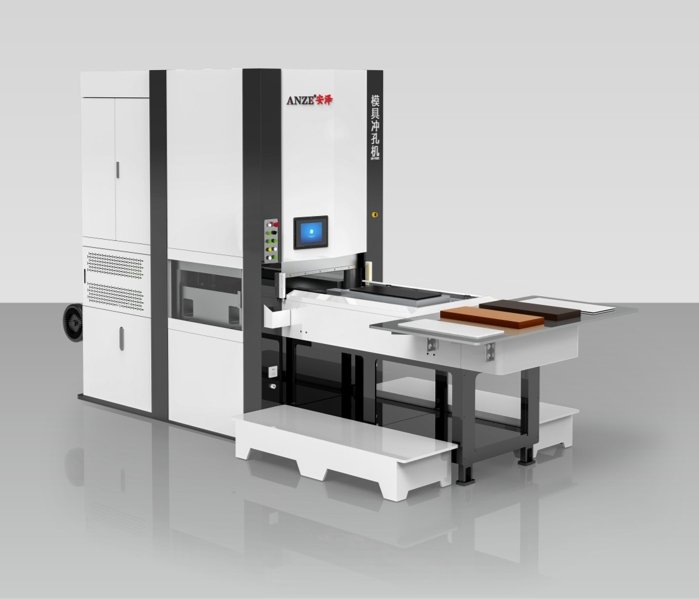
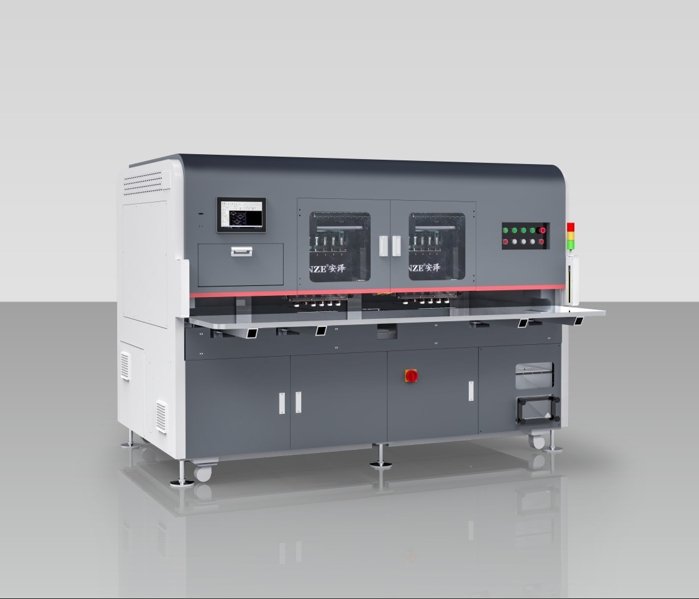
A sheet perforation machine is an industrial system designed to generate controlled, repeatable holes in leather, fabric, microfiber, TPU sheets, PU materials, and other flexible substrates. In the global manufacturing industry—especially in furniture, automotive, apparel, and luggage—demand for high-precision perforation continues to rise due to the need for ventilation, aesthetics, structural balance, and customized branding.
At Anze, we have spent more than 20 years developing sheet perforation machine technologies, with over twenty best-selling models deployed worldwide. Our systems are specialized in handling soft and semi-rigid sheet materials with consistent accuracy and production efficiency.
This whitepaper provides an in-depth technical analysis of:
Machine architecture
Material performance variables
Tooling design
Software control
Automation workflow
Industrial applications
Quality assessment
Safety and maintenance
The goal is to provide manufacturers, engineers, and production planners with a clear understanding of how a sheet perforation machine functions and how Anze’s solutions can be integrated into advanced production environments.
2. Technical Definition of a Sheet Perforation Machine
A sheet perforation machine uses mechanical, pneumatic, or servo-driven force to punch precise holes into flat materials. The perforation can be:
Straight-line perforation
Micro-perforation patterns
Large-diameter decorative perforation
Ventilation channel perforation
High-density functional perforation
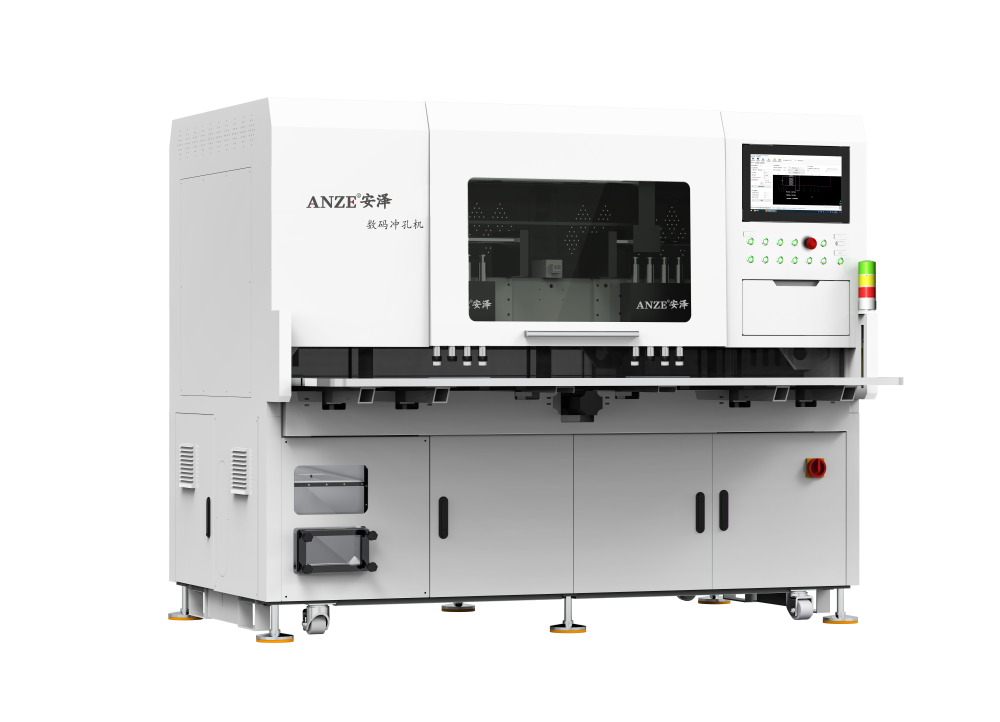
A modern sheet perforation machine integrates:
Servo motion system
Precision punching head
Custom dies or digital tools
Vacuum or clamping table
CNC control panel / proprietary software
Material feeding system
Real-time monitoring & calibration sensors
The result is a system capable of meeting industrial standards for dimensional stability, repeatability, and long-term reliability.
3. Mechanical Architecture of the Sheet Perforation Machine
A sheet perforation machine consists of multiple high-precision modules:
3.1 Frame and Structural Design
기계 본체는 다음으로 구성됩니다:
보강강
진동 방지용 알루미늄 합금
CNC 밀링 가공된 지지 보
이는 다음을 제공합니다:
높은 펀칭 빈도에서의 안정성
장기적인 기계적 정밀도
진동으로 인한 편차 감소 (미세 구멍 가공에 필수적임)
3.2 Punching Unit
펀칭 유닛은 이 기계의 핵심이며 다음을 포함합니다:
고속 펀칭 실린더
서보 구동 램
교체형 다이 세트
냉각 및 윤활 시스템
힘 균등화 메커니즘
Anze의 엔지니어링은 다음 분야에 중점을 둡니다:
깔끔하게 절단된 가장자리
버(burr) 없음
±0.05mm의 정밀도
긴 다이(die) 수명
3.3 Material Fixing System
펀칭 중 시트를 안정시키기 위해 이 기계는 다음을 사용합니다:
고진공 테이블
정전기 흡착판
공압식 클램핑 프레임
조절식 소재 가이드
3.4 Motion Control System
An advanced servo motor + CNC controller provides:
XY축 보간
다단 깊이 펀칭 제어
동기화된 펀칭 리듬
자동 홀 패턴 정렬
모션 제어 정밀도는 고성능 시트 타공기와 저가형 모델을 구별하는 핵심적인 장점입니다.

4. Types of Sheet Perforation Technologies
A sheet perforation machine can use one or more perforation methods:
4.1 Mechanical Punching (Most Common)
High speed
강한 침투력
Suitable for leather, PU, PVC, microfiber, fabric
Best edge quality
Long-term industrial operation
4.2 CNC Micro-Perforation
For ventilation holes
Hole diameters: 0.5 mm–1.5 mm
Often used in:
Leather seats
Sporting goods
신발
Sofa backing sheets
Functional textiles
Anze specializes in digital micro-perforation machines for leather and microfiber.
4.3 Rotary Perforation (Continuous Roll-to-Sheet)
Best for fabrics
Fast processing
Suitable for continuous production lines
Supports thermal bonding perforation
4.4 Laser Perforation
Zero tooling
Complex shapes
Suitable for thin fabrics and membranes
Clean edges
Slower vs mechanical punching
Requires fume extraction
4.5 Hybrid Mechanical + Laser Systems
A hybrid sheet perforation machine combines:
Mechanical tools for durability
Laser for micro details
Good for luxury bags and automotive trim.
5. Material Compatibility Analysis for Sheet Perforation Machines
5.1 Natural Leather
Performance considerations:
입자 강성
섬유 방향
수분 보유력
인장 시의 신축성
Best used with mechanical servo punching.
5.2 PU Leather & Synthetic Leather
Characteristics:
균일 밀도
더 빠른 펀칭
하부 구멍 변형
CNC 자동화 패턴에 이상적입니다.
5.3 Microfiber
고강도
찢어짐에 강함
미세 구멍 작업에 탁월합니다.
정밀한 다이 형상이 요구됩니다.
5.4 Fabrics and Technical Textiles
연속 타공 가능
매우 얇은 원단에는 레이저가 선호됩니다.
중간 두께의 원단에는 기계식 펀칭이 선호됩니다.
5.5 Soft Plastic Sheets (TPU, EVA, PVC)
온도 안정화가 필요합니다.
비점착성 다이 코팅이 필요합니다.
신발, 가방, 쿠션의 통기용 통로로 적합합니다.
6. Process Workflow of a Sheet Perforation Machine
6.1 CAD Pattern Import
Patterns are loaded into the CNC controller via:
USB
Wi-Fi
Ethernet
Proprietary software
Supported formats:
DXF
AI
PLT
SVG
6.2 Material Loading
Sheets placed on vacuum table
Clamps adjust material tension
Position sensors synchronize coordinates
6.3 Punching Calibration
The machine performs:
Punch alignment test
Die clearance check
Pressure calibration
Test perforation
6.4 Automatic Perforation
The sheet perforation machine then performs:
XY motion
Synchronized punching
Real-time tool correction
Pattern registration
6.5 Quality Inspection
Integrated systems include:
CCD vision scanning
Hole diameter measurement
Pattern alignment detection
6.6 Finished Sheet Output
Sheets are:
Automatically stacked
Transferred to conveyors
Stored for lamination or stitching
7. Engineering Advantages of Anze Sheet Perforation Machines
7.1 High Punching Speed
Up to:
2,000 punches/minute (mechanical)
10 m/min (rotary feed)
1,500 micro-holes/min (micro-perforation)
7.2 Precision Hole Quality
Burr-free
±0.05 mm tolerance
Symmetric hole geometry
Ideal for high-end upholstery
7.3 Long Tool Lifetime
Special alloy dies
Anti-wear coating
Heat treatment processes
7.4 Intelligent Control System
Our custom controller supports:
Automated calibration
Multi-pattern sequencing
Hole density simulation
Energy-optimized operation
7.5 Wide Material Compatibility
The machine handles:
Leather
마이크로파이버
PU, PVC, TPU
Fabric
EVA
Composite sheets
7.6 Automation Integration
Available add-ons:
Robotic arms
Automatic sheet loader
RFID job recognition
Production data logging system
8. Industrial Applications of Sheet Perforation Machines
8.1 Furniture
Sofa leather
Chair upholstery
Decorative cushion panels
Ventilation enhancement
8.2 Automotive
Car seat leather
Door trim
Dashboard leather
Acoustic panels
8.3 Footwear
Shoe uppers
Ventilation patterns
Branding perforations
8.4 Bags & Luggage
Luxury bag patterns
Decorative perforation
Ventilated backpack pads
8.5 Apparel & Fashion
Sportswear
Jackets
Fashion accessories
9. Maintenance Requirements for a Sheet Perforation Machine
9.1 Daily Inspection
Die wear
Vacuum condition
Lubrication
Motion calibration
9.2 Weekly Service
Table leveling
Air compressor drain
CNC software updates
9.3 Quarterly Maintenance
Bearing replacement
Belt tensioning
Laser optics cleaning (if equipped)
9.4 Annual Overhaul
Structural alignment
Servo motor tuning
Die regrinding
10. Quality Control Standards
10.1 Hole Diameter Measurement
Tools:
Digital microscopes
Automatic CCD
Sample grid scanning
10.2 Pattern Alignment
High-speed imaging
XY calibration
10.3 Edge Quality
Evaluated for:
Smoothness
Tear resistance
Thermal deformation
11. Sheet Perforation Machine Buying Guide
11.1 Core Considerations
Material types
Daily production volume
Hole shape flexibility
Software compatibility
Automation requirements
11.2 Key Specifications
Punching speed
Max sheet size
Hole diameter range
Servo accuracy
Die lifespan
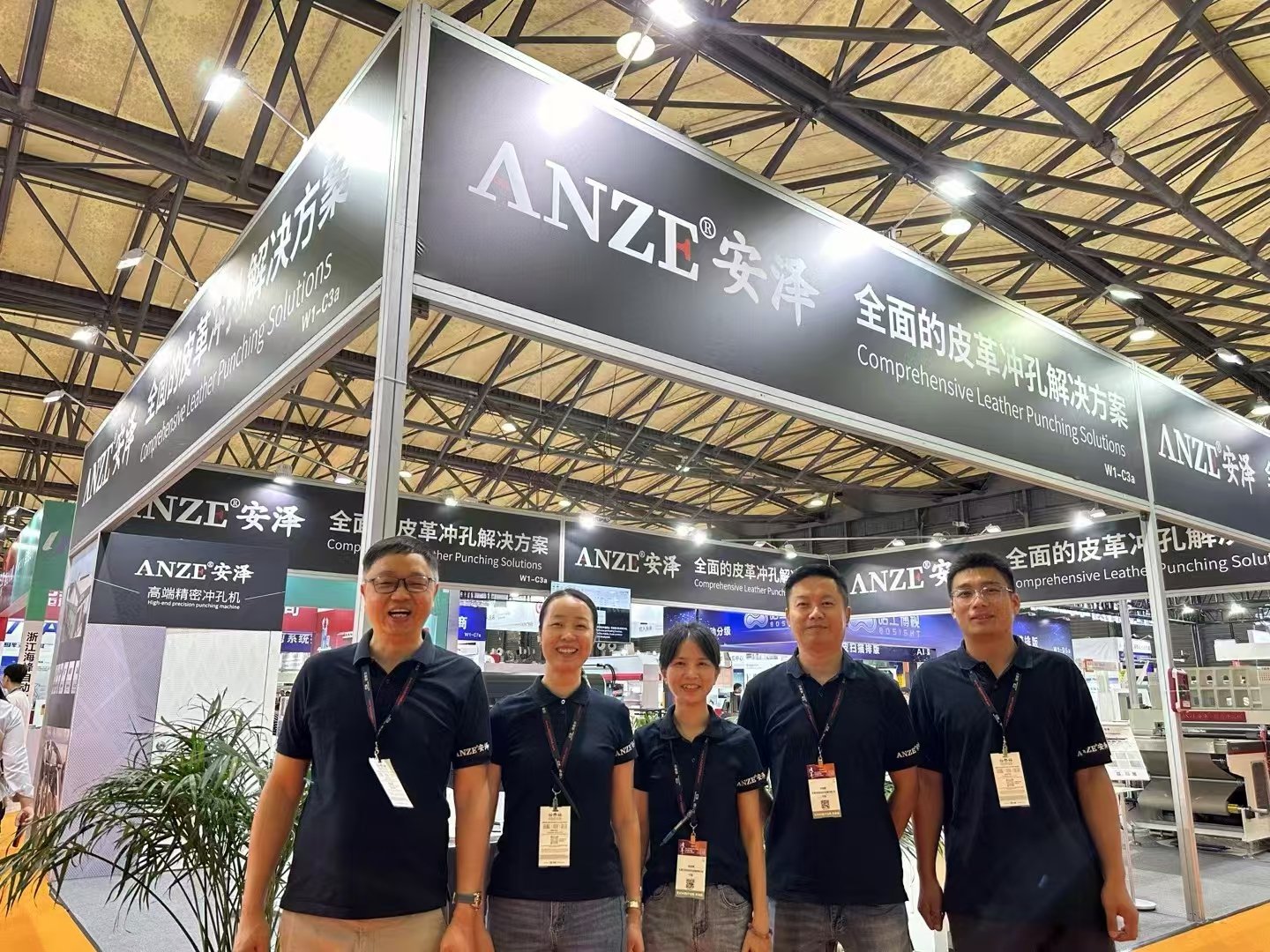
12. Why Choose Anze as Your Sheet Perforation Machine Supplier
✔ 20+ years of manufacturing experience
✔ Global installations across furniture, automotive, footwear, and apparel
✔ 20+ mature, proven perforation machine models
✔ Custom engineering for OEM/ODM projects
✔ High-speed, high-precision CNC control system
✔ Full after-sales support + spare parts supply
Anze’s sheet perforation machine solutions are designed for factories seeking:
Stable long-term production
High precision
Heavy-duty operation
Versatility in material types
Automation compatibility
sheet perforation machine is an essential tool
A modern sheet perforation machine is an essential tool for manufacturers in leather, microfiber, textiles, and flexible sheet industries. With advanced control systems, industrial-grade components, and versatile compatibility, Anze provides world-class perforation solutions suitable for high-performance production.
For companies seeking consistent quality, automation capability, and durable performance, Anze remains a global leader in sheet perforation machine engineering.
당사는 풍부한 경험과 숙련된 기술을 갖춘 팀을 바탕으로 다양한 소재의 특성과 가공 기술을 깊이 이해하고 있으며, 고객의 요구 사항에 맞춰 가죽 타공기를 맞춤 제작해 드립니다. 문의 사항이 있으시면 언제든지 연락해 주십시오! WhatsApp: +86 180 0298 0031
장비의 설치 및 유지보수 방법은 무엇입니까?
일부 모델은 공장에서 조립된 상태로 출고됩니다. 대형 장비는 여러 부품으로 나누어 포장되며 설치 설명서가 함께 제공됩니다. 모든 장비에는 중국어 및 영어로 된 사용자 설명서가 포함되어 있습니다.
고객이 Anze 공장으로 인원을 보내 교육을 받게 하거나, 당사가 기술 전문가를 파견하여 현장 교육을 제공할 수 있습니다.
장비의 작업 환경 요건은 무엇입니까?
그만큼 CNC 가죽 펀칭기 기계는 안정적인 테이블 위에 고정해야 하며, 먼지, 정전기, 습기 및 칩과의 접촉으로 인한 부품 고장을 방지하기 위해 주변 환경을 깨끗하고 정돈되게 유지해야 합니다.
판매 후 서비스(A/S) 정책은 어떻게 되나요?
당사는 24시간 온라인 서비스를 제공하는 경험 많은 애프터서비스 팀과 완벽한 애프터서비스 시스템을 갖추고 있습니다. 공장 교육 지원, 해외 기계 서비스 지원을 위한 비디오 기술 지원, 온라인 지원, 엔지니어 지원 등을 제공합니다.
즉석에서 초대를 수락하실 수 있나요?
물론 저희 회사를 방문하셔서 직접 만나 뵙고 상호 사업 발전을 도모하시는 것을 환영합니다.
배송 기간은 얼마나 걸리나요?
제작 기간은 주문 수량 및 맞춤 제작 여부에 따라 다르며, 일반적으로 7~10 영업일이 소요됩니다. 가죽 펀칭기 맞춤 제작 주문의 경우 1~2개월이 소요됩니다.