










Last Updated on 2025-11-07 by 안제
1. The Precision Art of Leather Perforation in Footwear
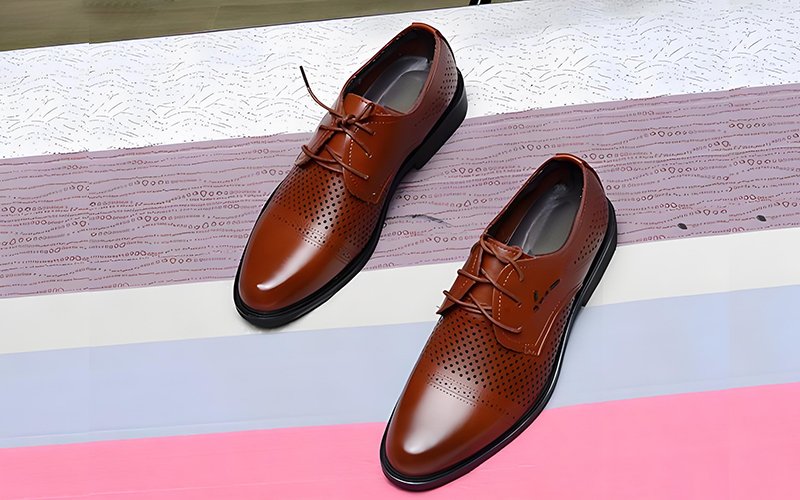
Leather perforation has long been a vital process in the footwear industry, merging aesthetic appeal with functional performance. From breathable sports sneakers to luxury dress shoes, the art of creating precise holes in leather directly impacts comfort, flexibility, and visual identity.
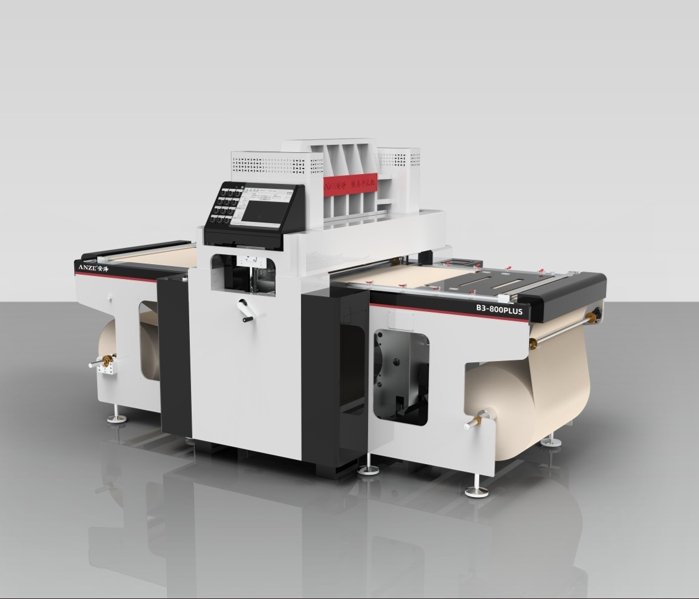
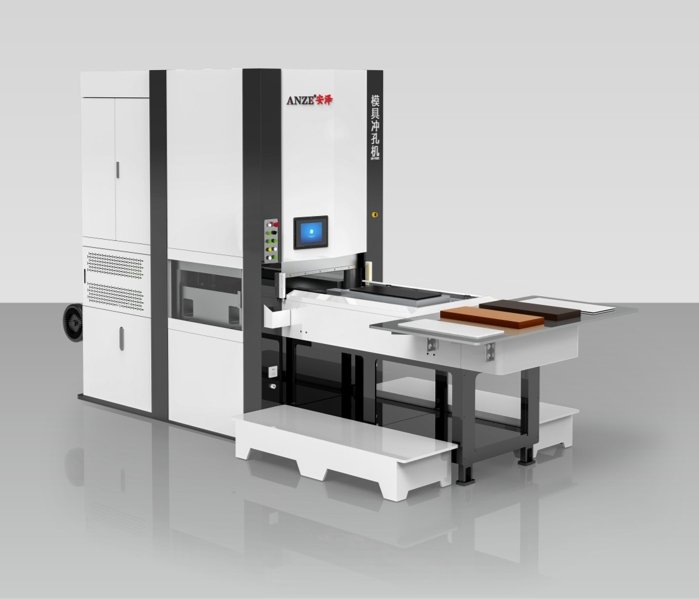
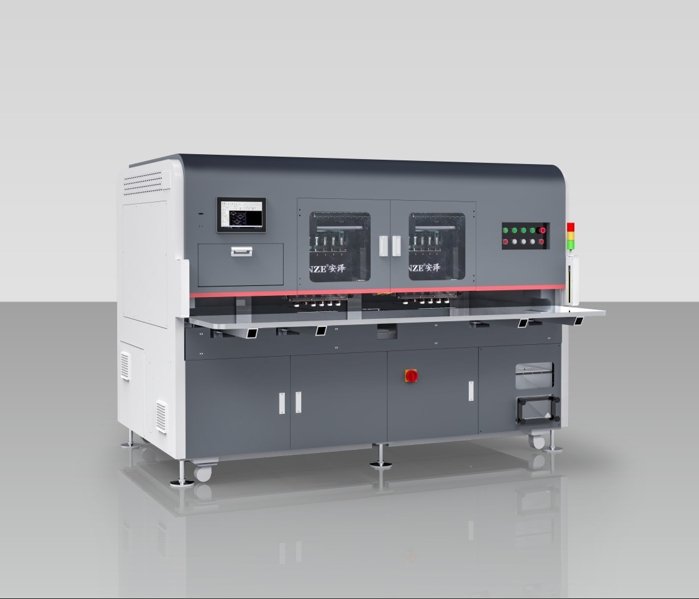
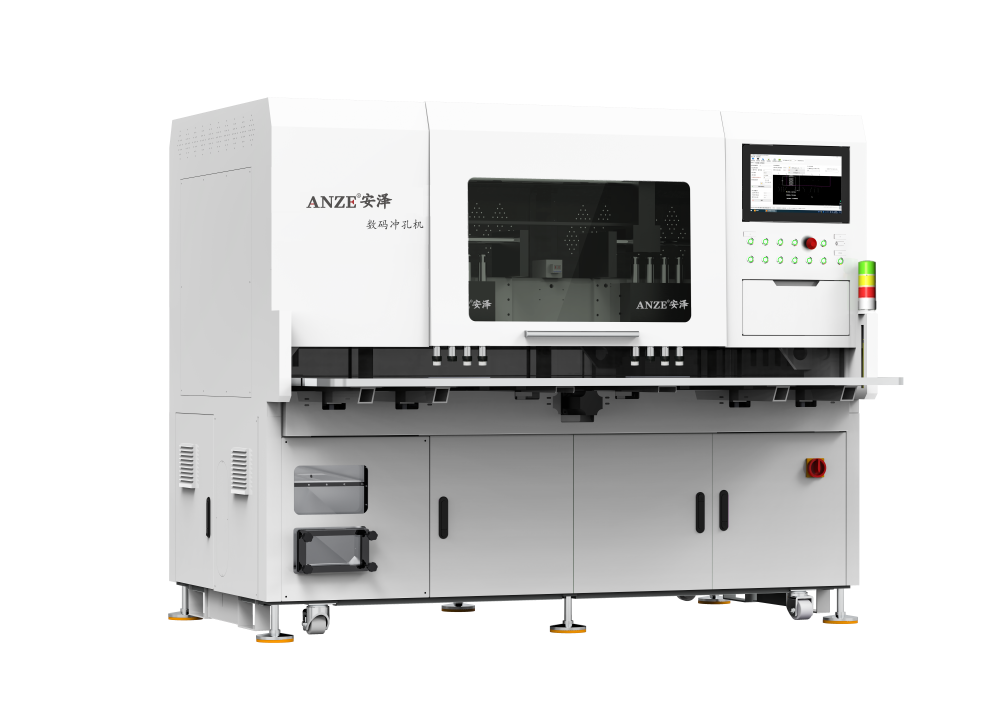
At the heart of this process lies the shoes leather perforation machine — an advanced piece of equipment engineered to ensure accuracy, repeatability, and high throughput. It combines precision mechanics with CNC and servo control systems to achieve uniform perforation patterns across various types of leather — from soft cowhide to synthetic polyurethane.
안제, a professional 가죽 천공기 제조업체 with over 20 years of experience, has developed more than 20 bestselling machine models. Our systems are widely used in industries including automotive interiors, furniture, and especially footwear manufacturing, providing custom perforation solutions for shoe uppers, linings, and decorative leather panels.
2. The Role of Leather Perforation in Shoe Design
Leather perforation for shoes is both functional and decorative.
2.1 Functional Benefits
Ventilation: Perforations increase airflow, enhancing breathability for the wearer.
Weight Reduction: Fine perforation patterns reduce overall material weight without compromising strength.
Flexibility: Micro holes help leather panels flex more naturally during movement.
2.2 Aesthetic Purposes
Designers often use intricate perforation patterns — geometric, floral, or logo-based — to distinguish their footwear lines. This requires extremely precise hole placement and consistent sizing, achievable only with a modern shoes leather perforation machine.
3. Understanding the Shoes Leather Perforation Machine
A shoes leather perforation machine is a precision device combining mechanical punching 그리고 CNC control for exact hole placement.
3.1 Core Components
| Component | Function | Description |
|---|---|---|
| Punching Head | Creates perforations | High-speed servo or pneumatic punches with replaceable dies. |
| Feeding Platform | Moves leather under the punch | Controlled by servo motors for smooth movement and accuracy. |
| Vacuum Table | Holds leather flat | Prevents wrinkling or shifting during perforation. |
| CNC Controller | Digital pattern control | Loads CAD patterns for variable perforation designs. |
| Vision Alignment System | Pattern correction | Uses cameras to ensure holes align with pre-marked leather contours. |
Anze’s latest series of CNC shoes leather perforation machines are designed with AI-driven feedback, pressure sensors, and smart calibration modules to maintain consistent quality even across textured or uneven leather surfaces.
4. Techniques for Shoe Leather Perforation
Different shoe types and materials require specific perforation techniques.
4.1 Mechanical Punching
Traditional yet highly reliable, mechanical punching uses hardened steel pins or dies to perforate leather sheets.
장점:
Ideal for thick, natural leathers.
Consistent hole edges.
Low maintenance costs.
Applications:
Men’s leather dress shoes, classic brogue patterns.
4.2 CNC Controlled Perforation
CNC perforation combines mechanical punching with digital control, allowing pattern flexibility and precision.
장점:
High accuracy (±0.03 mm).
Complex pattern capability.
Fast setup using digital CAD files.
Applications:
Luxury footwear, designer brands, custom-made shoes.
4.3 Laser Perforation
Laser-based perforation systems use focused energy beams to create holes without physical contact.
장점:
Ideal for synthetic and coated leathers.
Allows micro-perforations with unique decorative shapes.
No mechanical tool wear.
Challenges:
Requires strict heat control to prevent charring.
Not suitable for thick natural leathers.
4.4 Rotary Die Perforation
Used primarily in high-volume production, rotary dies apply continuous perforation to roll-fed materials.
장점:
Excellent for uniform repetitive patterns.
High throughput.
Consistent alignment for shoe lining materials.
5. Process Parameters and Control
Achieving perfect perforation requires fine control over multiple process parameters.
| Parameter | Recommended Range | Impact |
|---|---|---|
| Hole Diameter | 0.8 – 2.0 mm | Smaller holes for ventilation, larger for decorative purposes. |
| Pitch (Spacing) | 2 – 5 mm | Determines density and structural integrity. |
| Punch Pressure | 1.8 – 3.5 kN | Affects edge sharpness and tear resistance. |
| Feed Speed | 50 – 150 mm/s | Influences throughput and pattern accuracy. |
| Vacuum Pressure | 0.3 – 0.5 bar | Prevents movement of soft leathers. |
5.1 Leather Type Optimization
Soft leather (goat, calf): Use lower pressure and slower speed.
Thick leather (cowhide): Increase punch force and use sharper dies.
Synthetic leather: Consider laser perforation with controlled pulse width (<10 ms).
6. Best Practices for Leather Perforation in Footwear
6.1 Preparation
Condition leather in 40–60% humidity to ensure flexibility.
Avoid surface coatings that may crack during punching.
6.2 Perforation Execution
Always perform test runs to verify hole alignment.
Use vacuum hold-down tables to minimize slippage.
Ensure tool temperature stability for consistent quality.
6.3 Post-Processing
Remove debris and dust with compressed air or vacuum cleaning.
Inspect for burrs or uneven hole edges.
Apply soft finishing to restore surface sheen.
7. Common Issues and Solutions
| Problem | Cause | Solution |
|---|---|---|
| Tearing at hole edges | Excessive punch force | Reduce pressure or use sharper tools. |
| Uneven hole spacing | Feed slippage | Check servo calibration or suction stability. |
| Burn marks | Laser power too high | Decrease power or increase pulse interval. |
| Pattern misalignment | Incorrect pattern import | Use vision correction system for alignment. |
| Wrinkling | Inadequate vacuum | Increase suction or use better clamping. |
Anze’s 천공기 integrate intelligent feedback systems that automatically detect these defects and adjust parameters in real time, ensuring consistent quality across production runs.
8. Quality Control and Performance Testing
Quality control ensures every perforated shoe leather meets visual and functional standards.
8.1 Inspection Parameters
Hole Uniformity: ±0.05 mm tolerance.
Pattern Alignment: <0.1 mm deviation.
Edge Smoothness: No visible fraying or cracking.
8.2 Testing Methods
| Test | Standard | Description |
|---|---|---|
| Tensile Strength | ASTM D4705 | Ensures leather retains durability post-perforation. |
| Flex Test | ISO 5402 | Simulates repetitive bending in shoe uppers. |
| Air Permeability | ISO 9237 | Measures ventilation efficiency. |
| Visual Defect Detection | Automated Camera | AI-based pattern recognition to flag deviations. |
Anze’s QC system uses high-speed optical sensors integrated directly into the machine workflow, minimizing post-production rejection rates.
9. Maintenance and Safety
9.1 Routine Maintenance
| Frequency | Task |
|---|---|
| Daily | Clean vacuum table and remove leather dust. |
| Weekly | Check punch alignment and lubrication. |
| Monthly | Inspect servo motor accuracy and replace worn dies. |
| Quarterly | Run full recalibration test. |
9.2 Safety Measures
Always disconnect power during die change.
Use protective eyewear during laser operation.
Ensure proper fume extraction when processing synthetic materials.
Anze machines are equipped with emergency stop systems, overload detection, and automatic shutdown in case of irregular vibration or overheating.
10. Case Study: Anze Shoes Leather Perforation Machine in Action
10.1 Client Overview
A Southeast Asian sports shoe manufacturer needed precise ventilation holes in synthetic leather uppers, with production capacity exceeding 8,000 pairs per week.
10.2 Challenges
Inconsistent hole sizes due to material stretch.
Pattern deviation under high-speed operation.
Excess scrap waste.
10.3 Solution
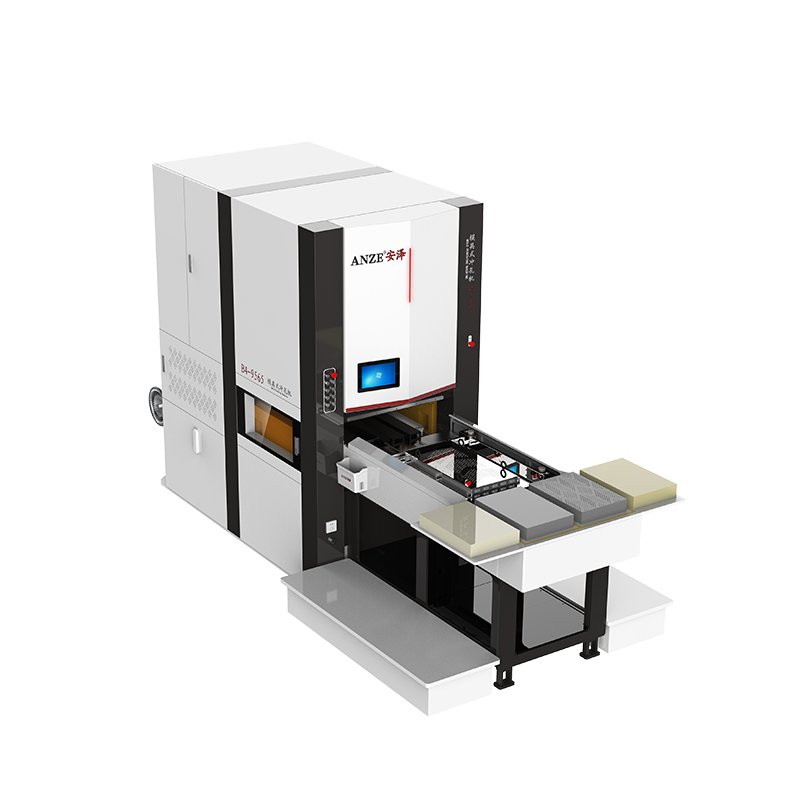
Anze provided the AZ-SP800 CNC Shoes Leather Perforation Machine, equipped with:
Dual servo punching heads for high throughput.
Vision correction and AI pattern alignment.
Smart vacuum system with adjustable zone control.
10.4 Results
| Metric | Before | After Using Anze Machine |
|---|---|---|
| Hole Uniformity | ±0.12 mm | ±0.04 mm |
| Scrap Rate | 6.8% | 1.2% |
| Production Speed | 90 pcs/hr | 140 pcs/hr |
| Downtime | 15% | <3% |
The client achieved 55% higher efficiency 그리고 significant improvement in finish quality, leading to a new export contract with a global sports brand.
11. Advanced Technology in Anze’s Shoes Leather Perforation Machines
Anze integrates next-generation innovations for superior performance:
CNC Digital Control: Real-time hole pattern adjustment.
AI Pattern Recognition: Detects defects and compensates instantly.
Intelligent Pressure Feedback: Ensures uniform force distribution.
Modular Tooling Design: Quick pattern changeover.
IoT Connectivity: Allows remote diagnostics and performance tracking.
12. Future Trends in Footwear Perforation Technology
12.1 Smart Manufacturing
Future shoes leather perforation machines will leverage AI and big data analytics to predict tool wear, auto-adjust force, and optimize cycle time.
12.2 Sustainable Operations
Anze’s R&D focuses on energy-efficient drives 그리고 eco-friendly vacuum systems, reducing power consumption by up to 20%.
12.3 Multi-Functional Perforation
Combining perforation with embossing or laser marking to create hybrid textures and design elements.
13. Why Choose Anze for Shoe Leather Perforation Solutions
With two decades of innovation and global service experience, Anze stands as a reliable partner for footwear manufacturers worldwide.
Key Advantages:
20+ years of experience in leather perforation systems.
More than 20 machine models for diverse applications.
Customizable solutions for shoe uppers, linings, and decorative leather.
Integrated R&D, production, and after-sales service.
Exported to over 40 countries across Asia, Europe, and the Americas.
Whether you produce luxury fashion footwear or high-performance sports shoes, Anze’s shoes leather perforation machines deliver precision, efficiency, and consistency.
a shoes leather perforation machine ensures the perfect balance
The evolution of footwear design increasingly depends on material engineering precision. Leather perforation not only enhances comfort and ventilation but also defines brand aesthetics.
A well-calibrated shoes leather perforation machine ensures the perfect balance between artistry and technology — every hole placed with accuracy, every pattern flawlessly replicated.
With 20 years of expertise and a commitment to innovation, 안제 empowers footwear manufacturers to lead in both style and performance.
Our mission is simple:
“To transform raw leather into functional beauty — one perforation at a time.”
당사는 풍부한 경험과 숙련된 기술을 갖춘 팀을 바탕으로 다양한 소재의 특성과 가공 기술을 깊이 이해하고 있으며, 고객의 요구 사항에 맞춰 가죽 타공기를 맞춤 제작해 드립니다. 문의 사항이 있으시면 언제든지 연락해 주십시오! WhatsApp: +86 180 0298 0031
장비의 설치 및 유지보수 방법은 무엇입니까?
일부 모델은 공장에서 조립된 상태로 출고됩니다. 대형 장비는 여러 부품으로 나누어 포장되며 설치 설명서가 함께 제공됩니다. 모든 장비에는 중국어 및 영어로 된 사용자 설명서가 포함되어 있습니다.
고객이 Anze 공장으로 인원을 보내 교육을 받게 하거나, 당사가 기술 전문가를 파견하여 현장 교육을 제공할 수 있습니다.
장비의 작업 환경 요건은 무엇입니까?
그만큼 CNC 가죽 펀칭기 기계는 안정적인 테이블 위에 고정해야 하며, 먼지, 정전기, 습기 및 칩과의 접촉으로 인한 부품 고장을 방지하기 위해 주변 환경을 깨끗하고 정돈되게 유지해야 합니다.
판매 후 서비스(A/S) 정책은 어떻게 되나요?
당사는 24시간 온라인 서비스를 제공하는 경험 많은 애프터서비스 팀과 완벽한 애프터서비스 시스템을 갖추고 있습니다. 공장 교육 지원, 해외 기계 서비스 지원을 위한 비디오 기술 지원, 온라인 지원, 엔지니어 지원 등을 제공합니다.
즉석에서 초대를 수락하실 수 있나요?
물론 저희 회사를 방문하셔서 직접 만나 뵙고 상호 사업 발전을 도모하시는 것을 환영합니다.
배송 기간은 얼마나 걸리나요?
제작 기간은 주문 수량 및 맞춤 제작 여부에 따라 다르며, 일반적으로 7~10 영업일이 소요됩니다. 가죽 펀칭기 맞춤 제작 주문의 경우 1~2개월이 소요됩니다.