










Last Updated on 2025-10-31 by 안제
자동차 산업에서 실내 소재의 발전은 다양한 요소의 융합을 반영합니다. 기능성, 미학, 그리고 장인정신. 모든 내부 구성 요소 중에서, 자동차 도어 패널 촉각적 편안함과 브랜드 정체성을 정의하는 데 중요한 역할을 합니다. 이러한 정교함에 핵심적인 기여를 하는 요소는 다음과 같습니다. 가죽 타공 — 예술성과 고정밀 제조 기술이 결합된 공정입니다. 이러한 정교한 소재 변환의 이면에는 핵심 기술이 자리 잡고 있습니다. 가죽 천공기.
This advanced equipment ensures consistent hole geometry, precise spacing, and smooth surface finish, meeting the demanding standards of modern automotive OEMs.
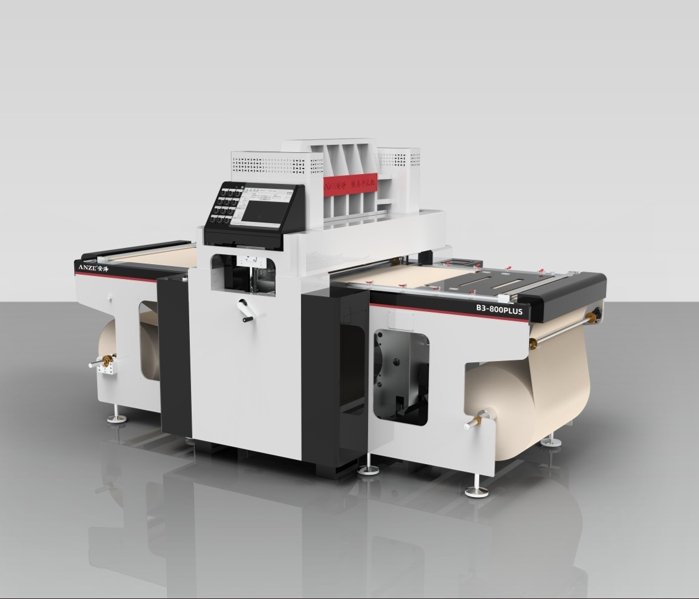
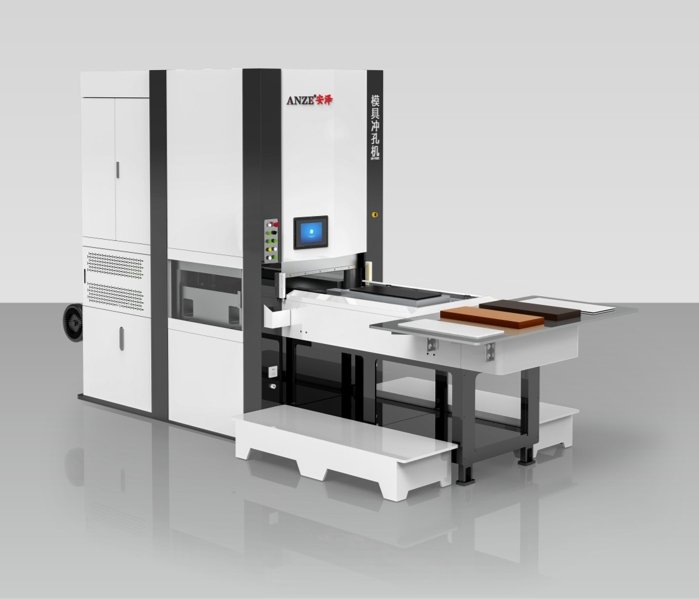
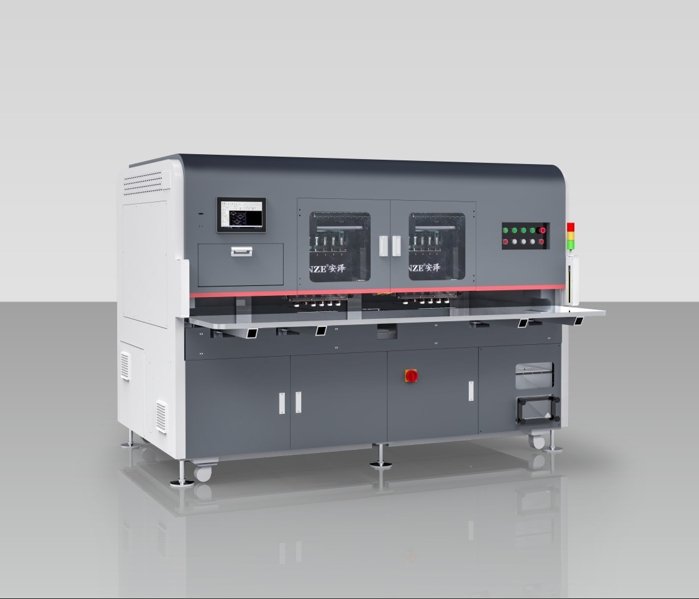
For more than 20 years, 안제 has specialized in designing and producing 가죽 천공기 for diverse industries — from car interiors and footwear to furniture and luggage. With over 20 popular machine models, Anze has become a global leader in precision perforation systems, enabling manufacturers to produce elegant, breathable, and acoustically optimized leather for high-end automotive door panels.

1. Understanding Automotive Door Leather Perforation
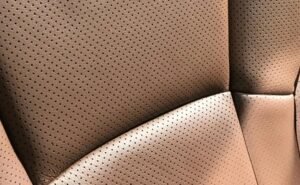
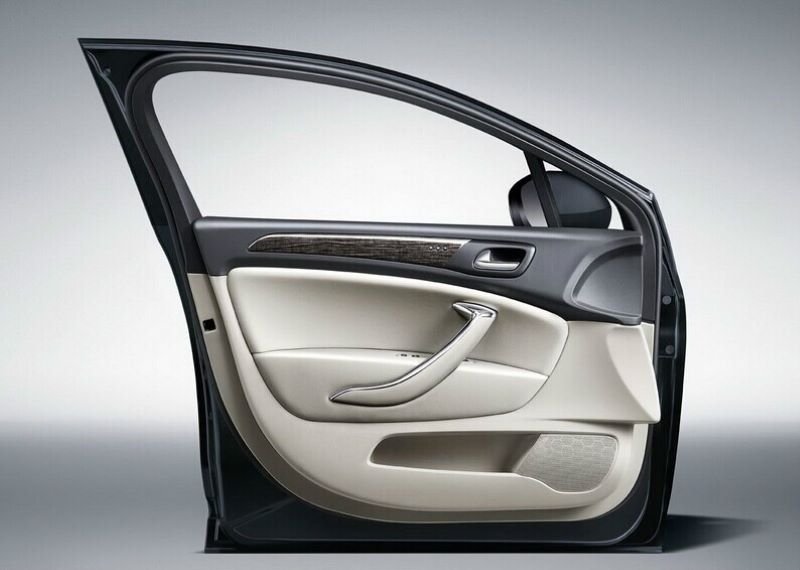
Leather perforation refers to the process of creating precisely spaced holes or micro-patterns on leather surfaces. In car door applications, it serves both functional and aesthetic purposes.
1.1 Functional Benefits
Ventilation and Moisture Control: Micro-perforations allow air circulation, improving comfort and durability in enclosed door environments.
Acoustic Absorption: Perforated leather helps absorb mid-frequency sounds, enhancing cabin quietness.
Weight Reduction: Controlled removal of material slightly reduces panel weight without compromising strength.
1.2 Aesthetic Enhancement
A 가죽 천공기 can generate customizable hole patterns — from linear arrays to geometric or brand-specific designs — elevating the perceived luxury of automotive interiors.
1.3 Performance Requirements
Automotive door leather must maintain:
Dimensional stability under temperature variation
Uniform surface finish despite pattern complexity
Tensile integrity despite material removal
Meeting these criteria requires an advanced 가죽 천공기 capable of fine control and repeatable precision.
2. Structure and Working Principle of a Leather Perforation Machine
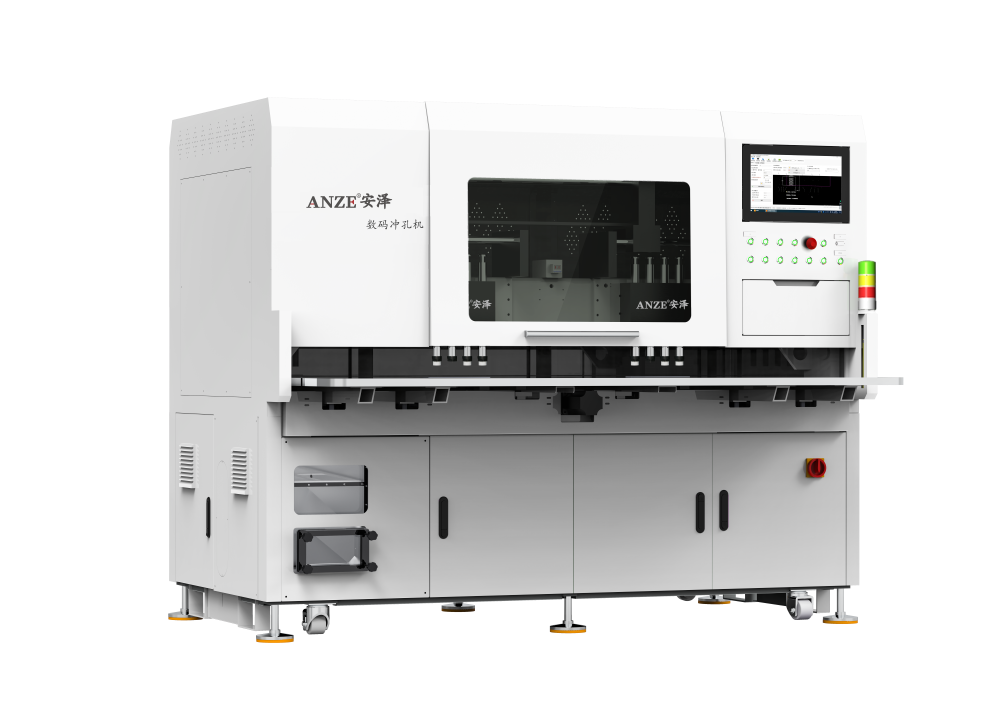
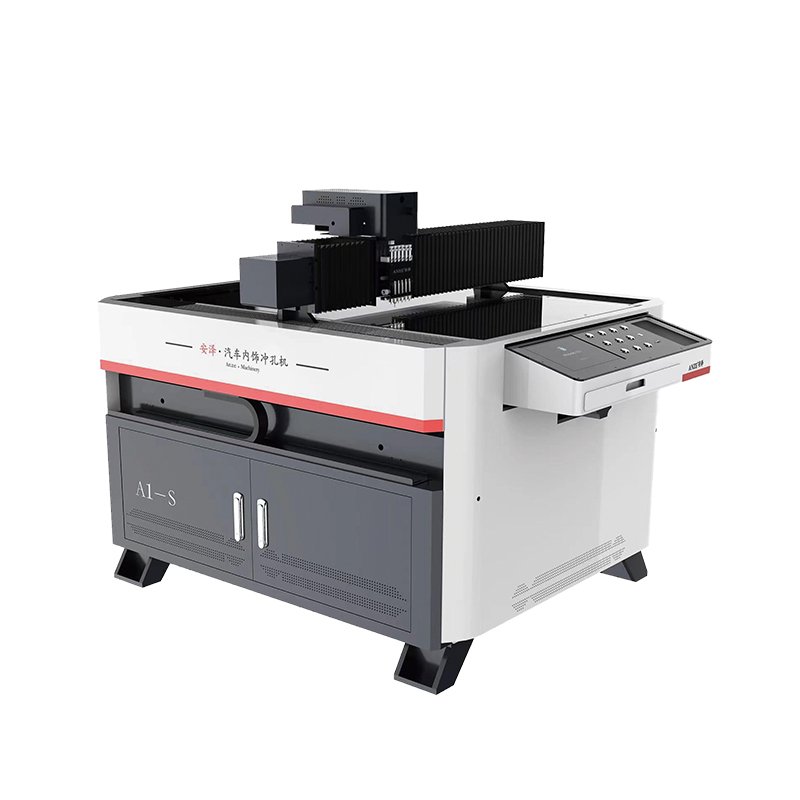
A 가죽 천공기 operates by driving perforating tools — mechanical punches, rotary dies, or laser beams — through the surface of the material under programmed control.
2.1 Key Components
| Component | Function |
|---|---|
| Feeding system | Guides and stabilizes the leather sheet. |
| Punching or laser unit | Generates perforations with precise depth and spacing. |
| Die assembly | Defines hole diameter and pattern geometry. |
| Servo control system | Regulates tool movement and synchronization. |
| Cooling/vacuum system | Removes debris and maintains clean surfaces. |
| Human-machine interface (HMI) | Enables operators to configure perforation parameters and monitor performance. |
Anze’s CNC-controlled leather perforation machines incorporate real-time feedback loops and digital servo motors to achieve ±0.1 mm positioning accuracy, ensuring uniform perforation patterns across large panel surfaces.
3. Categories of Leather Perforation Machines for Automotive Applications
3.1 Mechanical Punch Perforation Machine
Uses precision steel punches to create holes. Best suited for natural leather 그리고 medium-density synthetic leather. Provides consistent results at high throughput.
3.2 Rotary Die Perforation Machine
Employs cylindrical dies for continuous processing of long leather rolls. Common in high-volume production of synthetic door covering materials.
3.3 Laser Leather Perforation Machine
Uses CO₂ or fiber lasers for non-contact perforation, ideal for micro-perforation 그리고 decorative precision patterns. Offers unmatched flexibility in pattern customization.
3.4 CNC Servo Perforation Machine
Integrates computer control for multi-axis precision and dynamic pattern variation. Preferred for high-end car interiors requiring complex designs and variable densities.
4. Techniques in Automotive Door Leather Perforation
Each 가죽 천공기 supports different techniques depending on the end-use requirements.
4.1 Uniform Micro-Perforation
Creates small, evenly distributed holes (0.5–1.0 mm) that maintain leather strength while improving breathability and sound absorption.
4.2 Gradient Perforation
Uses variable hole densities across the panel to balance visual appeal with functional airflow. Common in door trims adjacent to speaker zones.
4.3 Patterned Decorative Perforation
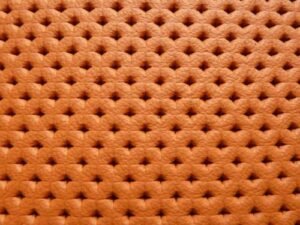
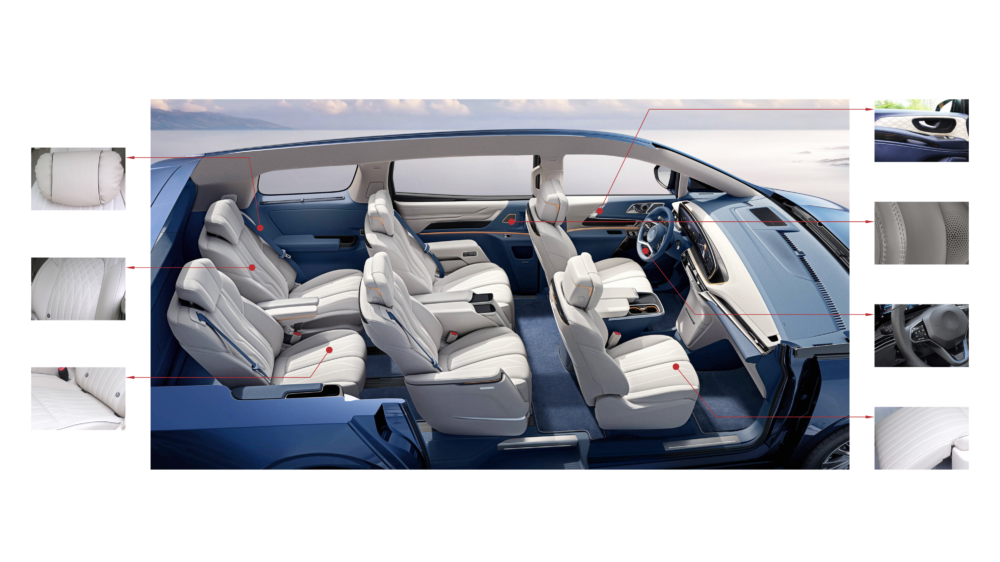
Designed for brand-specific aesthetics — hexagonal, diamond, or wave patterns — synchronized with interior stitching.
4.4 Laser Fine-Cut Perforation
Enables ultra-clean edges with zero burrs, ideal for synthetic and PU-coated materials. This method uses pulsed laser energy controlled by Anze’s proprietary software.
5. Process Flow of Leather Perforation for Automotive Doors
A precise workflow ensures efficiency and quality consistency when using a 가죽 천공기.
Material Inspection – Assess thickness, surface coating, and elasticity.
Pattern Programming – Use CAD/CAM integration to define hole layout.
Machine Calibration – Adjust punch pressure, laser power, and feed rate.
Trial Run and Validation – Conduct initial samples for dimensional verification.
Continuous Production – Execute high-speed perforation with automatic alignment.
Quality Inspection – Employ vision systems or laser scanners for defect detection.
Post-Processing – Clean, condition, and stabilize leather sheets for cutting and lamination.
Anze’s machines include automatic calibration routines, reducing setup time by 40% and ensuring uniform results across multiple production shifts.
6. Key Process Parameters and Control Factors
For optimal results, the 가죽 천공기 must maintain precise control over:
| Parameter | Typical Range | Impact |
|---|---|---|
| Hole Diameter | 0.5 – 2.5 mm | Defines airflow and aesthetic density |
| Pitch (Spacing) | 1 – 5 mm | Affects texture and strength |
| Punch Pressure / Laser Power | Material-dependent | Influences edge quality |
| Feed Rate | 0.2 – 1.5 m/s | Determines productivity |
| Alignment Tolerance | ±0.1 mm | Prevents pattern distortion |
| Temperature Control | 20–25°C | Prevents leather warping |
Real-time feedback systems in Anze’s 가죽 천공기 allow automatic compensation for temperature and tension fluctuations, maintaining stable hole geometry even under continuous operation.
7. Troubleshooting and Optimization Techniques
7.1 Common Defects
Edge Burrs: Caused by blunt tools or excessive pressure.
Misaligned Patterns: Result of feed slippage or software offset errors.
Surface Burn Marks: Indicate improper laser focus or energy density.
Irregular Hole Sizes: Due to inconsistent material elasticity or punch wear.
7.2 Optimization Strategies
Regular toolhead maintenance to sustain sharpness and dimensional accuracy.
Implement AI-based defect monitoring for real-time correction.
Use tension sensors to maintain constant material feed.
Calibrate laser optics periodically for consistent beam intensity.
Anze’s latest control algorithms integrate machine learning-based quality correction, enabling automatic detection and adjustment of pattern deviations.
8. Safety and Maintenance Guidelines
Operating a 가죽 천공기 requires strict adherence to safety and maintenance procedures:
Ensure proper grounding 그리고 static protection during leather handling.
Regularly inspect air filters and vacuum systems to remove debris.
Maintain lubrication schedules for mechanical punches.
Keep laser optics clean using non-abrasive materials.
Schedule preventive maintenance every 1,000 operational hours.
Anze’s smart maintenance interface provides real-time maintenance alerts and digital logs for predictive servicing, reducing downtime by 25%.
9. Case Study: Anze’s Perforation Solution for Automotive Door Leather
9.1 Project Overview
A Tier-1 automotive supplier required high-precision perforation on synthetic leather door trims for a premium electric vehicle series.
9.2 Challenges
Complex curved patterns following door contour lines
Required hole diameter: 0.8 ± 0.05 mm
Must achieve 500,000 holes per sheet with <1% defect rate
9.3 Anze’s Solution
Anze deployed its CNC Leather Perforation Machine Model AZ-LP900, featuring:
Servo-driven feeding with automatic curvature compensation
Dynamic pattern mapping using optical position tracking
Adaptive laser pulse modulation for PU-coated materials
9.4 Results
Accuracy: ±0.05 mm across 1.2 m panels
Defect rate: <0.5%
Production efficiency increased by 38%
Tool lifespan extended by 20%
The project established a new benchmark for precision automotive door leather perforation.
10. Comparison with Other Global Perforation Technologies
| 제조업체 | Core Technology | Primary Application |
|---|---|---|
| Trumpf (Germany) | High-power laser systems | Metal processing |
| Amada (Japan) | CNC punching machines | Sheet metal |
| Bobst (Switzerland) | Rotary die perforation | Packaging materials |
| Anze (China) | Leather perforation machines | Automotive & soft materials |
Unlike competitors focusing on hard materials, Anze’s 가죽 천공기 are optimized for soft substrates, featuring adaptive pressure control and high-precision servo guidance designed specifically for automotive interiors.
11. Quality Assurance and Certification
Anze’s 가죽 천공기 comply with major industry standards:
ISO 9001 for quality management
CE and UL safety compliance
IATF 16949 compatibility for automotive suppliers
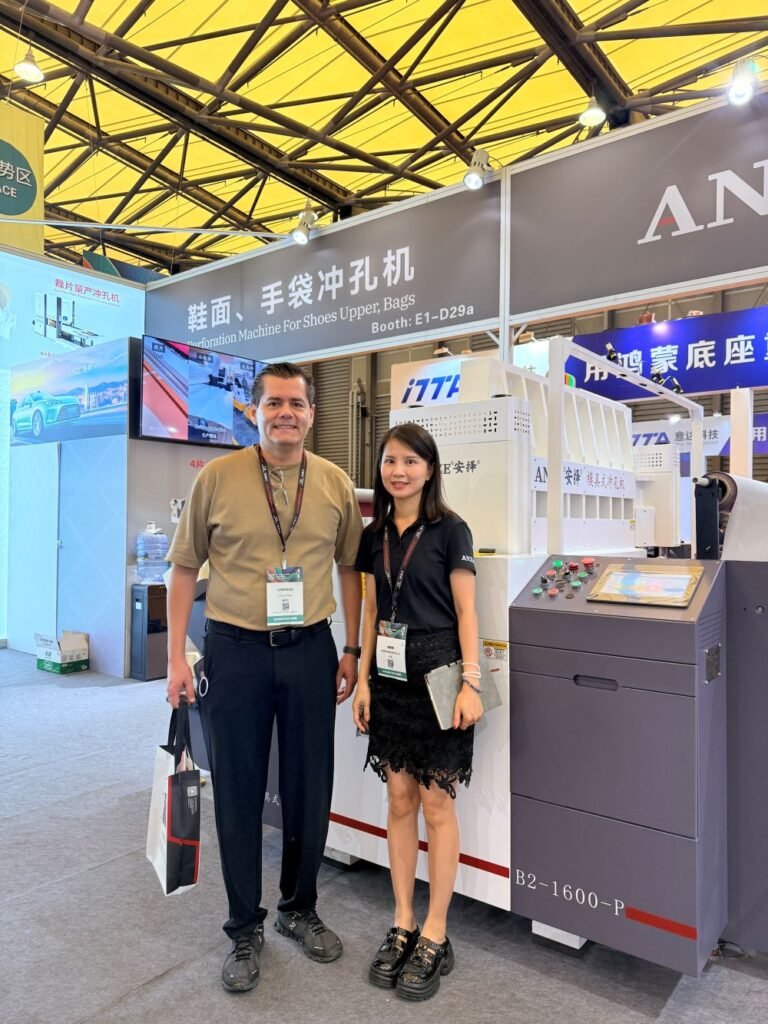
Each machine undergoes over 200 performance tests before shipment, including continuous endurance runs exceeding 8 hours at 90% duty cycle.
12. Sustainability and Environmental Responsibility
Modern leather perforation aligns with environmental manufacturing principles.
Anze’s systems promote:
Energy-efficient servo drives reducing power consumption by 15%.
Smart material nesting algorithms minimizing leather waste.
Low-noise operation improving workplace conditions.
Support for eco-leather and recycled composites, advancing sustainability in automotive interiors.
13. Future Trends in Leather Perforation Technology
13.1 Integration with AI and IoT
Next-generation 가죽 천공기 will integrate predictive maintenance and adaptive quality control based on machine learning.
13.2 Multi-Material Compatibility
Future systems will process hybrid materials, including bio-based vegan leather 그리고 recyclable composites.
13.3 Automated Pattern Customization
Automotive brands will leverage digital libraries to create brand-specific perforation signatures instantly, enhancing personalization.
Anze’s R&D division is actively developing smart interconnected perforation systems compatible with Industry 4.0 ecosystems.
Precision, Performance, and Partnership
In the competitive world of automotive interiors, precision leather perforation defines craftsmanship and innovation. Achieving flawless perforation patterns on door panels requires a blend of advanced engineering, material science, and automated precision.
With over two decades of expertise, 안제 continues to lead the market with its high-performance 가죽 천공기, providing manufacturers with:
Exceptional accuracy
Custom pattern flexibility
Reliable operation
Sustainable performance
As the industry moves toward intelligent manufacturing, Anze’s mission remains clear: to deliver cutting-edge leather perforation solutions that empower automotive brands to achieve superior design, comfort, and durability.
당사는 풍부한 경험과 숙련된 기술을 갖춘 팀을 바탕으로 다양한 소재의 특성과 가공 기술을 깊이 이해하고 있으며, 고객의 요구 사항에 맞춰 가죽 타공기를 맞춤 제작해 드립니다. 문의 사항이 있으시면 언제든지 연락해 주십시오! WhatsApp: +86 180 0298 0031
장비의 설치 및 유지보수 방법은 무엇입니까?
일부 모델은 공장에서 조립된 상태로 출고됩니다. 대형 장비는 여러 부품으로 나누어 포장되며 설치 설명서가 함께 제공됩니다. 모든 장비에는 중국어 및 영어로 된 사용자 설명서가 포함되어 있습니다.
고객이 Anze 공장으로 인원을 보내 교육을 받게 하거나, 당사가 기술 전문가를 파견하여 현장 교육을 제공할 수 있습니다.
장비의 작업 환경 요건은 무엇입니까?
그만큼 CNC 가죽 펀칭기 기계는 안정적인 테이블 위에 고정해야 하며, 먼지, 정전기, 습기 및 칩과의 접촉으로 인한 부품 고장을 방지하기 위해 주변 환경을 깨끗하고 정돈되게 유지해야 합니다.
판매 후 서비스(A/S) 정책은 어떻게 되나요?
당사는 24시간 온라인 서비스를 제공하는 경험 많은 애프터서비스 팀과 완벽한 애프터서비스 시스템을 갖추고 있습니다. 공장 교육 지원, 해외 기계 서비스 지원을 위한 비디오 기술 지원, 온라인 지원, 엔지니어 지원 등을 제공합니다.
즉석에서 초대를 수락하실 수 있나요?
물론 저희 회사를 방문하셔서 직접 만나 뵙고 상호 사업 발전을 도모하시는 것을 환영합니다.
배송 기간은 얼마나 걸리나요?
제작 기간은 주문 수량 및 맞춤 제작 여부에 따라 다르며, 일반적으로 7~10 영업일이 소요됩니다. 가죽 펀칭기 맞춤 제작 주문의 경우 1~2개월이 소요됩니다.