










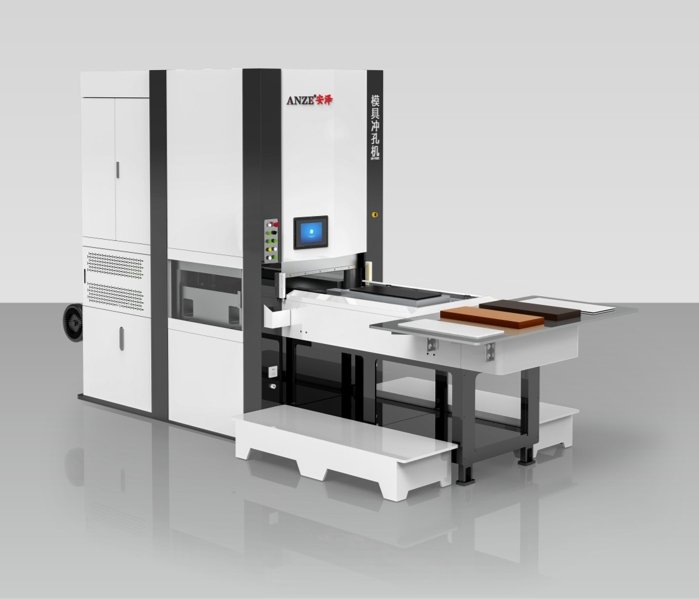

How Anze Smart Vision Inspection Technology of Leather perforating machine Helps Leather Processing Factories Achieve Real-Time Quality Control
In the leather processing industry, perforation quality is one of the most important factors determining the final appearance, functionality, and value of leather products.
Whether the application is automotive seat covers, luxury furniture, leather handbags, sports equipment, or industrial upholstery, customers expect perforated leather to have:
- Accurate hole diameter
- Consistent hole spacing
- Smooth hole edges
- Uniform perforation patterns
- No missing holes or deformation
For manufacturers using a آلة تثقيب الجلد, quality inspection is a critical production step.
Traditionally, many factories rely on manual inspection. Experienced quality inspectors check perforated leather by measuring:
- Hole diameter
- Hole distance
- Pattern alignment
- Edge smoothness
- Surface defects
Although skilled inspectors can identify many problems, manual inspection has several limitations:
- It requires experienced workers
- Inspection speed depends on human ability
- Results may vary between inspectors
- It is difficult to inspect every product continuously
- Small defects may be missed during high-speed production
As production demand increases, especially in automotive leather processing and large-scale upholstery manufacturing, companies need faster and more reliable inspection solutions.
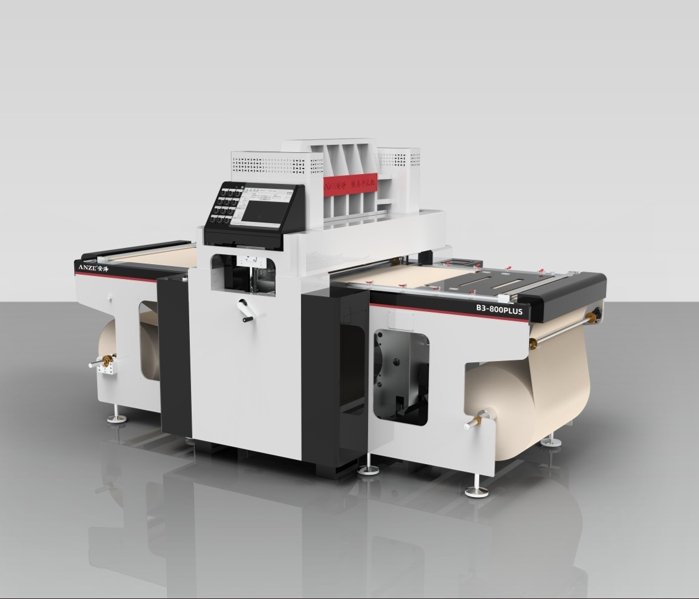
To solve this challenge, Anze engineers have developed advanced آلة تثقيب الجلد solutions integrated with intelligent vision inspection systems.
By combining automated perforation technology with AI-based visual inspection, manufacturers can achieve:
- Real-time defect detection
- Automatic quality evaluation
- Higher inspection efficiency
- Reduced dependence on manual inspection
- More stable production quality
كمحترف مصنع آلات تثقيب الجلود with more than 20 years of experience, Anze continues to develop intelligent solutions that help global customers improve manufacturing efficiency and product quality.
This article explores how AI vision systems can be integrated into آلة تثقيب الجلد production lines and how intelligent inspection technology is transforming leather perforation quality control.
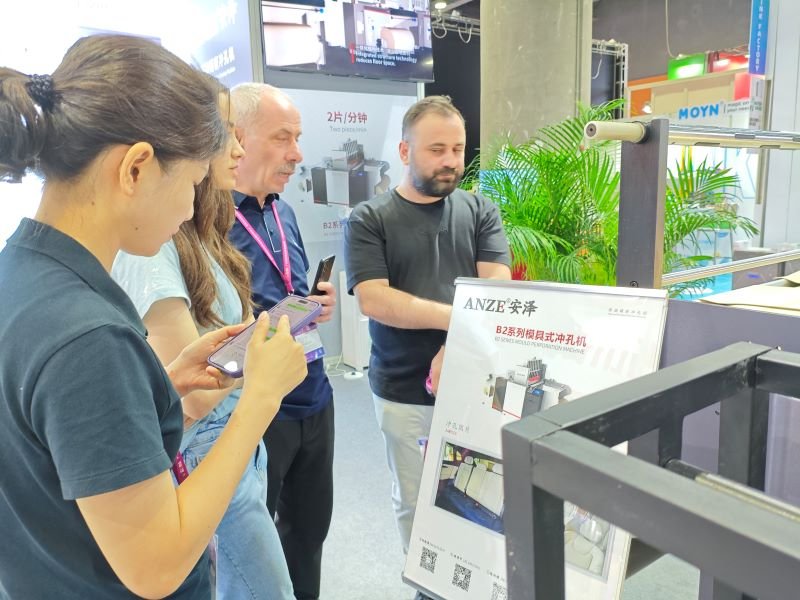
Why Quality Inspection Is Critical for Leather Perforating Machine Production
A modern آلة تثقيب الجلد can produce thousands of holes per minute depending on the machine type, material, and production requirements.
During high-speed production, even a small deviation can affect the final product.
Common defects include:
- Incorrect hole diameter
- Uneven hole spacing
- Missing perforations
- Irregular hole shapes
- Torn leather edges
- Burrs around holes
- Pattern misalignment
For industries such as automotive interiors, these defects can cause:
- Material rejection
- Production delays
- Increased costs
- Customer complaints
Therefore, accurate inspection is not only a quality control process—it is an essential part of modern leather manufacturing.
Traditional Manual Inspection Methods for Leather Perforation Quality
For many years, leather factories have depended on skilled inspectors.
The inspection process usually includes:
Checking Hole Diameter
Inspectors measure whether each perforation meets design requirements.
For example:
- 1.0 mm holes
- 1.5 mm holes
- 2.0 mm holes
depending on the product design.
Checking Hole Spacing
The distance between holes is critical for appearance.
Incorrect spacing can create:
- Uneven patterns
- Visual defects
- Poor ventilation performance
Checking Hole Edge Quality
The inspector evaluates whether holes have:
- Smooth edges
- No tearing
- No excessive burrs
Checking Overall Pattern Consistency
Especially for automotive seat covers, the entire perforation pattern must remain symmetrical.
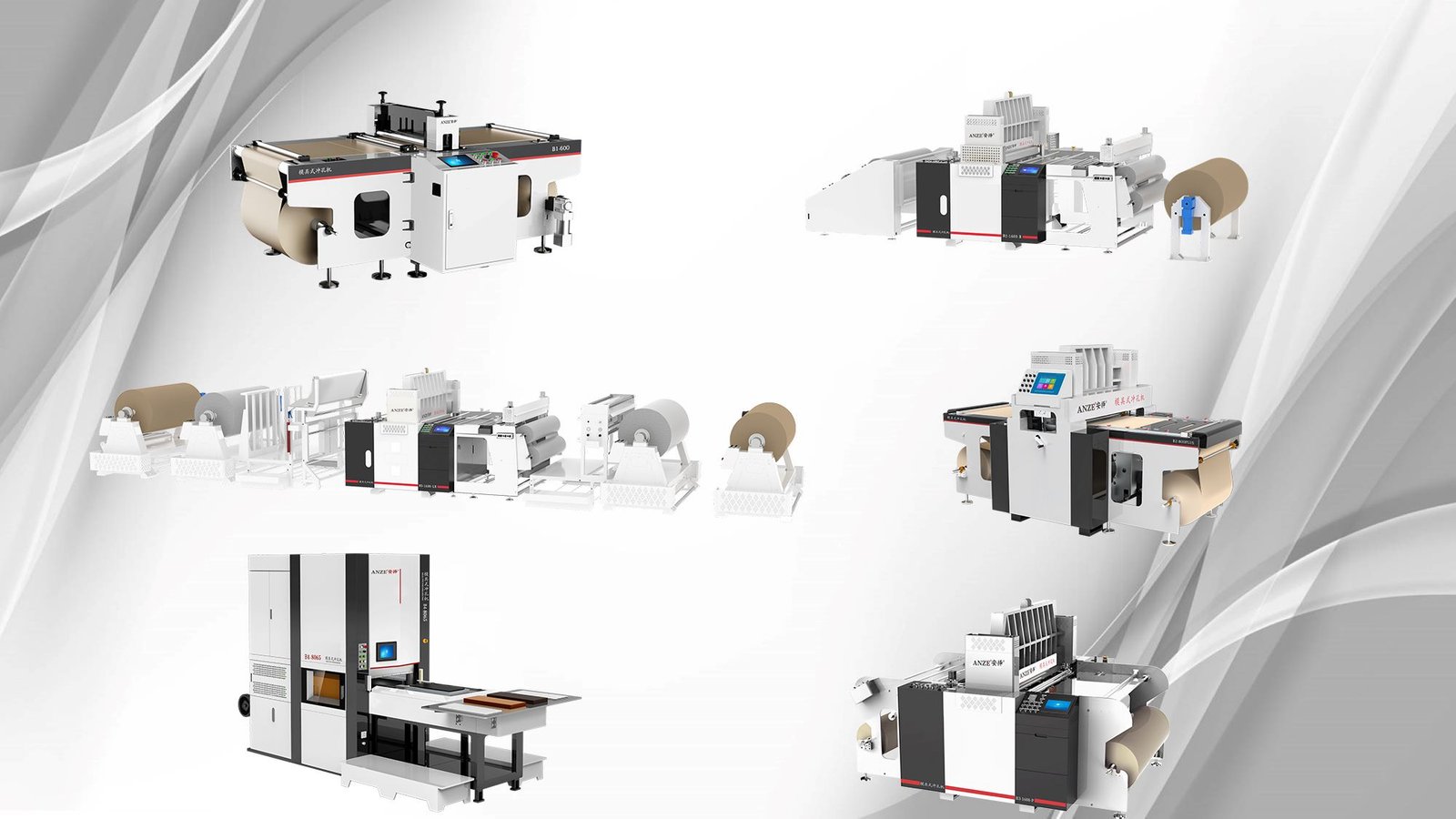
Limitations of Manual Inspection in High-Speed Leather Processing
Although experienced inspectors are valuable, manual inspection cannot always meet modern production requirements.
1. Inspection Speed Limitation
A آلة تثقيب الجلد can operate continuously at high speed.
However, human inspectors cannot maintain the same inspection speed for long periods.
This creates a challenge:
Machine production speed increases, but inspection capacity does not.
2. Human Subjectivity
Different inspectors may judge defects differently.
For example:
One inspector may accept a slightly rough hole edge, while another may reject it.
AI vision systems provide more consistent evaluation standards.
3. Difficulty Detecting Small Defects
Some defects are difficult to see with the naked eye:
- Small diameter deviations
- Minor spacing errors
- Tiny edge damage
High-resolution cameras can detect these details more accurately.
What Is an AI Vision Inspection System for Leather Perforating Machine?
An AI vision inspection system is an intelligent quality control technology that uses:
- Industrial cameras
- Image processing software
- Artificial intelligence algorithms
- Machine learning models
to automatically analyze perforated leather.
The system captures images of the leather surface and compares actual perforation results with programmed standards.
It can evaluate:
- Hole position
- Hole size
- Hole spacing
- Pattern accuracy
- Edge quality
in real time.
How Anze Integrates Vision Systems into Leather Perforating Machine Solutions
Anze engineers combine advanced mechanical technology with intelligent inspection systems.
The complete process includes:
Step 1: High-Speed Leather Perforation
إن آلة تثقيب الجلد performs punching according to the programmed pattern.
Step 2: Automatic Image Capture
After perforation, industrial cameras capture detailed images of the leather surface.
The system records:
- Hole locations
- Hole shapes
- Surface conditions
Step 3: AI Image Analysis
The intelligent software analyzes the images automatically.
The system checks whether:
- Hole positions match the design
- Diameter is within tolerance
- Spacing is correct
- Defects exist
Step 4: Real-Time Quality Feedback
If a defect is detected, the system can:
- Send an alarm
- Mark defective areas
- Stop production if necessary
- Adjust machine parameters
This creates a closed-loop quality control process.
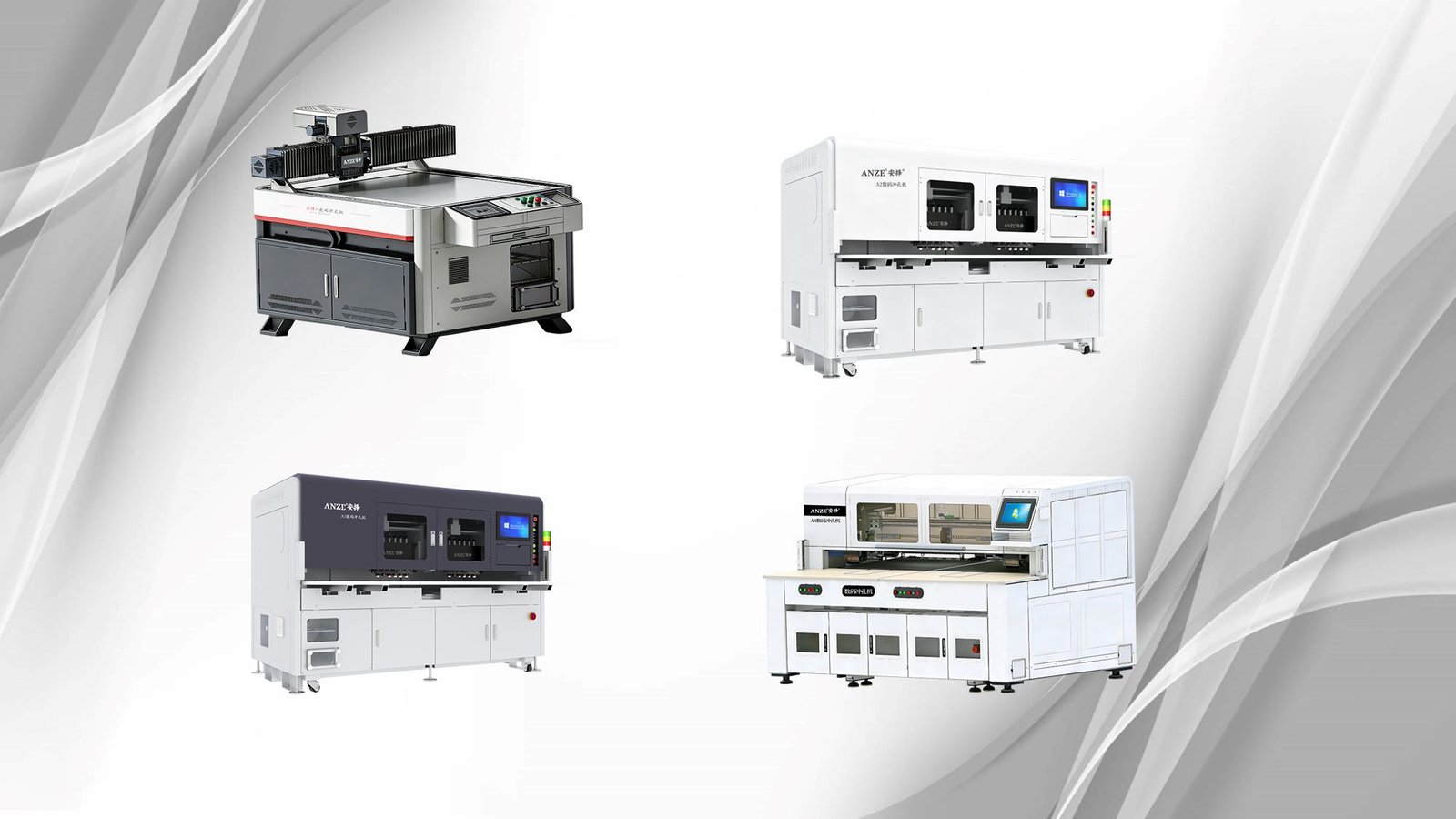
Key Advantages of AI Vision Inspection for Leather Perforating Machine Systems
1. Real-Time Defect Detection
One of the biggest advantages is immediate inspection.
Instead of discovering defects after production, factories can identify problems during operation.
This helps reduce:
- نفايات المواد
- Production losses
- Customer complaints
2. Higher Inspection Accuracy
AI vision systems can measure:
- Micron-level differences
- Hole position deviations
- Pattern inconsistencies
This is especially valuable for premium applications.
3. Reduced Labor Requirements
Instead of relying entirely on manual inspection, factories can use automated systems to support quality control.
Workers can focus on:
- Machine operation
- Production management
- تحسين العمليات
4. Continuous 24/7 Inspection Capability
Unlike human inspection, intelligent vision systems can operate continuously.
This is ideal for factories running:
- Multiple shifts
- High-volume production
- Automotive supply projects
Applications of AI Vision Leather Perforating Machine Technology
Automotive Seat Manufacturing
Automotive interiors have extremely strict appearance requirements.
AI inspection helps manufacturers produce:
- Perforated leather seats
- Ventilated seat panels
- Luxury interior components
with consistent quality.
Leather Furniture Production
Luxury furniture manufacturers require:
- Beautiful patterns
- Consistent hole spacing
- Premium appearance
Vision inspection helps maintain product standards.
Leather Processing Factories
Large leather processors benefit from:
- Faster inspection
- Reduced waste
- Automated quality reports
AI Vision Inspection for CNC Perforating Leather Machine Applications
A ماكينة تثقيب الجلود CNC provides excellent flexibility for customized patterns.
However, flexible production also creates higher inspection requirements.
Different orders may require:
- Different hole patterns
- Different spacing
- Different designs
AI vision systems can automatically compare actual production results with digital design files.
This makes customized leather production more reliable.
What Defects Can AI Vision Systems Detect?
Missing Holes
The system identifies areas where holes should exist but are absent.
Incorrect Hole Diameter
The system measures actual hole size against preset specifications.
Uneven Hole Spacing
The software detects distance variations between perforations.
Hole Shape Problems
It can identify:
- Deformed holes
- Irregular edges
- Damaged areas
Pattern Alignment Errors
Especially important for:
- Automotive seat covers
- Luxury furniture panels
How AI Vision Technology Improves Factory Efficiency
Reduced Quality Inspection Time
Traditional inspection requires workers to manually measure samples.
Automated inspection can evaluate products immediately after production.
Lower Material Waste
Early defect detection prevents large quantities of defective products.
Better Production Data Management
Smart systems can collect:
- Defect statistics
- Production quality data
- Machine performance information
This supports continuous improvement.
Challenges When Implementing AI Vision Systems
Although intelligent inspection provides many benefits, successful implementation requires professional engineering.
Important factors include:
Proper Camera Selection
Different leather materials require different imaging solutions.
Considerations include:
- Leather color
- Surface texture
- Reflection characteristics
Lighting System Optimization
Leather surfaces can reflect light differently.
Proper lighting ensures accurate image analysis.
Software Training
AI systems require accurate defect recognition models.
Anze engineers optimize systems according to customer applications.
Why Choose Anze as Your Leather Perforation Machine Manufacturer?
With more than 20 years of experience, Anze understands both machine manufacturing and real production challenges.
Our advantages include:
Professional Engineering Team
Anze provides solutions for:
- Mechanical design
- CNC control
- Automation integration
- Vision inspection systems
More Than 20 Self-Developed Leather Perforation Machines
Our equipment serves:
- Automotive suppliers
- Leather factories
- Furniture manufacturers
- Industrial material processors
Complete Intelligent Manufacturing Solutions
تقدم أنزي ما يلي:
- Leather perforating machine systems
- CNC perforating leather machine solutions
- AI inspection integration
- Production optimization consulting
Future Development of Intelligent Leather Perforation Technology
The future of leather processing will move toward:
- Smart factories
- Automated inspection
- AI quality control
- Data-driven manufacturing
The combination of آلة تثقيب الجلد technology and artificial intelligence will help manufacturers achieve higher efficiency and better quality.
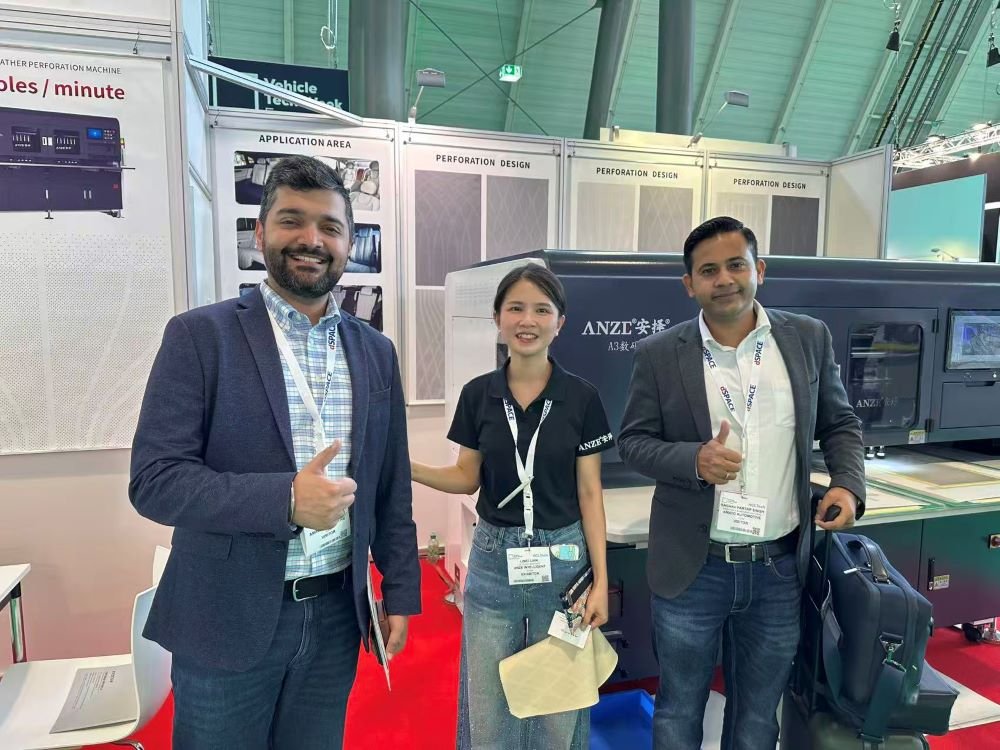
AI vision inspection systems into leather perforating machine solutions
Quality inspection is a critical challenge for modern leather processing factories.
Traditional manual inspection requires experience and time, but it cannot always keep pace with high-speed automated production.
By integrating AI vision inspection systems into آلة تثقيب الجلد solutions, manufacturers can achieve:
- Real-time defect detection
- Higher inspection accuracy
- Reduced labor dependence
- Lower material waste
- More stable production quality
As an experienced مصنع آلات تثقيب الجلود, Anze continues developing intelligent solutions that combine precision machinery, automation technology, and smart inspection systems.
Through advanced ماكينة تثقيب الجلود CNC technology and AI-based quality control, Anze helps global leather manufacturers build more efficient, reliable, and intelligent production lines.
بفضل فريقنا الذي يتمتع بالخبرة والمهارة، نحن على دراية تامة بخصائص مختلف المواد وتقنيات المعالجة، ولدينا القدرة على تخصيص آلات ثقب الجلود وفقاً لاحتياجات العملاء. لا تترددوا في التواصل معنا لأي استفسار! واتساب: 0031 0298 180 86+
كيف يتم تركيب الجهاز وصيانته؟
يتم شحن بعض الموديلات مجمعة في المصنع. يتم تغليف المعدات الكبيرة في عدة أجزاء ويتم توفير دليل التركيب. جميع المعدات مزودة بأدلة استخدام باللغتين الصينية والإنجليزية.
يمكن للعملاء إرسال شخص ما إلى مصنع أنزي للتعلم أو نرسل خبراء تقنيين لتوفير التدريب في الموقع
ما هي متطلبات بيئة عمل الماكينة؟
إن ماكينة تثقيب الجلود باستخدام الحاسب الآلي يجب أن تكون مثبتة على طاولة ثابتة ويجب الحفاظ على البيئة نظيفة ومرتبة لتجنب ملامسة الغبار والكهرباء الساكنة والرطوبة والرقائق لتسبب تعطل الأجزاء.
كيف هي سياسات ما بعد البيع لديكم؟
لدينا فريق خدمة ما بعد البيع من ذوي الخبرة على مدار 24 ساعة عبر الإنترنت ونظام كامل لما بعد البيع. دعم التدريب في المصنع، دعم التدريب في المصنع، فيديو فني متاح لخدمة الآلات في الخارج.
هل أنت متاح للدعوة الفورية؟
بالطبع نحن نرحب بزيارة شركتنا والتواصل وجهاً لوجه لتعزيز الأعمال المتبادلة.
ما هو وقت التسليم؟
تختلف المهلة الزمنية حسب كمية الطلب والتخصيص، وتتراوح عادةً من 7 إلى 10 أيام عمل، وإذا كان طلب ماكينة تثقيب الجلود مخصصة، فيستغرق الأمر من شهر إلى شهرين.