

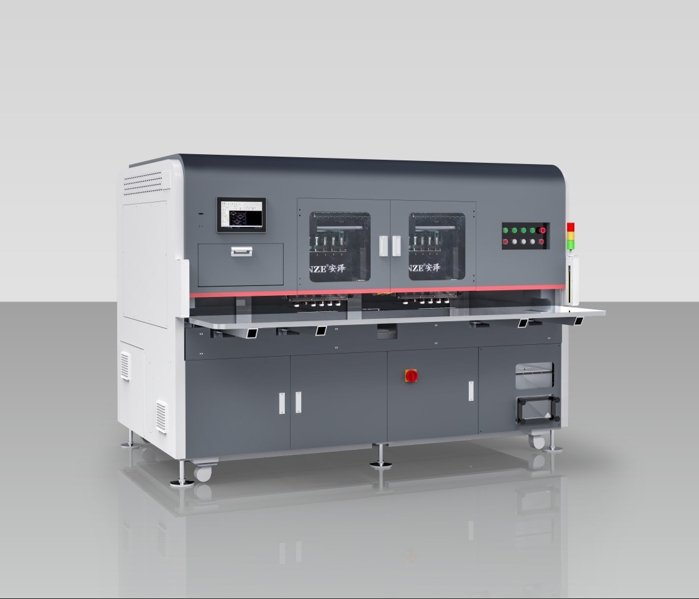
The automotive industry has increasingly demanding requirements for leather and synthetic leather interior components. Modern vehicle interiors are no longer judged only by appearance. Automotive leather must often satisfy requirements for comfort, breathability, acoustic performance, visual consistency, durability, dimensional stability, and production efficiency. This is why perforating automotive leather has become an important manufacturing process in automotive interior production.
Perforating automotive leather creates precisely controlled holes, patterns, ventilation zones, decorative structures, and functional perforation areas on leather or synthetic leather. Depending on the application, the perforation may be used to improve seat ventilation, create invisible airbag deployment zones, enhance acoustic performance, improve surface appearance, or provide a distinctive premium interior design.
However, automotive leather perforation is significantly more demanding than ordinary leather punching. Automotive components can have strict requirements for hole diameter, hole spacing, pattern accuracy, edge quality, material utilization, production speed, and repeatability.
For manufacturers producing automotive seat covers, door panels, dashboards, steering wheel wraps, headrests, armrests, and other interior components, choosing the right leather CNC perforation machine is therefore critical.
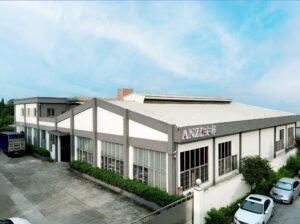
Anze is a professional leather perforation equipment manufacturer with approximately 20 years of experience in designing and manufacturing leather perforation equipment. Anze has independently developed more than 20 leather perforation machine models and has accumulated extensive technical experience in automotive interiors, furniture, sports protective equipment, footwear, bags, and other industries.
More importantly, Anze does not only supply machines. The company also provides leather perforation design solutions, helping customers select appropriate perforation technologies, machine configurations, patterns, and production methods for different applications.
This article explains how to solve different automotive leather perforation requirements and why Anze can be considered a first-choice supplier for automotive leather perforation equipment.

What Is Perforating Automotive Leather?
Perforating automotive leather is the controlled process of creating holes or specific perforation patterns in leather, synthetic leather, PU leather, PVC leather, microfiber, and other automotive upholstery materials.
The holes can be arranged according to different designs, including:
- Round holes
- Square holes
- Oval holes
- Slotted holes
- Micro-perforation
- Linear perforation
- Decorative patterns
- Ventilation patterns
- Acoustic perforation patterns
- Functional airbag perforation zones
- Customized geometric patterns
The basic objective is not simply to make holes.
The real objective of automotive leather perforation is to create a repeatable and engineered hole pattern without damaging the material or compromising the structural requirements of the finished component.
For example, perforated leather used for ventilated car seats needs enough open area to allow air to pass through. At the same time, the holes must be evenly distributed and visually consistent.
A perforation pattern on a steering wheel may require different hole dimensions and spacing because the material is wrapped around a curved structure and must maintain both appearance and durability.
An automotive door panel may require a decorative or acoustic perforation pattern rather than maximum ventilation.
Therefore, perforating automotive leather is an application-specific manufacturing process, not a one-size-fits-all punching operation.
Why Perforating Automotive Leather Requires Specialized Equipment
Automotive leather components are often produced in large quantities, while customers expect extremely consistent quality from the first part to the last part.
A production line may need to process thousands or even millions of perforated components while maintaining consistent hole geometry and pattern positioning.
Several factors make automotive leather perforation challenging.
- Different automotive components require different patterns
Seat cushions, seat backs, headrests, door panels, dashboards, and steering wheels rarely use exactly the same perforation pattern.
A production machine therefore needs sufficient flexibility to handle multiple designs.
- Leather is a flexible material
Unlike rigid metal or plastic sheets, leather can stretch, compress, wrinkle, or move during processing.
If the material is not properly positioned and controlled, the actual hole spacing can differ from the programmed pattern.
- Automotive production requires repeatability
A premium automotive interior must maintain visual consistency.
If one section has slightly different hole spacing from another section, the difference may become immediately visible.
- High-speed production creates additional challenges
Increasing punching speed can increase vibration, heat, mechanical wear, material movement, and control errors.
A machine designed for laboratory samples may therefore not be suitable for continuous automotive mass production.
- Different materials behave differently
Automotive interiors can use:
- Genuine leather
- PU leather
- PVC synthetic leather
- Microfiber leather
- Composite materials
- Laminated leather
- Leather with foam backing
- Multi-layer upholstery materials
Each material may require different processing parameters.
This is why selecting a professional leather perforation machine manufacturer is more important than simply selecting a machine based on maximum punching speed.
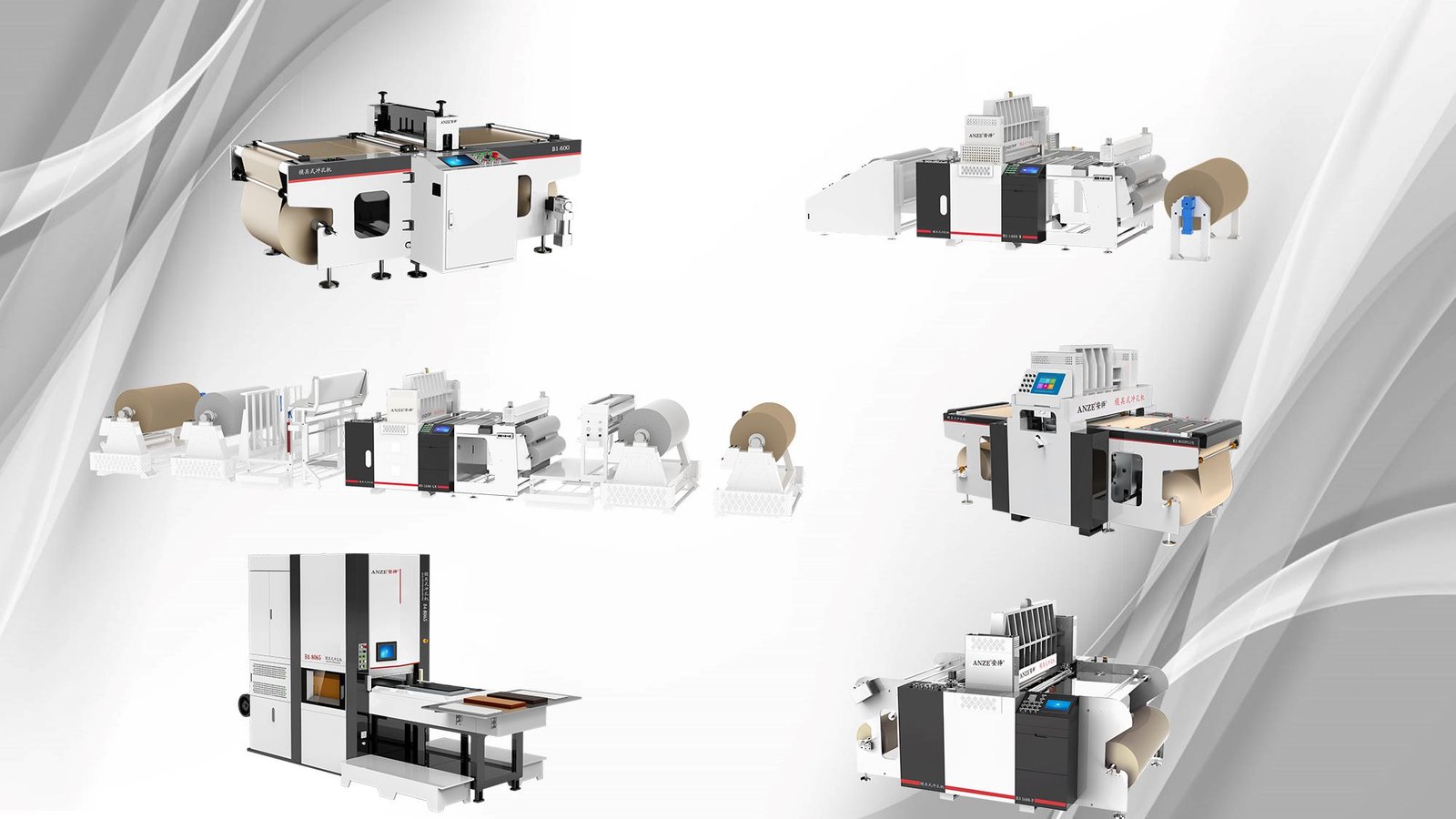
Perforating Automotive Leather for Car Seats
Car seats are one of the most important applications for perforating automotive leather.
Perforated leather is commonly associated with premium automotive seats because the holes can improve air permeability and support seat ventilation systems while also creating a distinctive visual appearance.
Automotive seat leather can include:
- Seat cushion covers
- Seat back covers
- Seat side panels
- Headrest covers
- Ventilation zones
- Decorative perforation zones
- Functional perforation sections
Different parts of the seat may require different perforation densities.
For example, the central seating area may use a dense and uniform perforation pattern for ventilation, while the side bolsters may remain solid to maintain strength and appearance.
This means an automotive leather perforation system must be capable of accurately controlling where holes are created.
Perforating Automotive Leather for Ventilated Seats
Ventilated seats require airflow through the upholstery.
A perforation system therefore needs to control:
- Hole diameter
- Hole spacing
- Open-area ratio
- Pattern density
- Perforation location
- Pattern transition areas
The goal is to create sufficient airflow while maintaining the mechanical integrity and visual appearance of the leather.
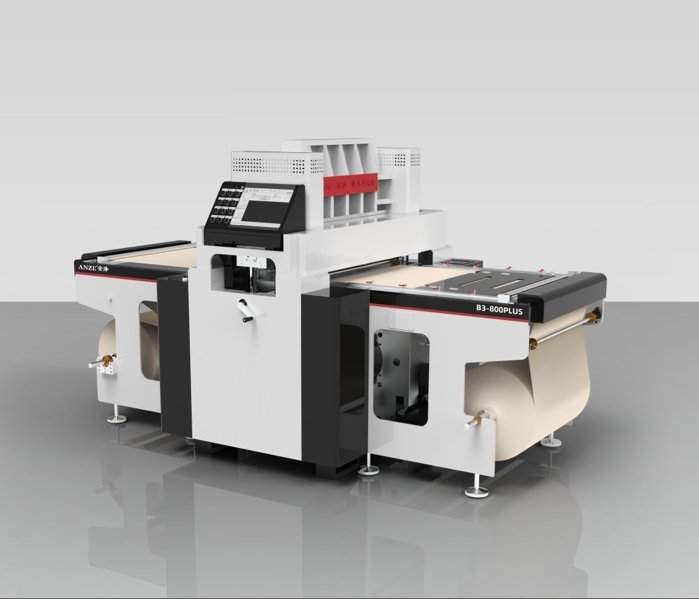
A CNC perforating leather machine is particularly suitable for applications where multiple patterns and customized ventilation zones need to be produced.
Instead of using a single fixed pattern for every component, CNC technology allows the programmed perforation design to be changed according to the seat model.
Perforating Automotive Leather for Seat Back Covers
Seat backs frequently combine functional and decorative requirements.
A perforation pattern may need to match:
- Seat centerlines
- Stitching lines
- Embossed logos
- Decorative seams
- Side bolsters
- Ventilation areas
If the perforation pattern shifts relative to the sewing line, the finished seat may look visually inconsistent.
For this reason, automotive leather perforation equipment needs accurate positioning and reliable material fixation.
The production process should consider the complete manufacturing sequence rather than perforation alone.
A professional leather CNC perforation machine can be integrated into a workflow in which CAD drawings, cutting patterns, sewing allowances, and perforation patterns are considered together.
This approach helps manufacturers reduce positioning errors between perforation and subsequent sewing or assembly processes.
Perforating Automotive Leather for Headrests
Headrests are another important application.
Because headrests are relatively compact components, their perforation patterns often need to be highly controlled.
A typical headrest may contain:
- A central perforation zone
- Symmetrical patterns
- Small-diameter holes
- Decorative perforations
- Non-perforated edges
The edge area is particularly important.
If holes are positioned too close to the cutting or sewing edge, the material may become structurally weaker or the finished appearance may become inconsistent.
Therefore, perforating automotive leather for headrests requires both pattern accuracy and appropriate edge-distance control.
CNC equipment provides an advantage when multiple headrest designs need to be produced because the perforation program can be changed without manufacturing a completely new mechanical die for every pattern.
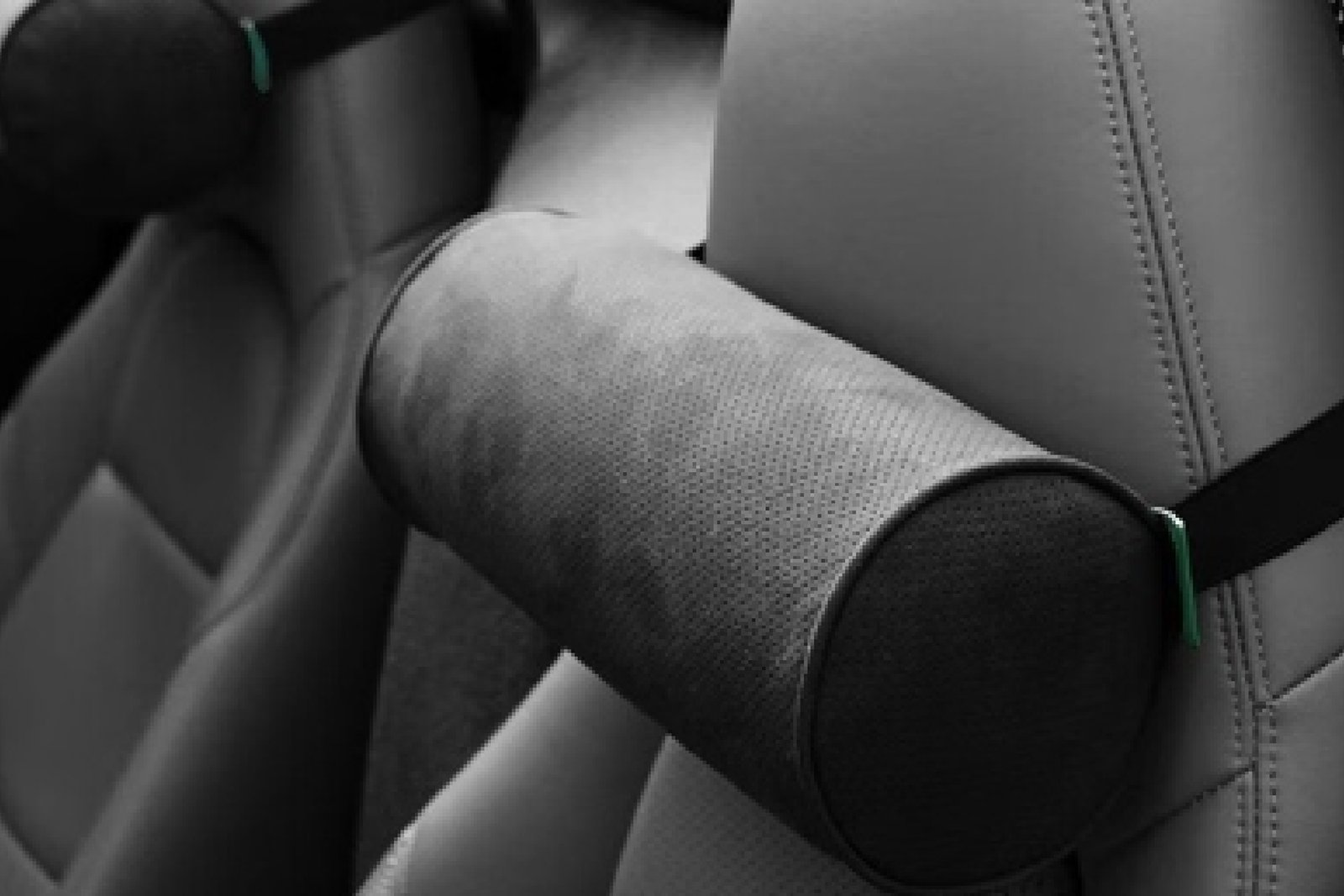
Perforating Automotive Leather for Steering Wheels
Steering wheel leather presents a different technical challenge.
Unlike a flat seat panel, steering wheel leather is often cut into complex shapes and wrapped around a three-dimensional structure.
The perforation pattern must therefore be positioned correctly relative to:
- Stitching lines
- Spoke areas
- Grip areas
- Decorative sections
- Control modules
- Airbag-related areas
A perforation pattern that looks correct on a CAD drawing can produce an undesirable result if material deformation is not considered.
This is why automotive leather perforation should be designed according to the actual finished component rather than simply applying a repetitive hole grid to the raw material.
An experienced leather perforation machine manufacturer can help evaluate the material, geometry, pattern, and production method before mass production.
Perforating Automotive Leather for Door Panels
Automotive door panels increasingly use perforated leather and synthetic leather for both visual and functional purposes.
Potential applications include:
- Door inserts
- Armrest surfaces
- Decorative panels
- Acoustic areas
- Premium interior trim
- Speaker-cover regions
In these applications, perforation may not primarily be intended for seat ventilation.
Instead, the pattern may be selected to achieve a specific visual or acoustic effect.
For example, a manufacturer may require a highly regular pattern across a large decorative panel.
The challenge is maintaining the same:
- Hole diameter
- Hole spacing
- Pattern direction
- Pattern density
- Edge position
- Repetition accuracy
across the entire component.
This is a typical application where programmable CNC perforation can provide significant flexibility.
Perforating Automotive Leather for Dashboards
Dashboard leather perforation requires careful consideration because dashboards may contain complex shapes, decorative areas, functional zones, and safety-related components.
Perforated sections may be used for:
- Decorative purposes
- Acoustic applications
- Ventilation-related structures
- Premium interior styling
- Speaker areas
The perforation program must avoid areas where holes could interfere with assembly, bonding, stitching, structural requirements, or other components.
For dashboard applications, the CNC perforation machine factory should ideally be capable of working from customer drawings and translating design requirements into a practical perforation process.
This is where Anze’s experience in customized leather perforation solutions becomes particularly valuable.
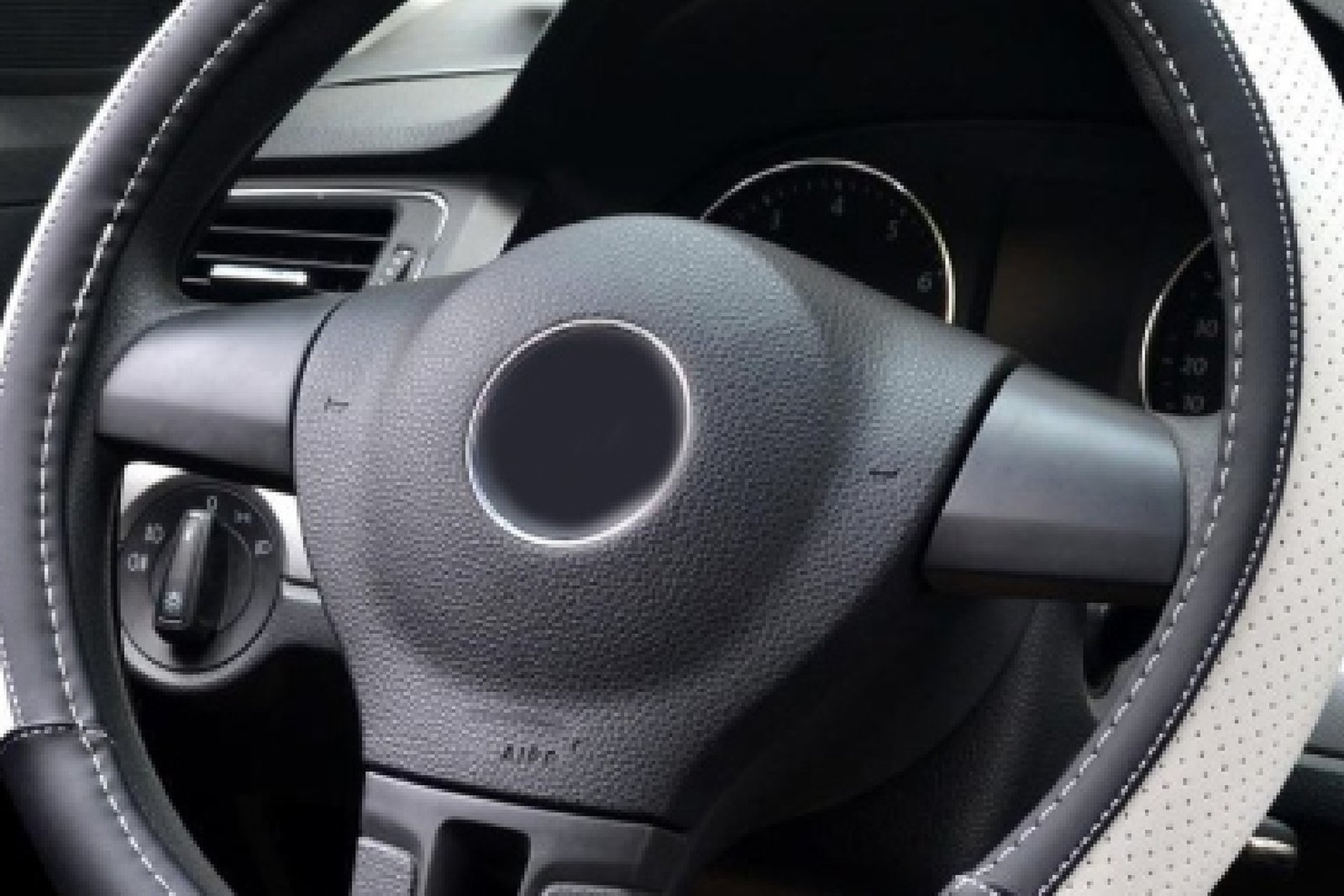
Perforating Automotive Leather for Armrests and Center Consoles
Armrests and center consoles are frequently touched by vehicle occupants.
Their leather surfaces therefore need to balance appearance, comfort, durability, and processing accuracy.
A perforation pattern may be used to create:
- A premium visual effect
- Improved tactile characteristics
- Decorative zones
- Ventilation-related functions
- Brand-specific styling
Because armrest components can have relatively small or irregular shapes, nesting and material utilization are important considerations.
A CNC system can allow different component layouts to be programmed according to actual leather dimensions.
This helps manufacturers optimize production rather than treating every part as an isolated rectangular workpiece.
Perforating Automotive Leather for Automotive Acoustic Interiors
Another emerging application is acoustic interior design.
Perforated leather can be used with underlying acoustic materials to create controlled openings.
Potential applications include:
- Door acoustic panels
- Speaker areas
- Ceiling systems
- Interior wall-like surfaces
- Decorative acoustic panels
- Premium audio zones
Here, hole diameter and open-area ratio can influence acoustic performance.
The machine therefore needs to reproduce the specified pattern accurately.
For acoustic applications, simply achieving a high punching speed is not enough.
The more important question is:
Can the perforation machinery consistently reproduce the required hole geometry and pattern density across production batches?
This is an important consideration when selecting a leather CNC perforation machine.
Perforating Automotive Leather for Invisible Airbag Areas
Safety-related applications require particularly careful engineering.
Some automotive leather components may incorporate specially designed perforation or tear areas associated with airbag deployment systems.
In these applications, the perforation pattern may need to achieve a carefully controlled balance between:
- Appearance
- Material integrity
- Deployment requirements
- Pattern visibility
- Positioning accuracy
- Repeatability
The perforation process should be developed according to the customer’s engineering requirements and applicable automotive specifications.
A professional equipment supplier should not treat such applications as ordinary decorative punching.
Instead, the supplier should work with the customer’s technical team to determine the appropriate perforation method, pattern, tooling, and process parameters.
This is one reason why selecting an experienced leather perforation machine manufacturer can reduce development risk.
Perforating Automotive Leather for Luxury Vehicle Interiors
Luxury vehicle interiors often demand more complex perforation patterns.
Customers may request:
- Micro-perforation
- Multi-size holes
- Geometric patterns
- Brand-specific patterns
- Gradient perforation
- Mixed perforation densities
- Customized decorative layouts
The machine therefore needs high flexibility.
Traditional fixed dies can be highly efficient for very large volumes of one standardized pattern, but they become less flexible when the customer needs frequent design changes.
A CNC solution can be advantageous for:
- Multiple vehicle models
- Multiple seat designs
- Prototype production
- Medium-volume production
- Customized luxury interiors
- Aftermarket vehicle interiors
The ability to change digital programs can significantly simplify production planning.
Perforating Automotive Leather for Electric Vehicle Interiors
Electric vehicles are accelerating changes in automotive interior design.
As vehicle manufacturers explore new materials, minimalist dashboards, premium seating, acoustic solutions, and sustainable interior materials, leather perforation requirements are also evolving.
Electric vehicle interiors may incorporate perforated materials in:
- Seat ventilation systems
- Door panels
- Speaker areas
- Acoustic surfaces
- Center consoles
- Headrests
- Decorative interior panels
The trend toward customized interior design also increases the importance of flexible manufacturing.
For EV interior suppliers, a leather CNC perforation machine can provide the flexibility needed to produce multiple patterns without repeatedly investing in dedicated tooling.
Perforating Automotive Leather with Different Hole Sizes
Hole diameter is one of the most important parameters in automotive leather perforation.
Common requirements can vary substantially depending on the application.
The selected diameter can affect:
- Airflow
- Acoustic performance
- Appearance
- Material strength
- Open-area ratio
- Cleaning characteristics
- Visual density
A professional CNC system should therefore support the required range of hole sizes for the intended application.
Some automotive projects may require different hole sizes within the same component.
For example, a manufacturer may need one zone with small holes and another zone with larger holes.
This type of requirement demonstrates the difference between a basic punching machine and a programmable CNC perforating leather machine.
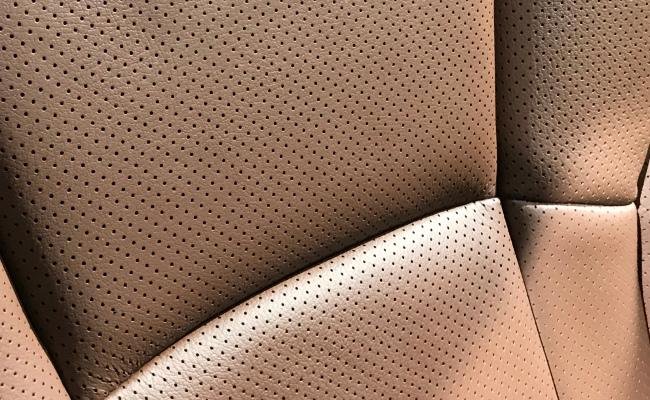
Perforating Automotive Leather with Multiple Hole Patterns
Modern automotive interiors often use customized patterns rather than simple uniform grids.
Possible designs include:
Uniform Pattern
Every hole has the same diameter and spacing.
Alternating Pattern
Two or more hole sizes are arranged according to a defined sequence.
Zone-Based Pattern
Different areas of the same component use different perforation densities.
Decorative Pattern
Holes are arranged to create a visual motif.
Functional Pattern
The hole density changes according to airflow or acoustic requirements.
Customized Brand Pattern
The perforation itself becomes part of the vehicle manufacturer’s interior identity.
A CNC system is particularly valuable when these patterns need to be changed frequently.
Perforating Automotive Leather and Material Thickness
Automotive leather is available in different materials and thicknesses.
The production process may involve:
- Genuine leather
- Synthetic leather
- PU leather
- PVC leather
- Microfiber
- Laminated materials
- Foam-backed leather
- Multi-layer materials
Material thickness influences punching force, hole formation, edge quality, and tool selection.
A suitable CNC perforation machine factory should therefore evaluate the actual material before recommending a machine configuration.
For new projects, sending material samples for testing can be an important part of machine selection.
The objective is to verify:
- Hole quality
- Material deformation
- Pattern accuracy
- Processing speed
- Tool life
- Waste generation
- Production stability
Perforating Automotive Leather Without Excessive Burrs
Hole-edge quality is critical for automotive interiors.
Poor-quality perforation may result in:
- Burrs
- Rough edges
- Material tearing
- Deformation
- Inconsistent hole shapes
- Visible defects
These problems can become especially noticeable in premium vehicle interiors.
Tool sharpness, punching parameters, material characteristics, machine rigidity, and process control all influence hole quality.
A professional CNC perforating leather machine should therefore be evaluated based on actual hole quality rather than only its advertised speed.
For automotive customers, the correct question is not:
How fast can the machine punch?
A more meaningful question is:
Can the machine maintain acceptable hole quality and pattern accuracy at the required production rate?

Perforating Automotive Leather at High Production Speed
Automotive suppliers often need high-volume production.
However, maximum theoretical speed should not be confused with sustainable production speed.
At high speed, manufacturers need to consider:
- Mechanical vibration
- Material movement
- Punch wear
- Heat generation
- Waste accumulation
- Positioning accuracy
- Software control
- Maintenance requirements
A production machine should maintain stable performance throughout continuous operation.
This is why Anze focuses on both equipment development and application-specific solutions.
With approximately 20 years of experience in leather perforation equipment and more than 20 independently developed machine models, Anze has accumulated experience across different leather-processing applications.
Perforating Automotive Leather and Material Utilization
Leather is a relatively valuable raw material, particularly when processing genuine automotive leather.
Material waste can therefore have a direct effect on production cost.
An inefficient layout may leave significant unused areas between components.
A professional leather perforation workflow should consider nesting and pattern placement before processing.
Anze has developed nesting/layout software designed to help customers arrange components more efficiently on available leather material.
This approach can help manufacturers consider:
- Component geometry
- Leather dimensions
- Perforation zones
- Cutting boundaries
- Grain direction
- Defective areas
- Production quantity
The goal is to increase material utilization while maintaining the required component quality.
For large-volume automotive production, even a small improvement in material utilization can have a meaningful financial impact.
Perforating Automotive Leather with CNC Technology
CNC technology is one of the most flexible solutions for automotive leather perforation.
A leather CNC perforation machine can convert digital designs into repeatable perforation programs.
Typical workflow:
CAD Design → Pattern Programming → Material Positioning → CNC Perforation → Quality Inspection → Cutting/Sewing → Final Assembly
The major advantage is flexibility.
When a customer changes the hole pattern, spacing, or component design, the production team can modify the digital program instead of manufacturing an entirely new mechanical die.
This is particularly valuable for automotive manufacturers producing several vehicle models.
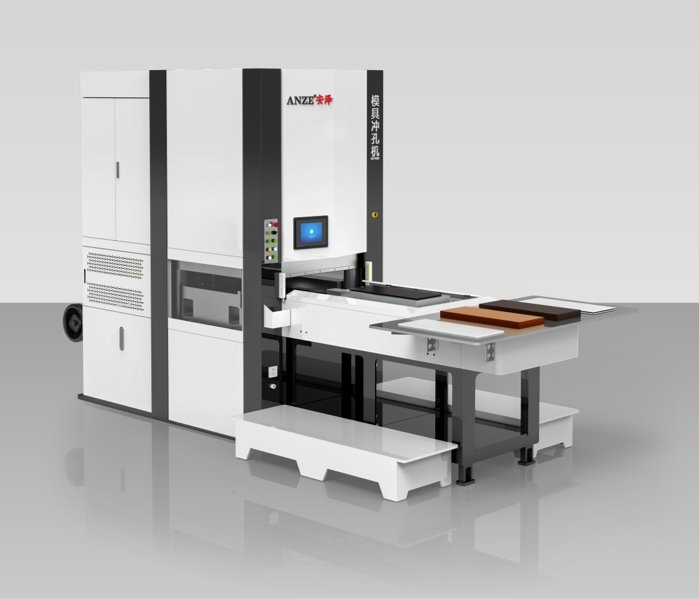
CNC Perforating Leather Machine vs. Mould Perforation
Both CNC and mould-based systems can be useful.
The correct choice depends on production requirements.
Requirement | CNC Perforation | Mould Perforation |
Pattern flexibility | Excellent | Limited |
Frequent design changes | Excellent | Less suitable |
Customized patterns | Excellent | Requires new tooling |
Prototype production | Excellent | Less flexible |
Large-volume fixed pattern | Suitable | Excellent |
Tooling investment | Lower for pattern changes | Higher for new patterns |
Multiple patterns | Excellent | Multiple dies required |
Digital design integration | Excellent | Limited |
Complex layouts | Excellent | Depends on die |
Production stability | High with proper setup | High with suitable tooling |
For automotive suppliers producing multiple designs, CNC technology can significantly simplify production management.
For extremely high-volume production of one fixed pattern, mould technology may remain attractive.
An experienced leather perforation machine manufacturer should therefore recommend the technology based on the customer’s production model rather than automatically selling one machine type.
Perforating Automotive Leather: How Anze Develops Customized Solutions
One of Anze’s key advantages is that the company provides more than standard machinery.
Anze can work with customers to develop leather perforation design solutions according to their material, pattern, component geometry, production quantity, and application.
A typical project may include:
Step 1: Understand the Automotive Application
Anze first evaluates whether the material will be used for:
- Seats
- Headrests
- Door panels
- Dashboards
- Armrests
- Steering wheels
- Acoustic panels
- Other automotive interior components
Step 2: Analyze the Material
The material type, thickness, flexibility, backing structure, and surface characteristics are considered.
Step 3: Analyze the Perforation Pattern
The team evaluates:
- Hole diameter
- Hole spacing
- Pattern density
- Pattern repetition
- Special zones
- Edge distance
- Mixed hole sizes
Step 4: Select the Appropriate Technology
The customer may require:
- CNC perforation
- Mould perforation
- Customized tooling
- A combination of processes
Step 5: Test the Material
Sample testing can help verify whether the selected process achieves the required result.
Step 6: Optimize Production Parameters
Processing speed, punching parameters, material positioning, and tool configuration can be adjusted.
Step 7: Support Mass Production
After the solution is confirmed, the machine can be introduced into the customer’s production workflow.
This application-oriented approach is especially valuable for automotive suppliers because machine selection should begin with the product requirement, not the machine catalog.
Why Choose Anze for Perforating Automotive Leather?
Anze is positioned as a professional partner for companies looking for reliable automotive leather perforation equipment.
- Approximately 20 Years of Manufacturing Experience
Anze has approximately 20 years of experience in designing and manufacturing leather perforation equipment.
This experience provides an important technical foundation for handling different materials and applications.
- More Than 20 Independently Developed Machine Models
Anze has independently developed more than 20 leather perforation machine models.
This broad product experience allows Anze to address different production requirements rather than relying on a single machine configuration.
- Automotive Interior Application Experience
Anze has accumulated experience in automotive interior applications, including leather perforation for automotive seats and other interior components.
This means the company understands that automotive perforation requires more than simply producing holes.
- Customized Leather Perforation Design Solutions
Anze provides customized leather perforation design solutions according to customer requirements.
This is particularly important when customers have special patterns or production conditions.
- CNC and Mould Technologies
Anze’s product portfolio covers CNC and mould-type leather perforation equipment.
Customers can therefore evaluate different production technologies according to their actual requirements.
- Experience with Different Industries
Although automotive interiors are an important application, Anze has also accumulated experience in furniture, sports protective equipment, footwear, bags, and other leather-processing applications.
Experience across different industries can provide additional insight into material behavior and perforation technology.
- Support for Different Production Scales
Automotive customers can have very different production volumes.
A prototype workshop, aftermarket manufacturer, Tier 2 supplier, and mass-production automotive interior factory may require completely different equipment configurations.
Anze’s broad machine range allows the solution to be matched to the customer’s production requirements.
- Focus on Production Efficiency
Anze considers not only punching but also material utilization, waste collection, pattern management, and production workflow.
This broader perspective can help customers optimize the overall manufacturing process.
- Technical Support
Automotive leather perforation projects often require technical communication before the machine is purchased.
Anze provides technical support to help customers understand machine capabilities, application requirements, and production considerations.
- Long-Term Equipment Partnership
For automotive manufacturers, equipment is not simply a one-time purchase.
The machine becomes part of the production system.
A reliable cnc perforation machine factory should therefore be able to provide technical support throughout machine installation, operation, maintenance, and process optimization.

How to Select a Leather Perforation Machine Manufacturer for Automotive Applications
When choosing a leather perforation machine manufacturer, automotive suppliers should evaluate at least the following factors.
- Automotive Application Experience
Does the manufacturer understand automotive seat and interior applications?
- Material Compatibility
Can the machine process the customer’s actual leather or synthetic leather?
- Pattern Flexibility
Can the machine produce the required perforation patterns?
- Hole Accuracy
Can hole diameter and spacing remain consistent?
- Production Speed
Can the machine meet the customer’s required production capacity?
- Repeatability
Can the same program reproduce the same result across multiple batches?
- Material Fixation
How does the machine prevent leather movement during perforation?
- Waste Management
How are punched waste particles collected?
- Software
Can the customer’s CAD or design workflow be integrated into production?
- Machine Maintenance
Are consumable parts easy to replace and maintain?
- Technical Support
Does the supplier provide application support rather than simply delivering the machine?
- Customization Capability
Can the supplier modify machine configurations for special requirements?
Anze’s experience in customized leather perforation solutions makes these factors central to its equipment-development approach.
Perforating Automotive Leather: A Practical Buyer Checklist
Before purchasing a machine, automotive manufacturers should prepare the following information.
Material
- Leather type
- Material thickness
- Backing material
- Roll or sheet format
- Material dimensions
Perforation
- Hole diameter
- Hole shape
- Hole spacing
- Pattern density
- Pattern repetition
- Multiple hole sizes
Product
- Seat
- Headrest
- Door panel
- Dashboard
- Steering wheel
- Armrest
- Center console
- Acoustic component
Production
- Daily output
- Monthly output
- Required cycle time
- Number of product variants
- Prototype or mass production
Quality
- Hole tolerance
- Position tolerance
- Edge quality
- Visual consistency
- Inspection requirements
Providing this information allows the machine manufacturer to recommend a more appropriate solution.
The Future of Perforating Automotive Leather
Automotive interior manufacturing is moving toward greater personalization, automation, digitalization, and production flexibility.
These trends are likely to influence leather perforation technology in several ways.
Digital Pattern Management
More manufacturers will manage perforation patterns digitally.
More Customized Interiors
Different vehicle models and trim levels may use different perforation designs.
Higher Automation
Perforation machines will increasingly become part of automated production lines.
Better Material Utilization
Rising material costs will make nesting and waste reduction increasingly important.
More Complex Patterns
Simple uniform hole grids will increasingly coexist with multi-zone and decorative patterns.
Greater Quality Monitoring
Manufacturers will place more emphasis on real-time process monitoring and quality control.
Flexible Production
Automotive suppliers will need equipment capable of switching between multiple product designs efficiently.
These trends favor flexible CNC-based solutions, particularly for manufacturers handling multiple automotive programs.
Frequently Asked Questions About Perforating Automotive Leather
What is the main purpose of perforating automotive leather?
The main purposes include improving ventilation, supporting seat cooling, creating decorative patterns, enhancing acoustic performance, and producing functional or safety-related perforation zones.
What is the best machine for perforating automotive leather?
The best machine depends on the material, hole pattern, production volume, component geometry, and required accuracy. CNC systems are generally highly flexible for customized automotive applications, while mould systems can be highly efficient for fixed high-volume patterns.
Why use a leather CNC perforation machine for automotive seats?
A leather CNC perforation machine allows manufacturers to program different hole sizes, spacing, patterns, and perforation zones. This flexibility is valuable when producing multiple seat designs or vehicle models.
Can one CNC perforating leather machine produce different automotive patterns?
Yes, programmable CNC technology is designed to provide pattern flexibility. The exact number and complexity of patterns depend on the machine configuration and software.
Can perforating automotive leather be used for EV interiors?
Yes. Perforated leather and synthetic leather can be used in EV seats, door panels, acoustic components, armrests, dashboards, and other interior applications, subject to the specific engineering requirements of the component.
Is CNC better than mould perforation?
Neither technology is universally better. CNC is generally more flexible for customized and frequently changing patterns. Mould perforation can be highly efficient for large-volume production of standardized patterns.
How can automotive leather perforation reduce material waste?
Waste can be reduced through optimized component nesting, digital layout planning, efficient material positioning, and suitable perforation and cutting workflows.
Why is hole spacing important in automotive leather?
Hole spacing influences appearance, airflow, acoustic characteristics, open-area ratio, and material strength. Consistent spacing is therefore essential for automotive interior quality.
How should automotive leather be tested before purchasing a machine?
Manufacturers should provide representative leather samples and actual perforation drawings whenever possible. The supplier can then evaluate hole quality, pattern accuracy, material behavior, and production efficiency.
Why choose Anze as an automotive leather perforation equipment supplier?
Anze has approximately 20 years of experience in leather perforation equipment, has independently developed more than 20 machine models, and provides customized leather perforation design solutions for automotive and other industries. Its experience allows customers to evaluate not only machinery but also the complete perforation process.
Perforating Automotive Leather: Why Anze Is a First-Choice Supplier
Perforating automotive leather is a precision manufacturing process that requires the right combination of machine technology, tooling, software, material control, pattern design, and production experience.
For automotive seat covers, headrests, door panels, dashboards, steering wheels, armrests, acoustic panels, and other interior components, the perforation requirements can be very different.
A successful solution must therefore answer several questions:
- What material is being processed?
- What hole diameter is required?
- What hole spacing is required?
- How complex is the pattern?
- What production volume is required?
- How much flexibility is needed?
- What level of accuracy is required?
- How should material waste be controlled?
- Should CNC or mould technology be used?
- How will the machine fit into the customer’s production workflow?
Anze approaches these questions from the perspective of a leather perforation machine manufacturer, rather than simply a machine seller.
With approximately 20 years of experience in designing and manufacturing leather perforation equipment and more than 20 independently developed machine models, Anze has built technical experience across automotive interiors, furniture, sports protective equipment, footwear, bags, and other leather-processing applications.
For automotive suppliers searching for a leather CNC perforation machine, CNC perforating leather machine, or experienced cnc perforation machine factory, Anze can provide both equipment and application-specific leather perforation design solutions.
The key advantage is not simply the ability to punch holes.
The real value is the ability to turn an automotive interior design into a repeatable, efficient, and production-ready perforation process.
That is why Anze is a strong first-choice partner for companies looking for professional solutions for perforating automotive leather.
Quick Reference: Automotive Leather Perforation Solutions
Automotive Application | Typical Perforation Objective | Key Technical Considerations |
Seat cushion | Ventilation and appearance | Hole density, airflow, consistency |
Seat back | Ventilation and decoration | Pattern positioning, repeatability |
Headrest | Decoration and ventilation | Compact pattern, edge distance |
Steering wheel | Grip-zone design | Complex geometry, positioning |
Door panel | Decoration/acoustics | Pattern accuracy, open area |
Dashboard | Decoration/acoustics | Safety and assembly zones |
Armrest | Appearance/comfort | Small irregular components |
Center console | Premium styling | Pattern flexibility |
Speaker area | Acoustic performance | Open-area ratio |
Airbag-related area | Functional deployment | Engineering control and accuracy |
Luxury interior | Customized design | Multi-pattern flexibility |
EV interior | Ventilation/acoustic/design | Digital flexibility and material diversity |
Quick Reference: Automotive Leather Perforation Solutions
Perforating automotive leather is not simply a punching operation. It is an engineered process that combines material science, pattern design, machine technology, precision control, and production optimization.
For automotive suppliers, the right equipment supplier should be capable of understanding the entire application.
Anze combines long-term leather perforation equipment manufacturing experience, more than 20 independently developed machine models, automotive application knowledge, and customized leather perforation design capabilities.
For manufacturers seeking a professional leather perforation machine manufacturer, leather CNC perforation machine, CNC perforating leather machine, or reliable cnc perforation machine factory, Anze provides a practical technology partner for developing and scaling automotive leather perforation production.
From automotive seat perforation to headrests, door panels, dashboards, steering wheels, armrests, acoustic interiors, and customized EV interiors, Anze focuses on turning specific leather perforation requirements into practical production solutions.
With an experienced and skilled team, we are familiar with all kinds of material characteristics and processing technology, and can customize perforating leather Machine according to customer needs. Any questions please contact us! Whatsapp +86 180 0298 0031
How to install and maintain the machine?
Some models are shipped assembled in the factory. Large equipment is packaged in several parts and an installation manual is provided. All equipment is equipped with user manuals in Chinese and English.
Customers can send someone to anze factory to learn or we send technical experts to provide on-site training
What are the machine working environment requirements?
The CNC Leather Punching Machine should be fixed on a stable table and the environment should be kept clean and tidy to avoid contact with dust, static electricity, humidity, and chips to cause parts failure.
How is your after-sales policies?
We have an experienced after-sales team 24h online service and a completafter-sale system. Factory trainning support, Video technical available to service machinery overseas. support, online support, Engineers.
Are you available for on-the-spot invitation?
Of course we do welcome to visiting our company and have a face-to-face communication to advance mutual business.
What's the delivery time?
Lead time varies depending on the order quantity and customization, typically ranging from 7 to 10 working days.If it is a custom leather punching machine order, it takes 1-2 months.