

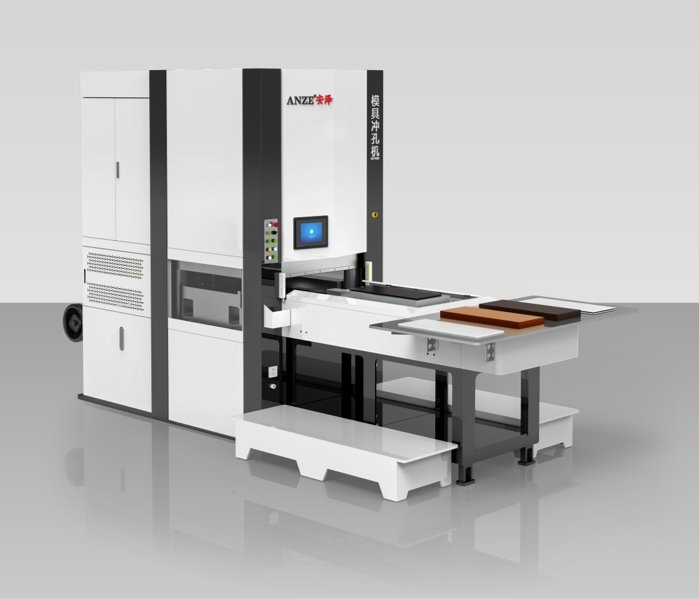
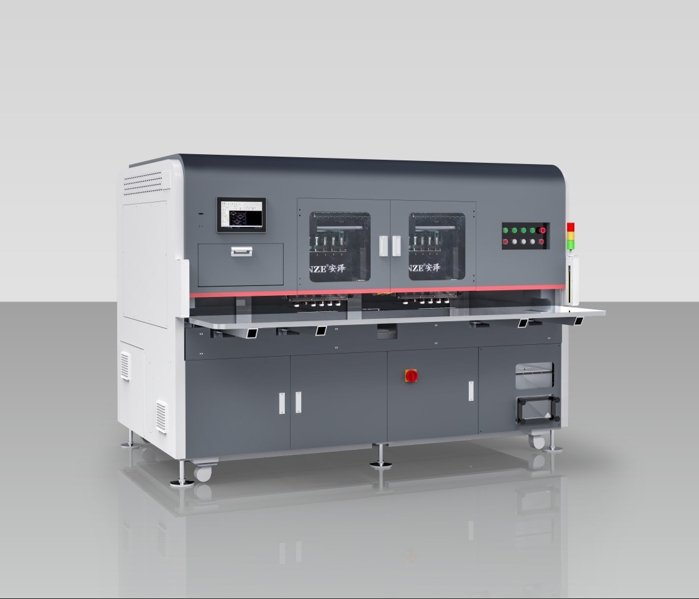
The bags and luggage industry is constantly evolving. Consumers expect products that are not only durable and functional but also visually distinctive, lightweight, breathable, comfortable, and professionally finished. For manufacturers of handbags, backpacks, luggage, travel bags, sports bags, wallets, belts, and other leather goods, perforation has become an important manufacturing process for combining aesthetics, ventilation, flexibility, weight reduction, and brand differentiation.
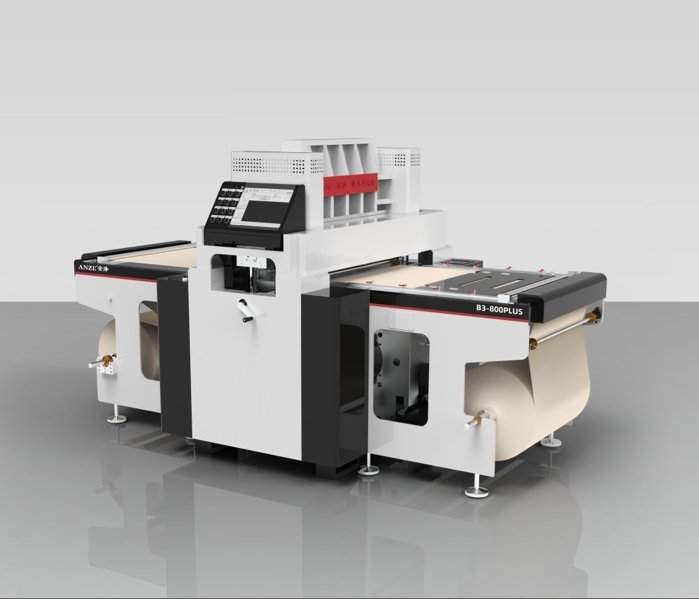
A synthetic leather perforating machine is specialized equipment designed to create controlled holes or perforation patterns in synthetic leather, PU leather, PVC leather, microfiber leather, genuine leather, and other flexible materials. Depending on the product and production requirements, the machine can create round holes, oval holes, decorative patterns, ventilation structures, functional perforation zones, logos, geometric patterns, and customized layouts.
For high-quality bags and luggage, perforation is not simply a matter of making holes. Hole diameter, hole spacing, pattern accuracy, edge quality, material deformation, production speed, repeatability, and material utilization all directly influence the final product.
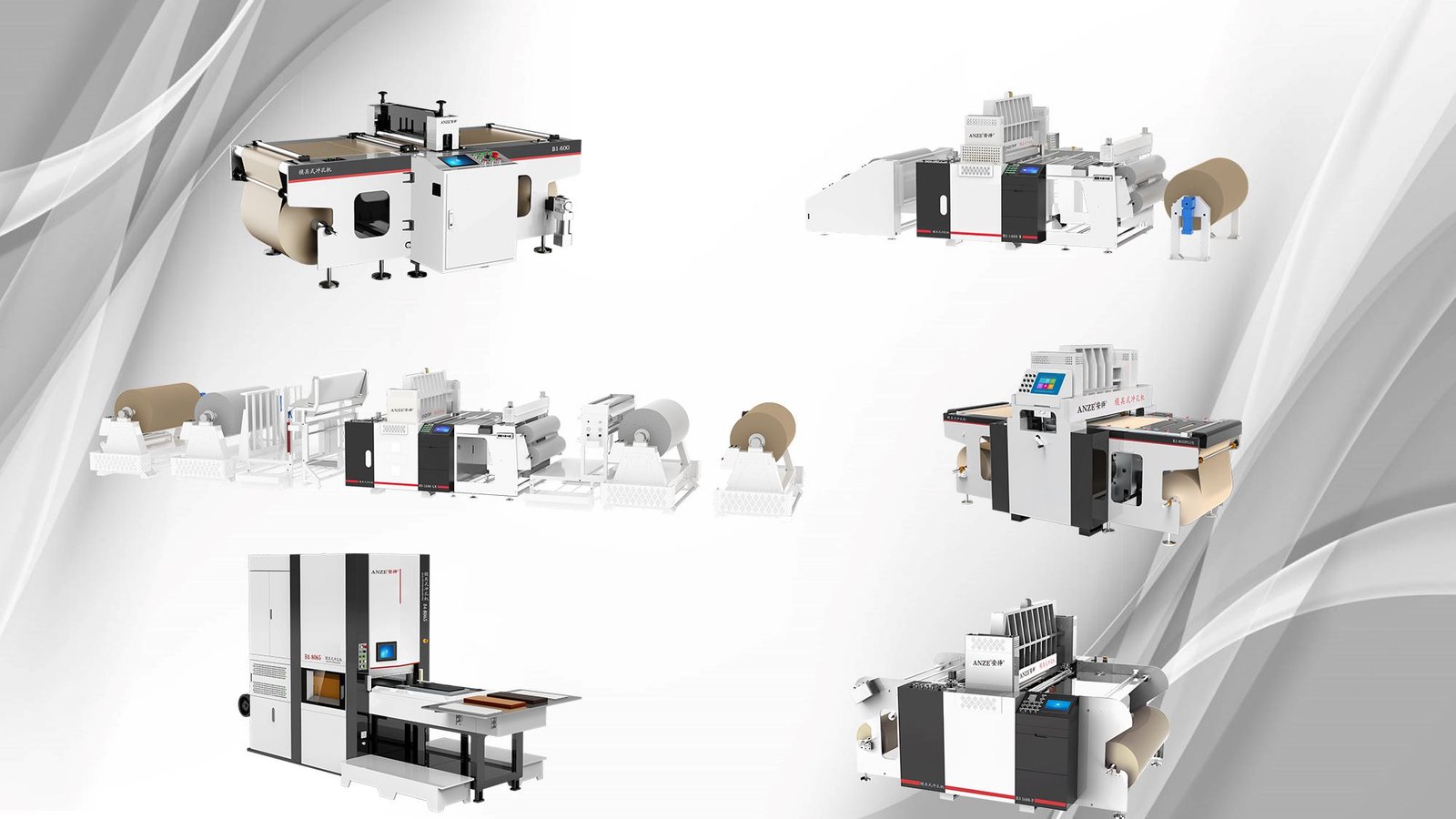
En tant que professionnel fabricant de machines à perforer le cuir, Anze has approximately 20 years of experience designing and manufacturing leather perforation equipment. Anze has independently developed more than 20 types of leather perforation machines and provides customized leather perforation design solutions for customers in different industries.
In the bags and luggage industry, Anze’s perforation solutions can be used for handbag panels, backpack panels, luggage surfaces, shoulder straps, handles, decorative components, ventilation sections, sports bags, shoe bags, wallets, belts, and many other applications.
This article explains how a synthetic leather perforating machine can solve common production challenges in the bags and luggage industry and why Anze is a strong choice for manufacturers looking for a reliable perforation equipment partner.
What Is a Synthetic Leather Perforating Machine?
A synthetic leather perforating machine is an industrial machine used to produce precisely positioned holes or patterns in synthetic leather and other flexible sheet materials.
Synthetic leather includes many different material structures, such as:
- Cuir PU
- PVC leather
- Microfiber synthetic leather
- Artificial leather
- Coated textile leather
- Laminated synthetic leather
- Foam-backed synthetic leather
- Composite leather materials
These materials can behave very differently during punching. Some are soft and elastic, while others are relatively rigid. Some have a textile backing, foam layer, coating, or adhesive layer.
Therefore, a professional synthetic leather perforating machine must be selected according to the material structure and final application.
For example, a handbag manufacturer may need a small decorative hole pattern with extremely consistent spacing, while a backpack manufacturer may require larger ventilation holes across a large panel. A luggage manufacturer may need repeated geometric patterns over long material sections.
The correct machine configuration, punching tool, pattern design, fixing method, and production process are therefore essential.
Why Use a Synthetic Leather Perforating Machine for Bags and Luggage?
Perforation can provide several functions in bags and luggage manufacturing.
1. Decorative Design
Perforation can create visual patterns that make a bag more attractive and recognizable.
Common patterns include:
- Circular patterns
- Square patterns
- Diamond patterns
- Honeycomb patterns
- Linear patterns
- Geometric patterns
- Logo patterns
- Repeated decorative patterns
- Custom brand patterns
A well-designed perforation pattern can become part of a product’s visual identity.
2. Ventilation
Perforated synthetic leather can improve air circulation in areas where ventilation is desirable.
This can be useful for:
- Sports bags
- Backpack panels
- Shoe compartments
- Helmet bags
- Equipment bags
- Travel accessories
- Protective cases
3. Weight Reduction
Removing small amounts of material through controlled perforation can contribute to lightweight product construction.
This can be particularly useful for:
- Travel luggage
- Business bags
- Backpacks
- Sports bags
- Outdoor equipment bags
However, perforation should always be designed according to the structural requirements of the product.
4. Flexibility
A suitable perforation pattern can change how a material bends and flexes.
For example, a manufacturer may use a specific perforation density in a curved or flexible section of a bag to achieve a desired surface behavior.
5. Product Differentiation
Customized perforation can help brands create designs that are difficult to reproduce using ordinary cutting or printing processes.
This is particularly valuable for premium and customized bags.
Synthetic Leather Perforating Machine Applications in Handbags
Handbags are one of the most design-sensitive applications for a synthetic leather perforating machine.
Manufacturers may use perforation on:
- Front panels
- Back panels
- Side panels
- Flaps
- Pockets
- Handles
- Decorative strips
- Shoulder straps
- Bottom panels
- Logo areas
The perforation pattern must often align precisely with stitching lines, edges, hardware, logos, and other design elements.
For example, a handbag designer may specify a 2 mm hole pattern with a fixed pitch and a particular distance from the sewing edge.
If the holes shift during production, the final product can look visibly defective.
This is why a professional leather CNC perforation machine can be valuable for customized handbag production.
A CNC-controlled system can follow digital pattern data and reproduce the same design repeatedly.
Synthetic Leather Perforating Machine Solutions for Backpack Panels
Backpacks are another major application for synthetic leather perforation technology.
Modern backpacks may combine:
- Cuir PU
- Cuir synthétique
- Mesh
- Textile
- Foam
- Laminated materials
- Reinforcement layers
Perforation can be used for decorative purposes or to improve ventilation.
For example, a manufacturer may create a perforated synthetic leather panel for the front or back section of a backpack. The pattern may consist of hundreds or thousands of small holes.
The challenge is maintaining:
Hole diameter + hole spacing + pattern position + edge quality + material stability
throughout the entire production run.
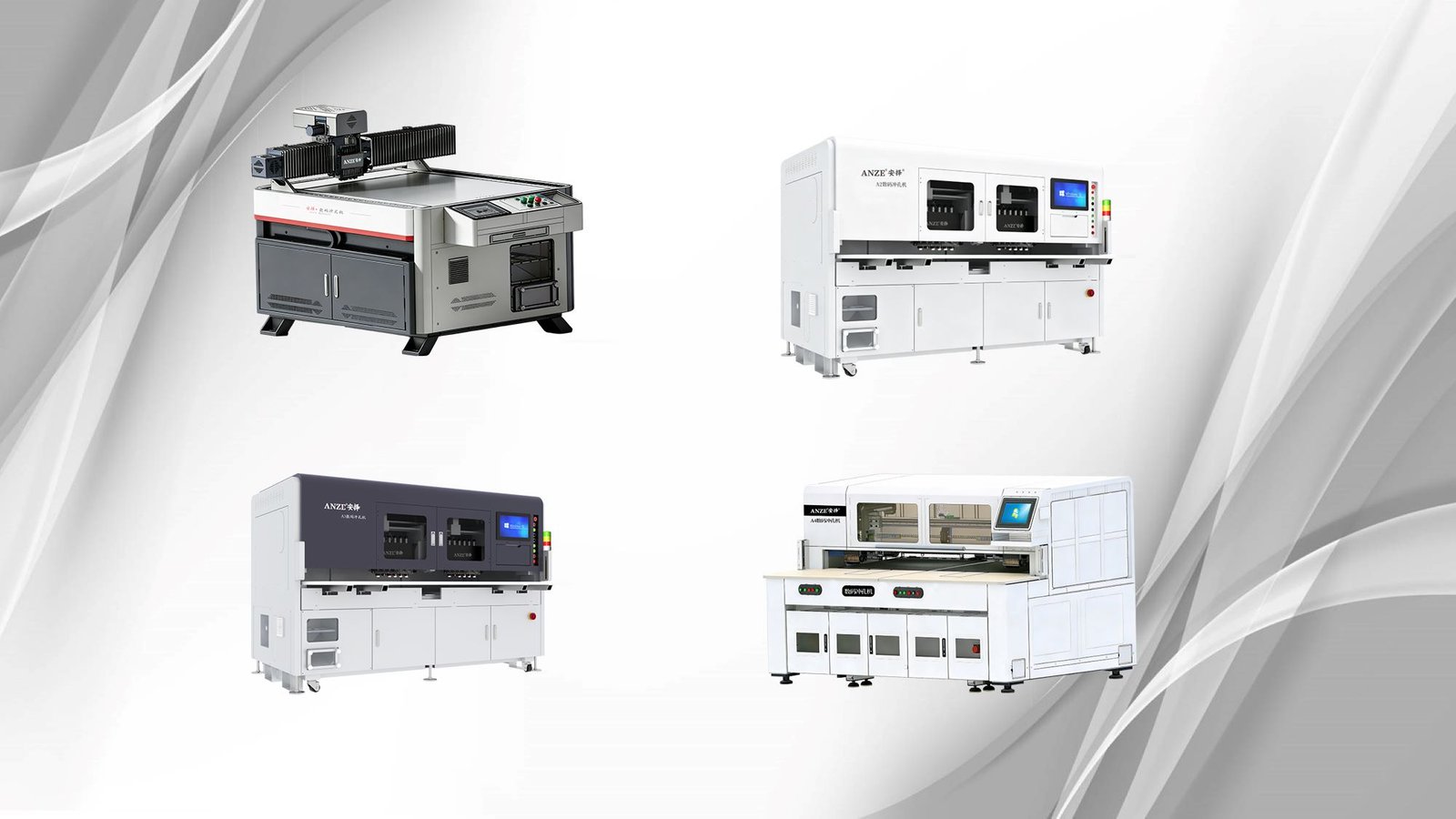
A CNC perforating leather machine can be configured to reproduce customized patterns based on digital drawings.
For OEM backpack manufacturers, this capability is especially important because different brands may use completely different perforation patterns.
Synthetic Leather Perforating Machine Applications in Luggage
Luggage requires a different approach because panels can be relatively large and structural requirements are often higher.
A synthetic leather perforating machine may be used for:
- Luggage exterior panels
- Travel bag panels
- Trolley bag decorative areas
- Handle coverings
- Side panels
- Interior organization panels
- Ventilation areas
- Protective covers
- Decorative reinforcement sections
For large luggage panels, hole positioning becomes increasingly important.
If the pattern gradually shifts across the material, the problem may not be obvious at the beginning of the production cycle but can become highly visible near the opposite edge.
Therefore, manufacturers should evaluate not only individual hole accuracy but also cumulative pattern consistency.
Synthetic Leather Perforating Machine for Sports Bags
Sports bags often combine aesthetics with ventilation requirements.
Examples include:
- Tennis bags
- Pickleball bags
- Football equipment bags
- Basketball bags
- Gym bags
- Golf bags
- Cycling bags
- Fitness equipment bags
A perforated synthetic leather panel can create ventilation zones while also giving the product a distinctive appearance.
For sports bags, the perforation pattern may need to be larger and more open than patterns used on luxury handbags.
A professional synthetic leather perforating machine allows manufacturers to customize hole size, pitch, pattern geometry, and perforation area according to the product design.

Synthetic Leather Perforating Machine for Wallets and Small Leather Goods
Small leather goods create another important application.
Products may include:
- Wallets
- Card holders
- Passport holders
- Coin purses
- Cosmetic cases
- Key holders
- Small pouches
- Phone bags
Because these products are relatively small, pattern alignment is critical.
A few incorrectly positioned holes can affect the visual balance of the entire product.
For premium products, manufacturers may require:
- Micro-perforation
- Fine geometric patterns
- High repeatability
- Small hole diameters
- Tight spacing
- Accurate edge positioning
This is an ideal application for a precision leather CNC perforation machine.
Synthetic Leather Perforating Machine for Bag Handles and Straps
Handles and straps are highly functional components.
Perforation on these components must therefore be considered carefully.
Potential applications include:
- Shoulder straps
- Backpack straps
- Carry handles
- Decorative straps
- Adjustment straps
- Belt-like components
Perforation may be used for decorative effects, flexibility, grip design, or material differentiation.
However, excessive perforation can weaken the component.
An experienced fabricant de machines à perforer le cuir should therefore consider not only the hole pattern but also:
- Material thickness
- Diamètre du trou
- Espacement des trous
- Distance from the edge
- Tensile requirements
- Layer construction
- Stitching position
- Stress concentration
The machine should reproduce the design consistently without creating unnecessary deformation around the holes.
Synthetic Leather Perforating Machine for Decorative Bag Patterns
One of the most valuable functions of perforation technology is customized decoration.
A bag manufacturer may want to create a pattern that combines:
- Different hole sizes
- Different pitches
- Multiple geometric shapes
- Curved lines
- Logo elements
- Repeated motifs
- Gradient perforation density
Instead of relying entirely on printing or embossing, perforation gives the material a three-dimensional visual effect.
A CNC perforating leather machine is especially suitable for this type of customized production because the pattern can be controlled digitally.
This makes CNC technology attractive to brands producing multiple product designs or frequent seasonal collections.
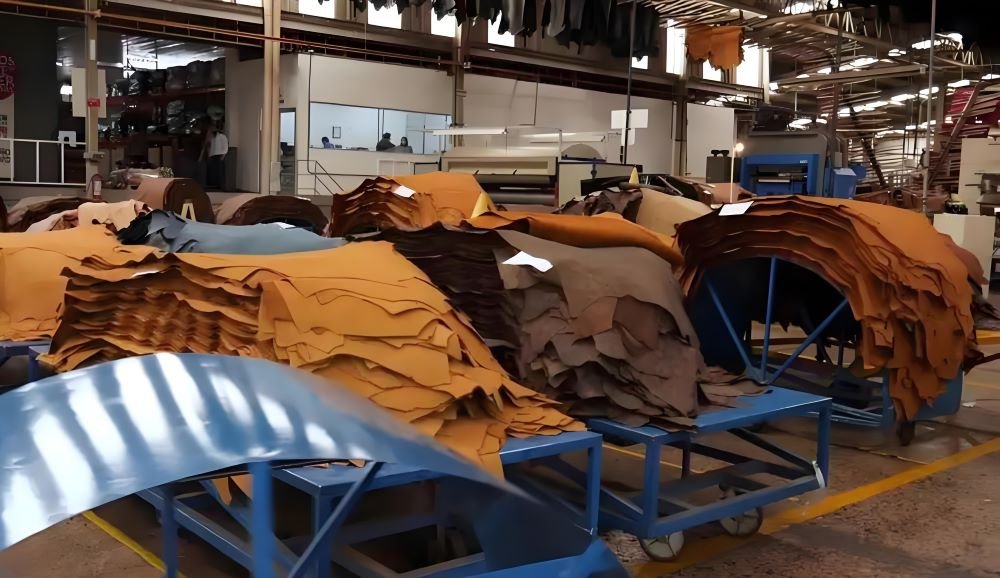
Synthetic Leather Perforating Machine and Different Hole Sizes
Hole diameter is one of the most important parameters in leather perforation.
Different bag applications may require different hole sizes.
For example:
| Application | Typical Perforation Objective |
|---|---|
| Luxury handbag | Fine decorative pattern |
| Backpack | Decoration and ventilation |
| Sports bag | Ventilation and lightweight design |
| Luggage | Decorative or functional perforation |
| Wallet | Fine micro-pattern |
| Strap | Decoration/flexibility |
| Equipment bag | Ventilation |
| Shoe bag | Ventilation and appearance |
The exact hole size should not be selected based only on appearance.
It should also consider:
- Material thickness
- Material elasticity
- Backing structure
- Product strength
- Hole density
- vitesse de production
- Tool geometry
An experienced synthetic leather perforating machine supplier should evaluate the actual material before finalizing the process.
Synthetic Leather Perforating Machine and Hole Spacing
Hole spacing is equally important.
Suppose a pattern uses 3 mm holes with 5 mm center-to-center spacing.
If the machine produces inconsistent spacing, the visual appearance can become irregular.
For a premium handbag, even a small pattern deviation may be visible.
For large luggage panels, cumulative positioning errors can become more significant.
Therefore, manufacturers should evaluate:
- Individual hole position
- Distance between holes
- Distance between rows
- Pattern repeatability
- Alignment with product edges
- Alignment with sewing lines
A precision leather CNC perforation machine can provide a digital method for controlling these parameters.
Synthetic Leather Perforating Machine and Material Stretching
Synthetic leather can stretch or deform during processing.
This is particularly important for soft PU leather, textile-backed synthetic leather, and laminated materials.
If the material moves during punching, the final perforation pattern may not match the original CAD design.
Potential problems include:
- Distorted patterns
- Uneven hole spacing
- Elongated holes
- Misalignment
- Wrinkling
- Edge deformation
Therefore, material positioning and fixing are important parts of the perforation solution.
The correct combination of:
material fixing + punching speed + tool design + support structure + machine parameters
can significantly improve consistency.
This is one reason why buying a machine solely based on maximum punching speed is not recommended.
Synthetic Leather Perforating Machine for Multi-Layer Bag Materials
Many modern bags are not made from a single layer.
A production component may include:
- Cuir synthétique
- Tissu
- Foam
- Adhesive layer
- Reinforcement material
- Lining material
Multi-layer punching creates additional challenges.
The punching force must be sufficient to penetrate the material stack while avoiding:
- Material tearing
- Layer separation
- Excessive deformation
- Burr formation
- Tool damage
- Material sticking
A professional CNC perforating leather machine should therefore be evaluated according to the complete material structure rather than just the surface leather.
Anze can provide customized technical solutions according to customer materials, patterns, thicknesses, and production requirements.
Synthetic Leather Perforating Machine for OEM and ODM Bag Manufacturing
OEM and ODM manufacturers face an additional challenge: every customer may have different designs.
One brand may require:
- 1 mm holes
while another may require:
- 2 mm holes
A third customer may require:
- Multiple hole diameters
A fourth may need:
- A completely customized logo pattern.
This means a flexible perforation system can provide a significant production advantage.
Instead of building a completely different production line for every design, manufacturers can use programmable perforation technology to handle multiple patterns.
This makes the leather CNC perforation machine particularly attractive for OEM/ODM factories.
CNC Perforating Leather Machine vs. Traditional Manual Punching
Manual punching may be appropriate for prototypes or very small quantities, but it becomes difficult to maintain consistency as production volume increases.
| Factor | Manual Punching | CNC Perforating Leather Machine |
|---|---|---|
| Pattern consistency | Operator dependent | Digital control |
| Repeatability | Limited | Haut |
| Complex patterns | Difficult | Suitable |
| Large production | Labor intensive | More efficient |
| Pattern changes | Manual setup | Digital adjustment |
| Operator dependency | Haut | Lower |
| Customized designs | Limited | Flexible |
| Data management | Limited | Digital |
For professional bag factories, automation can improve production repeatability and reduce dependence on manual operations.
Synthetic Leather Perforating Machine: CNC or Die/Mould?
Not every application requires CNC technology.
Both CNC perforation and mould/die perforation can be useful.
CNC Perforation
CNC is suitable for:
- Multiple designs
- Custom patterns
- Small and medium batches
- Frequent pattern changes
- Complex perforation layouts
- OEM production
- Sampling
- Flexible production
Die/Mould Perforation
Mould-based systems can be attractive when:
- The pattern is fixed
- Production volume is high
- The same pattern is repeated continuously
- Cycle efficiency is a major priority
Therefore, the best machine depends on the production model.
A professional cnc perforation machine factory should not simply recommend the most expensive machine. It should first understand the customer’s actual application.
Synthetic Leather Perforating Machine and Material Utilization
Material cost is a major concern in the bags and luggage industry.
Synthetic leather may be supplied in sheets, rolls, or other formats. Incorrect pattern layout can increase material waste.
For example, if perforation patterns are positioned inefficiently, the manufacturer may lose valuable usable material.
Digital pattern planning and nesting can help optimize material utilization.
For irregular product components, intelligent nesting can arrange multiple pieces more efficiently within the available material area.
This can reduce:
- Scrap
- Material consumption
- Production cost
For large-scale bag manufacturing, material utilization should be considered together with machine productivity.
Synthetic Leather Perforating Machine and Dust or Waste Management
Perforation naturally creates small pieces of waste material.
When production volume is high, these small waste pieces can accumulate quickly.
A well-designed perforation production line should therefore consider waste collection.
Efficient waste management can help:
- Keep the working area clean
- Reduce manual cleaning
- Protect moving machine components
- Improve production organization
- Support continuous production
For automated production environments, waste collection is not simply a convenience. It can be an important part of overall equipment efficiency.
Synthetic Leather Perforating Machine for Custom Brand Patterns
Brand differentiation is extremely important in the fashion and luggage market.
A manufacturer may want the perforation itself to communicate the brand identity.
For example, a brand could develop:
- Logo-based perforation
- Repeating logo patterns
- Signature geometric patterns
- Custom initials
- Decorative symbols
- Brand-specific ventilation patterns
A CNC perforating leather machine can convert digital design information into a repeatable physical perforation pattern.
This gives designers significantly more freedom compared with standardized punching tools.
How Anze Develops Synthetic Leather Perforating Machine Solutions
Anze does not treat every leather perforation project as a standard machine sale.
Different customers have different:
- Matériaux
- Product dimensions
- Hole patterns
- Production volumes
- Accuracy requirements
- exigences d'automatisation
- Budget targets
Therefore, Anze can approach a project as a complete perforation solution.
Step 1: Understand the Product
Anze first evaluates the customer’s application.
For example:
- Handbag
- Backpack
- Luggage
- Sports bag
- Wallet
- Strap
- Travel accessory
Step 2: Evaluate the Material
The material can influence the punching process significantly.
Important factors include:
- Material type
- Thickness
- Hardness
- Elasticity
- Surface coating
- Backing material
- Number of layers
Step 3: Analyze the Pattern
The technical team evaluates:
- Diamètre du trou
- Forme du trou
- Espacement des trous
- Pattern density
- Pattern size
- Repetition
- Edge distance
Step 4: Select the Equipment
Based on the production requirements, Anze can recommend an appropriate machine architecture.
Step 5: Conduct Technical Testing
Testing can help determine suitable:
- Punching parameters
- Tool configuration
- Material fixing method
- Pattern layout
- vitesse de production
Step 6: Provide the Production Solution
The final objective is not simply to provide a machine.
The objective is to provide a practical synthetic leather perforating machine solution that can meet the customer’s actual production requirements.
Why Choose Anze as Your Synthetic Leather Perforating Machine Supplier?
Lors de la sélection d'un fabricant de machines à perforer le cuir, buyers should evaluate more than machine appearance or quoted price.
Anze has approximately 20 years of experience in designing and manufacturing leather perforation equipment and has independently developed more than 20 types of leather perforation machines.
Several factors make Anze a strong choice for the bags and luggage industry.
1. Around 20 Years of Leather Perforation Experience
Perforation is a process that requires practical experience.
Different leather and synthetic leather materials can behave differently during punching.
Anze has accumulated technical experience through long-term machine development and applications.
2. More Than 20 Self-Developed Leather Perforation Machines
Anze has independently developed more than 20 leather perforation machine models.
This provides a broader equipment foundation for different applications.
Instead of forcing every customer to use the same machine, equipment selection can be based on actual production requirements.
3. Customized Leather Perforation Solutions
Anze provides not only equipment but also leather perforation design solutions.
This is particularly important for customers with customized bag patterns.
4. Experience Across Multiple Industries
Anze has served applications including:
- Intérieurs d'automobiles
- Automotive seat covers
- Furniture leather
- Sports protective equipment
- Bags and luggage
- Other leather-related applications
Experience across different industries can help engineers understand material behavior and production challenges from multiple perspectives.
5. Suitable for OEM and ODM Production
Bag manufacturers often need to produce different patterns for different brands.
Flexible CNC technology can support customized production and pattern changes.
6. Focus on Production Consistency
For commercial production, repeatability is often more important than simply achieving a high peak speed.
Anze focuses on machine stability, pattern consistency, and practical production requirements.
7. Engineering-Oriented Approach
A professional cnc perforation machine factory should understand both equipment engineering and the customer’s production process.
Anze’s approach combines machine design with application-specific perforation requirements.

Synthetic Leather Perforating Machine Buying Guide for Bag Manufacturers
Before purchasing a synthetic leather perforating machine, manufacturers should consider at least the following factors.
1. Material Type
Is the material PU, PVC, microfiber, genuine leather, laminated leather, or a composite material?
2. Material Thickness
Different thicknesses require different punching conditions.
3. Material Elasticity
Flexible materials may require special fixing and processing considerations.
4. Hole Diameter
Determine the smallest and largest required hole sizes.
5. Hole Shape
Round holes are common, but some designs require special shapes.
6. Hole Spacing
Specify center-to-center spacing and row spacing.
7. Pattern Complexity
Determine whether the pattern is simple, geometric, logo-based, or highly customized.
8. Production Volume
Low-volume customized production and high-volume mass production may require different equipment strategies.
9. Pattern Change Frequency
Frequent product changes favor flexible CNC systems.
10. Product Dimensions
Large luggage panels require different working areas from small wallet components.
11. Number of Layers
Determine whether the machine will process single-layer or multi-layer materials.
12. Material Utilization
Evaluate nesting and layout requirements.
13. Waste Collection
Consider whether automatic waste collection is necessary.
14. Technical Support
Machine installation, training, maintenance, and application support should also be evaluated.
A reliable fabricant de machines à perforer le cuir should be able to discuss these parameters with you before recommending a machine.
Common Synthetic Leather Perforating Machine Problems and Solutions
Problem 1: Holes Are Not Consistent
Possible causes include:
- Material movement
- Incorrect fixing
- Improper tool selection
- Machine calibration
- Excessive material elasticity
The solution should address the complete processing system rather than only the punch.
Problem 2: Holes Become Deformed
Possible causes include material stretching or unsuitable punching parameters.
The manufacturer should evaluate material behavior and processing conditions.
Problem 3: Pattern Alignment Is Incorrect
This can occur when the material is not positioned consistently or when the digital pattern is not properly referenced.
Accurate positioning and repeatable machine control are important.
Problem 4: Burrs Appear Around Holes
Burrs can result from unsuitable tools, material characteristics, tool wear, or incorrect processing conditions.
Tool condition should be monitored regularly.
Problem 5: Production Waste Is Too High
Poor nesting can cause unnecessary material loss.
Digital nesting and optimized pattern layouts can help improve utilization.
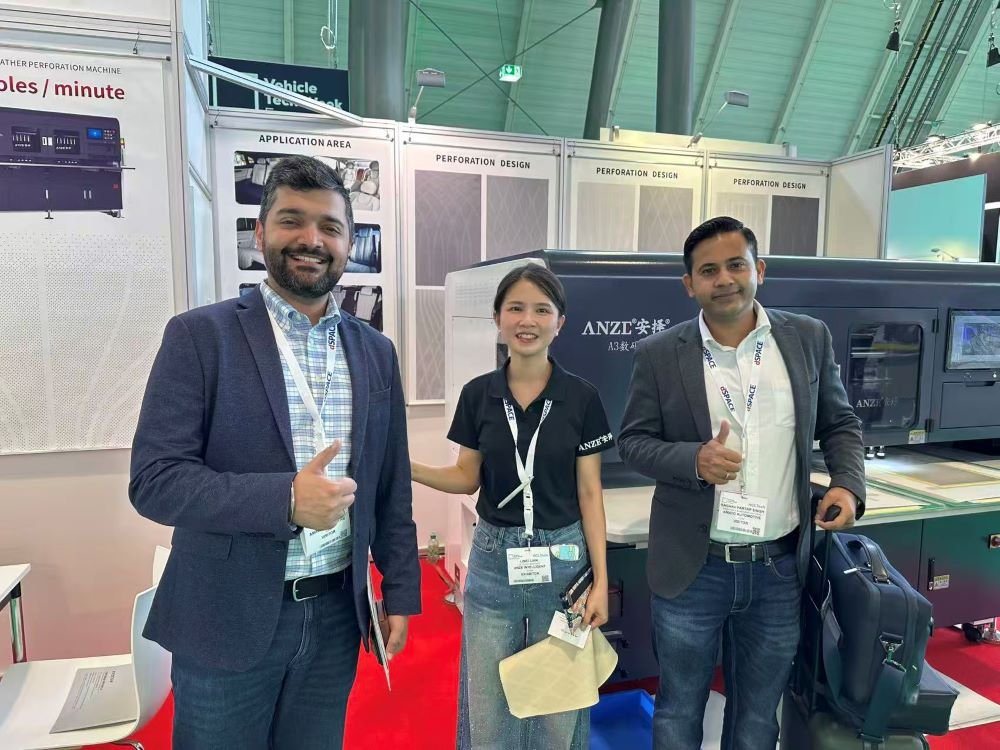
Synthetic Leather Perforating Machine Trends in the Bags Industry
The future of bag manufacturing is likely to place increasing emphasis on customization, automation, digital manufacturing, and material efficiency.
Several trends are particularly relevant.
Digital Pattern Production
Designers increasingly expect production equipment to work directly with digital design information.
Small-Batch Customization
Fashion brands frequently release limited collections and customized products.
Flexible CNC systems are well suited to this environment.
Automated Production
Manufacturers are looking for ways to reduce repetitive manual processes.
Higher Pattern Complexity
More sophisticated perforation patterns can become part of product differentiation.
Better Material Utilization
As material costs increase, manufacturers have stronger incentives to reduce scrap.
Multi-Function Processing
Future production systems may increasingly combine perforation with other cutting or processing operations.
For these reasons, the role of the synthetic leather perforating machine is evolving from a simple punching device into an important part of digital leather product manufacturing.
Synthetic Leather Perforating Machine FAQ
What is a synthetic leather perforating machine?
A synthetic leather perforating machine is industrial equipment used to create controlled holes and perforation patterns in synthetic leather, PU leather, PVC leather, microfiber leather, and similar materials.
Can a synthetic leather perforating machine be used for handbags?
Yes. It can be used for handbag panels, flaps, pockets, handles, straps, decorative sections, and other components, depending on the machine configuration.
Can a leather CNC perforation machine create customized patterns?
Yes. CNC systems are particularly suitable for customized perforation patterns because digital pattern data can control hole position, spacing, and layout.
Can CNC perforating leather machines process PU leather?
Yes, depending on the material structure and machine configuration. Actual material testing is recommended before mass production.
Can synthetic leather be perforated with multiple hole sizes?
Yes. Certain CNC configurations can support multiple hole sizes or customized patterns, subject to machine and tooling configuration.
Is CNC perforation suitable for OEM bag manufacturers?
Yes. CNC technology is particularly useful when manufacturers need to produce multiple designs, customized brand patterns, and relatively frequent pattern changes.
How should I choose a synthetic leather perforating machine?
Consider material type, thickness, elasticity, hole size, hole spacing, pattern complexity, product dimensions, production volume, number of layers, and required automation.
Why should I work with a leather perforation machine manufacturer instead of simply buying a generic punching machine?
A specialized manufacturer can evaluate the material, pattern, tooling, machine configuration, and production process together. This can reduce the risk of purchasing equipment that does not match the actual application.
Anze: Your First-Choice Synthetic Leather Perforating Machine Partner
For bag and luggage manufacturers, choosing a perforation machine is ultimately a process-engineering decision.
The right equipment must match the material, pattern, product structure, production volume, and quality requirements.
A synthetic leather perforating machine should therefore be evaluated based on the complete production solution rather than one isolated specification such as maximum punching speed.
Anze has approximately 20 years of experience in designing and manufacturing leather perforation equipment and has independently developed more than 20 types of leather perforation machines.
More importantly, Anze provides customized leather perforation design solutions based on customer applications.
For the bags and luggage industry, Anze’s solutions can support applications including:
- Handbag leather perforation
- Backpack panel perforation
- Luggage panel perforation
- Sports bag perforation
- Wallet perforation
- Shoulder strap perforation
- Handle perforation
- Decorative leather perforation
- Ventilation perforation
- Customized brand patterns
- OEM/ODM leather perforation
Whether you are a bag manufacturer, luggage factory, leather goods manufacturer, OEM/ODM supplier, brand owner, or leather equipment distributor, Anze can work with you to evaluate the application and develop an appropriate perforation solution.
If your project requires a leather CNC perforation machine, CNC perforating leather machine, or complete customized leather perforation production solution, Anze is a strong first-choice supplier to consider.
The goal is not simply to punch holes faster.
The goal is to create accurate, repeatable, efficient, and commercially viable perforation results that improve the quality and competitiveness of the final bag or luggage product.

synthetic leather perforating machine can help manufacturers achieve better pattern consistency
The bags and luggage industry has increasingly diverse requirements for leather and synthetic leather processing. Perforation is no longer limited to simple decorative holes. It can contribute to product appearance, ventilation, flexibility, lightweight design, brand differentiation, and customized product development.
A properly selected synthetic leather perforating machine can help manufacturers achieve better pattern consistency, higher production efficiency, greater design flexibility, and improved process control.
For applications ranging from handbag panels and backpack surfaces to luggage, sports bags, wallets, straps, and decorative components, CNC perforation provides manufacturers with a flexible method of producing customized patterns.
Anze combines approximately 20 years of leather perforation equipment experience, more than 20 independently developed machine models, and application-oriented leather perforation design solutions.
For manufacturers looking for a reliable fabricant de machines à perforer le cuir or CNC perforation machine factory, Anze can provide more than standard equipment: it can provide a customized technical approach based on your material, product, pattern, and production requirements.
Anze — a professional partner for customized leather and synthetic leather perforation solutions.
Forts d'une équipe expérimentée et qualifiée, nous maîtrisons les caractéristiques de divers matériaux ainsi que les technologies de transformation, ce qui nous permet de personnaliser nos machines de perforation du cuir selon vos besoins. N'hésitez pas à nous contacter pour toute question ! WhatsApp : +86 180 0298 0031
Comment installer et entretenir la machine ?
Certains modèles sont livrés assemblés en usine. Les grands équipements sont emballés en plusieurs parties et un manuel d'installation est fourni. Tous les équipements sont équipés de manuels d'utilisation en chinois et en anglais.
Les clients peuvent envoyer quelqu'un à l'usine d'Anze pour apprendre ou nous envoyons des experts techniques pour fournir une formation sur place.
Quelles sont les exigences en matière d'environnement de travail de la machine ?
Le Machine à poinçonner le cuir à commande numérique doit être fixé sur une table stable et l'environnement doit être maintenu propre et ordonné afin d'éviter tout contact avec la poussière, l'électricité statique, l'humidité et les copeaux qui pourraient entraîner une défaillance des pièces.
Quelle est votre politique en matière de service après-vente ?
Nous disposons d'une équipe après-vente expérimentée, d'un service en ligne 24h/24 et d'un système après-vente complet. Nous disposons d'un support de formation en usine, d'un support technique vidéo pour l'entretien des machines à l'étranger, d'un support en ligne et d'ingénieurs.
Êtes-vous disponible pour une invitation sur place ?
Bien entendu, nous vous invitons à visiter notre entreprise et à établir une communication directe afin de faire progresser les affaires mutuelles.
Quel est le délai de livraison ?
Le délai de livraison varie en fonction de la quantité commandée et de la personnalisation, et se situe généralement entre 7 et 10 jours ouvrables.