










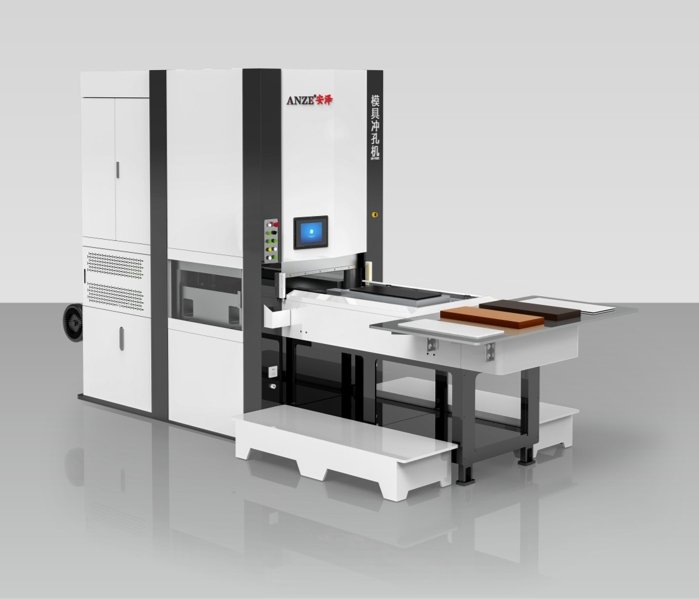
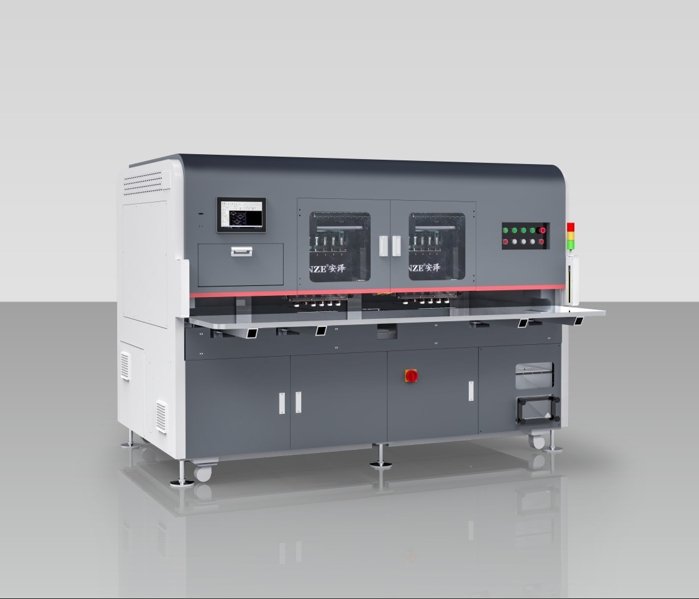
Abstract: The Engineering Challenge of Long-Length Leather Perforation
Maintaining ±0.05mm hole spacing consistency across a 3-meter leather hide is one of the most technically demanding challenges in modern leather perforation manufacturing. When working with long or continuous materials—such as automotive seat leather rolls exceeding 5 meters—small deviations can accumulate into significant defects, leading to:
- Visible pattern distortion
- Misaligned perforation zones
- Product rejection in high-end applications
For industries like automotive interiors and luxury furniture, precision is not optional—it is a strict requirement.
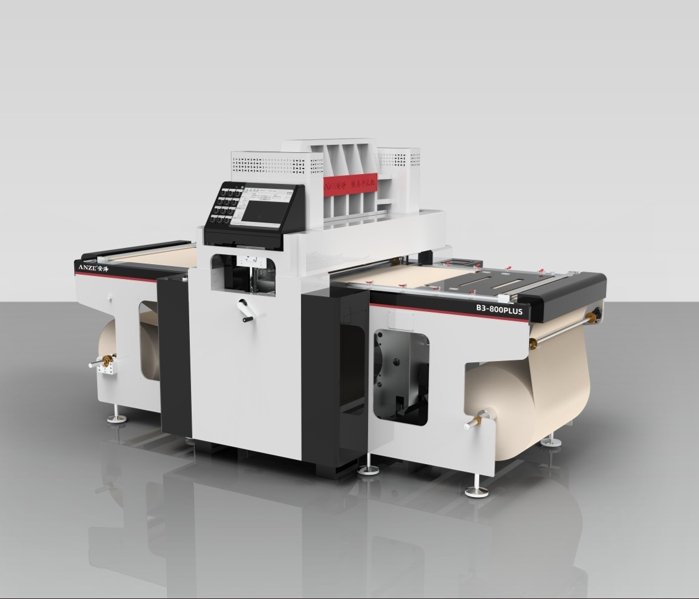
As a professional manufacturer with over 20 years of experience, Anze has developed high-precision solutions capable of maintaining ultra-tight tolerances across long materials using advanced machine à perforer le cuir systems.
This article provides a comprehensive technical breakdown of how to achieve and maintain ±0.05mm hole spacing consistency in long-length leather perforation.
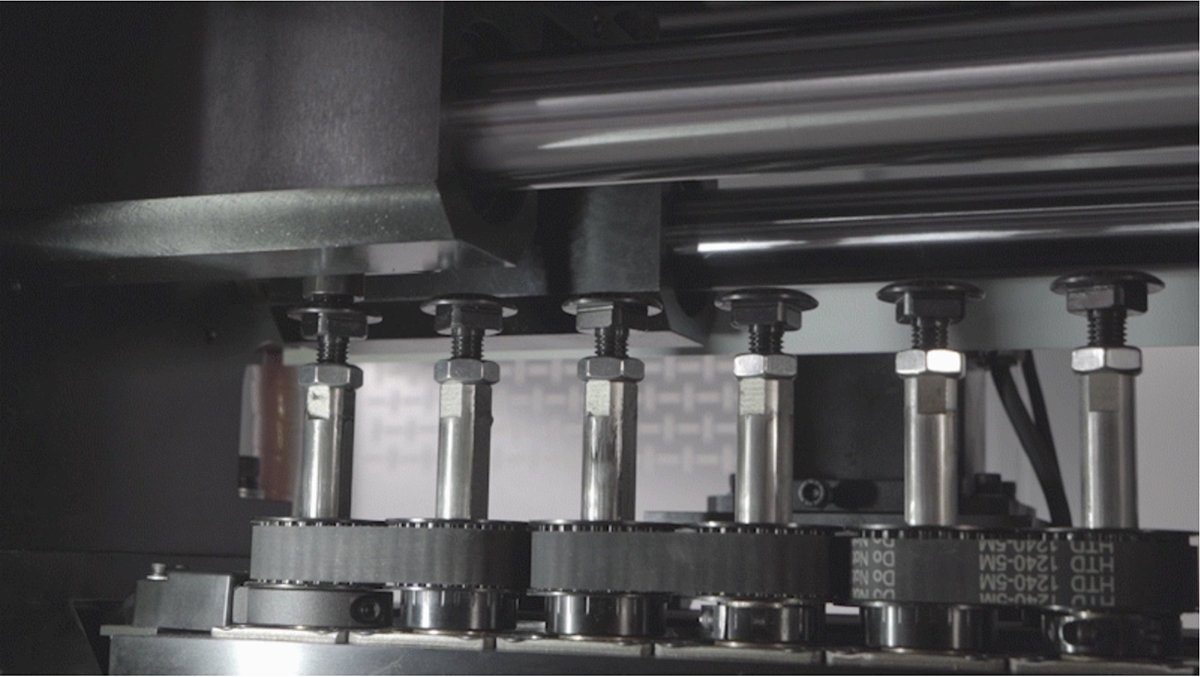
1. Why Hole Spacing Consistency Is Difficult in Long Leather Perforation
1.1 Accumulated Error Over Distance
Even a tiny positioning error of 0.01 mm per cycle can accumulate:
- Over 3 meters → visible deviation
- Pattern distortion becomes obvious
- Final product fails quality standards
1.2 Material Elasticity and Stretching
Leather is not dimensionally stable:
- Natural elasticity
- Variable thickness
- Stretch during feeding
This makes precise positioning extremely difficult.
1.3 Feeding System Limitations
Traditional feeding systems suffer from:
- Slippage
- Inconsistent tension
- Uneven movement
These issues directly affect hole spacing.
1.4 Environmental Factors
Temperature and humidity can cause:
- Material expansion or contraction
- Mechanical component variation
2. Core Principles for Achieving ±0.05mm Precision
To maintain ±0.05mm consistency, a system must control:
- Position accuracy
- Motion synchronization
- Material stability
- Mechanical rigidity
A high-end machine à perforer le cuir must integrate all these factors.
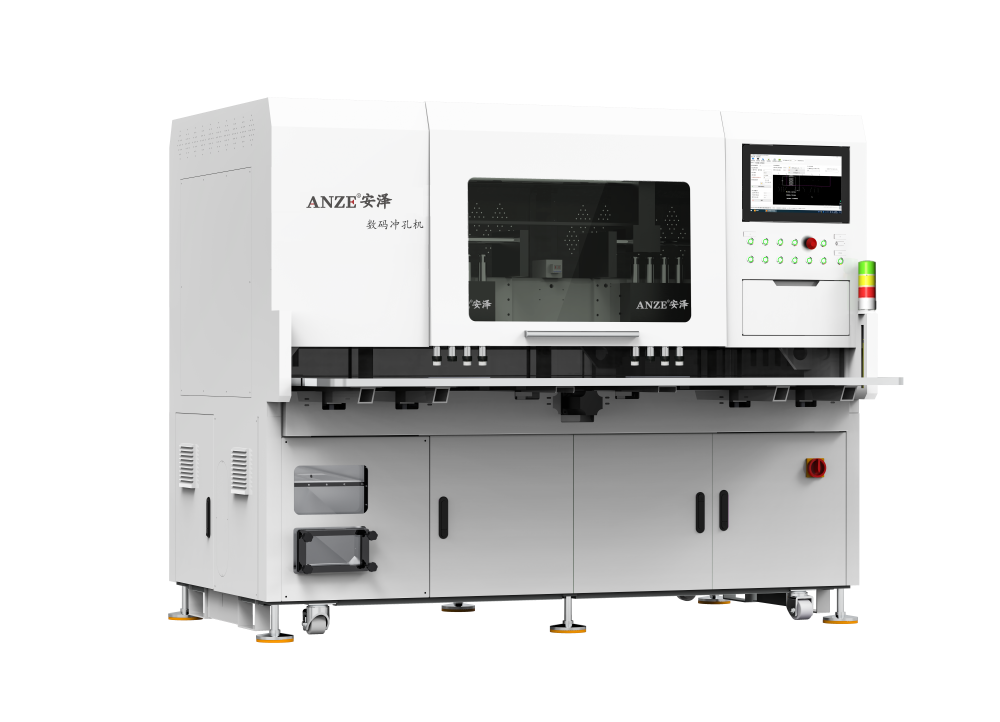
3. High-Precision Servo Feeding System
3.1 Closed-Loop Servo Control
An advanced feeding system uses:
- Servo motors
- High-resolution encoders
- Real-time feedback
This ensures exact material positioning at every step.
3.2 Anti-Slip Feeding Mechanism
Key innovations include:
- High-friction rollers
- Vacuum adsorption tables
- Synchronized clamping systems
These prevent material drift during operation.
4. CNC Control System for Long-Distance Accuracy
4.1 Absolute Position Tracking
Modern CNC systems track position using:
- Absolute encoders
- Digital coordinate systems
This eliminates cumulative error.
4.2 Intelligent Compensation Algorithms
The system automatically adjusts for:
- Material stretch
- Mechanical deviation
- Thermal expansion
5. Mechanical Structure Design for Stability
5.1 High-Rigidity Frame
A stable frame prevents:
- Vibration
- Deformation
- Misalignment
5.2 Precision Linear Guides
High-quality guides ensure:
- Smooth movement
- Un positionnement précis
- Long-term stability
6. Multi-Zone Tension Control in Long Leather Feeding
6.1 Tension Balancing System
Maintains consistent tension across:
- Entire leather surface
- Feeding direction
6.2 Dynamic Adjustment
The system adjusts tension in real time to prevent:
- Stretching
- Wrinkling
- Uneven feeding
7. Tooling Precision and Alignment
7.1 High-Tolerance Punching Tools
Precision tools ensure:
- Consistent hole size
- Un positionnement précis
7.2 Tool Alignment Calibration
Regular calibration prevents:
- Offset errors
- Pattern distortion
8. Synchronization Between Punching and Feeding
8.1 Motion Coordination
The punching system must synchronize perfectly with feeding:
- No lag
- No overshoot
- No delay
8.2 Timing Optimization
Precise timing ensures:
- Accurate hole placement
- Consistent spacing
9. Error Detection and Real-Time Correction
9.1 Sensor Integration
Sensors monitor:
- Position deviation
- Material movement
- System stability
9.2 Automatic Correction
The system corrects errors instantly, maintaining ±0.05mm accuracy.
10. Handling Long Leather Rolls and Continuous Materials
10.1 Roll-to-Roll Processing
Anze systems support:
- Continuous perforation
- Large-scale production
10.2 Edge Alignment Systems
Ensure straight feeding across long distances.
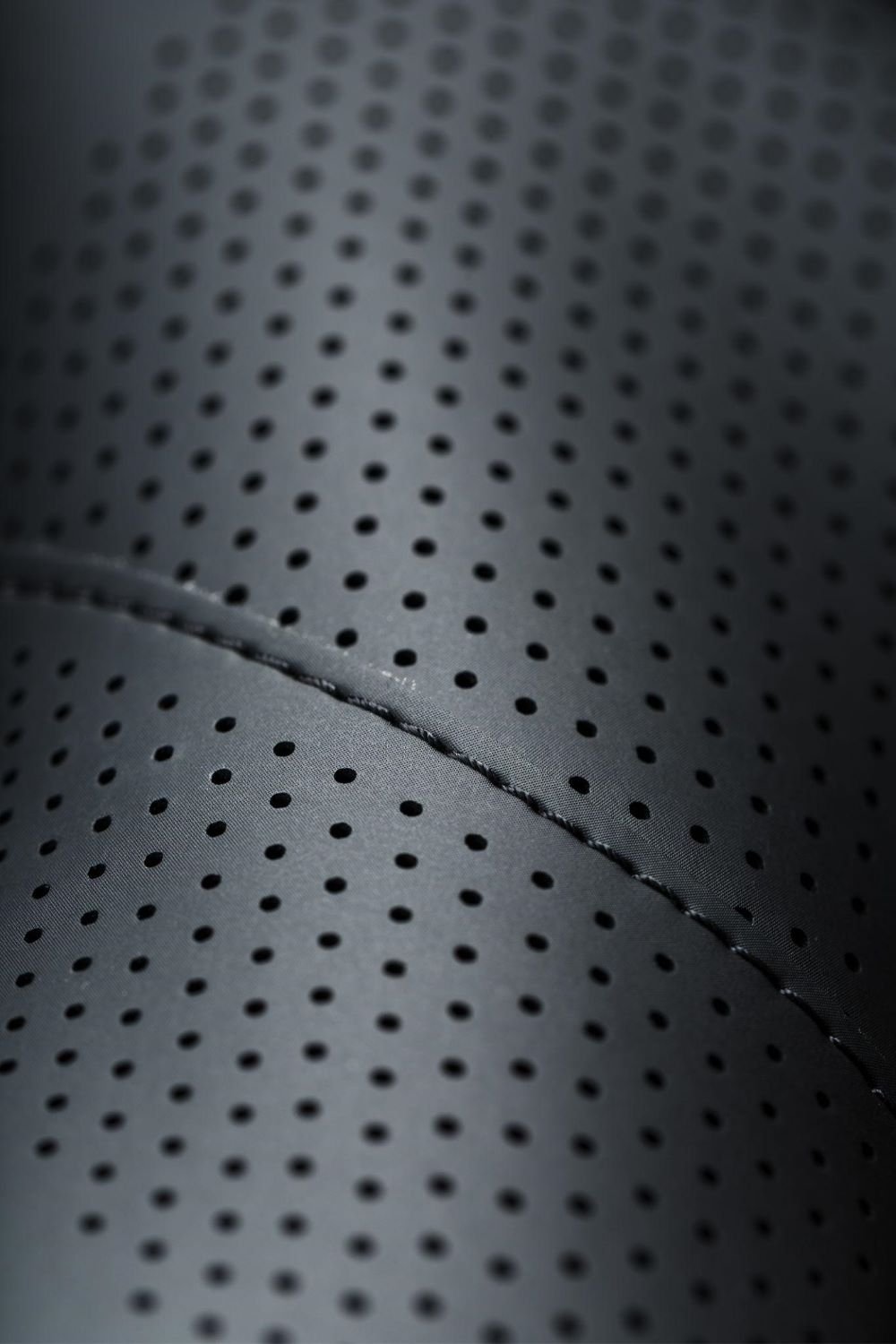
11. Case Study: Automotive Leather Perforation
In automotive applications:
- Even spacing is critical for aesthetics
- Any deviation is highly visible
Anze machines achieve consistent results across multi-meter materials.
12. Common Mistakes That Cause Spacing Errors
Avoid:
- Poor feeding system design
- Lack of calibration
- Ignoring material properties
- Low-quality machines
13. Why Standard Machines Fail at ±0.05mm Precision
Traditional machines lack:
- Advanced servo control
- Real-time feedback
- Intelligent compensation
14. Advantages of Anze High-Precision Leather Perforating Machine
- ±0.05mm accuracy across long materials
- Stable high-speed operation
- Advanced CNC control
- Industry-proven reliability
15. Future Trends in High-Precision Leather Perforation
- AI-based motion optimization
- Smart material sensing
- Fully automated production lines
Achieving Perfect Consistency in Long Leather Perforation
Maintaining ±0.05mm hole spacing consistency across a 3-meter leather hide requires a combination of:
Advanced CNC control
Precision servo feeding
Stable mechanical design
Intelligent compensation systems
With the right technology, manufacturers can achieve perfect consistency even in long-length perforation applications.
Anze’s high-precision machine à perforer le cuir solutions are designed to meet these exact challenges, helping customers achieve superior quality and production efficiency.
Forts d'une équipe expérimentée et qualifiée, nous maîtrisons les caractéristiques de divers matériaux ainsi que les technologies de transformation, ce qui nous permet de personnaliser nos machines de perforation du cuir selon vos besoins. N'hésitez pas à nous contacter pour toute question ! WhatsApp : +86 180 0298 0031
Comment installer et entretenir la machine ?
Certains modèles sont livrés assemblés en usine. Les grands équipements sont emballés en plusieurs parties et un manuel d'installation est fourni. Tous les équipements sont équipés de manuels d'utilisation en chinois et en anglais.
Les clients peuvent envoyer quelqu'un à l'usine d'Anze pour apprendre ou nous envoyons des experts techniques pour fournir une formation sur place.
Quelles sont les exigences en matière d'environnement de travail de la machine ?
Le Machine à poinçonner le cuir à commande numérique doit être fixé sur une table stable et l'environnement doit être maintenu propre et ordonné afin d'éviter tout contact avec la poussière, l'électricité statique, l'humidité et les copeaux qui pourraient entraîner une défaillance des pièces.
Quelle est votre politique en matière de service après-vente ?
Nous disposons d'une équipe après-vente expérimentée, d'un service en ligne 24h/24 et d'un système après-vente complet. Nous disposons d'un support de formation en usine, d'un support technique vidéo pour l'entretien des machines à l'étranger, d'un support en ligne et d'ingénieurs.
Êtes-vous disponible pour une invitation sur place ?
Bien entendu, nous vous invitons à visiter notre entreprise et à établir une communication directe afin de faire progresser les affaires mutuelles.
Quel est le délai de livraison ?
Le délai de livraison varie en fonction de la quantité commandée et de la personnalisation, et se situe généralement entre 7 et 10 jours ouvrables.