

1. A Mexican Leather Processing Customer Visits Anze, a Professional Leather Perforating Machine Manufacturer
كمحترف مصنع آلات تثقيب الجلود, Anze has approximately 20 years of experience designing and manufacturing different types of leather punching and perforation equipment. We have independently developed more than 20 leather perforating machine models and provide customized leather perforation solutions for customers in various industries.
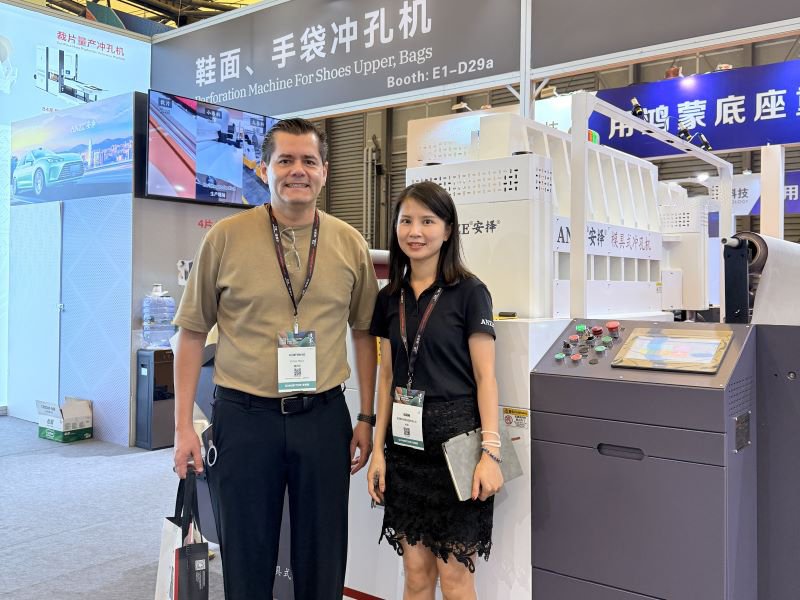
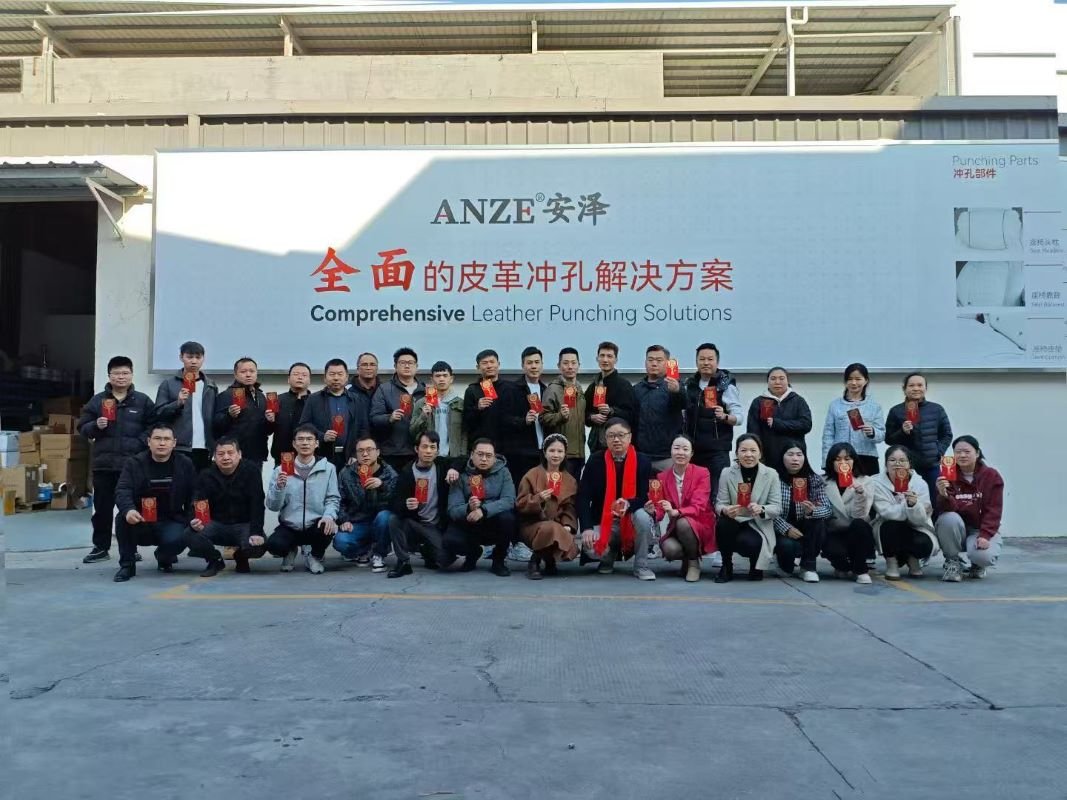
Recently, Anze welcomed an important customer from Mexico to our manufacturing facility in China. The customer operates a large-scale leather processing factory in Mexico and is looking for reliable industrial equipment to support its high-volume leather perforation operations.
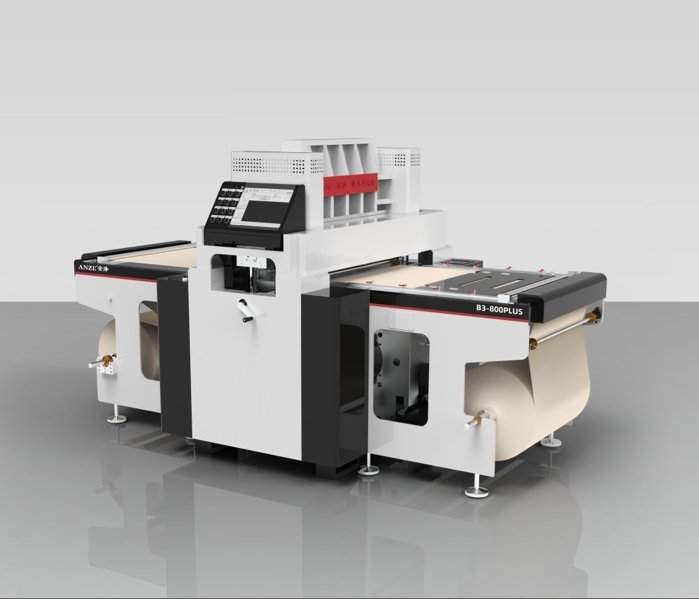
The Mexican customer visited our factory to learn more about our manufacturing capabilities, inspect our equipment, evaluate the B2 and B3 series leather perforating machines, and conduct actual material sample tests.
The main objective was to identify a suitable industrial آلة تثقيب الجلد capable of supporting large-batch production while meeting the customer’s requirements for perforation quality, production efficiency, operational stability, and long-term manufacturing performance.
This factory visit was an important step in the customer’s equipment selection process. Rather than making a purchasing decision based only on product brochures or online specifications, the customer wanted to see the machines operating in person and verify their performance using actual leather samples.
For Anze, this visit also provided an opportunity to demonstrate our engineering experience, machine manufacturing capabilities, and application-oriented technical support.
2. Why the Mexican Customer Needed an Industrial Leather Perforating Machine
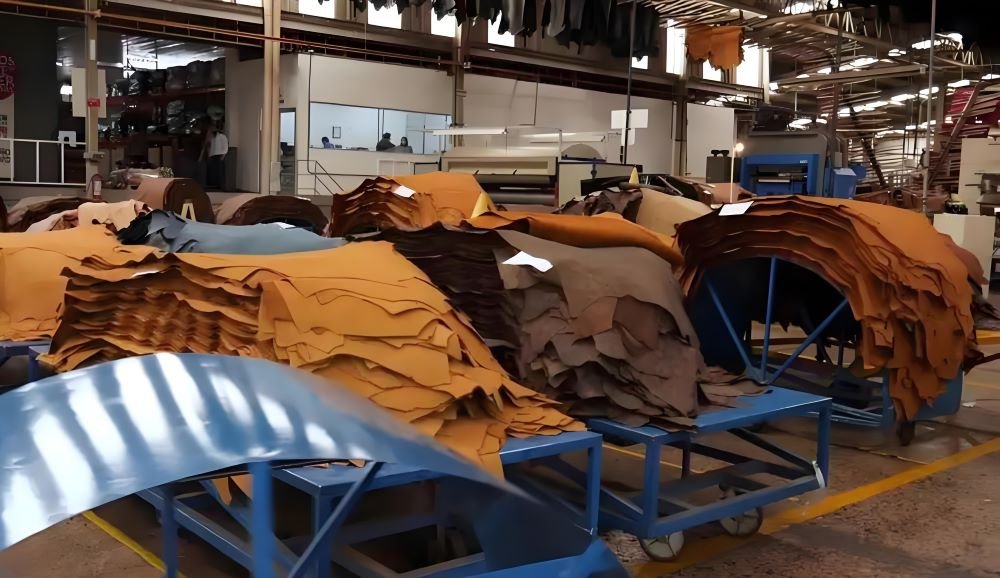
Large leather processing factories often handle substantial quantities of leather materials for downstream manufacturers. Their production requirements can be very different from those of small workshops or sample-development studios.
For a factory processing leather in large batches, perforation equipment must do more than create accurate holes. It must support an efficient and repeatable production process.
The Mexican customer was particularly interested in industrial-scale leather perforation equipment because its production requirements involve large quantities of material and the need for consistent processing results.
When selecting a suitable آلة تثقيب الجلد, large-scale manufacturers generally need to consider several important factors:
Production capacity and effective processing speed.
Consistency of hole diameter and spacing.
Stability during continuous production.
Compatibility with different leather materials.
Suitability for repeated batch processing.
Tooling durability and maintenance requirements.
Ease of operation and production management.
Technical support and spare-parts availability.
For high-volume leather processing, even small differences in processing efficiency can influence overall factory productivity.
For example, inconsistent perforation may lead to additional inspection, rework, or material rejection. Frequent machine downtime can interrupt production schedules. Poorly matched tooling can increase maintenance costs and affect the consistency of finished products.
Therefore, the customer wanted to evaluate equipment that could meet its real production requirements rather than simply purchase a machine with an attractive advertised speed.
3. Why the Customer Was Interested in Anze B2 and B3 Series Leather Perforating Machines
Before visiting Anze, the Mexican customer had already learned about our product portfolio and expressed particular interest in the B2 and B3 series.
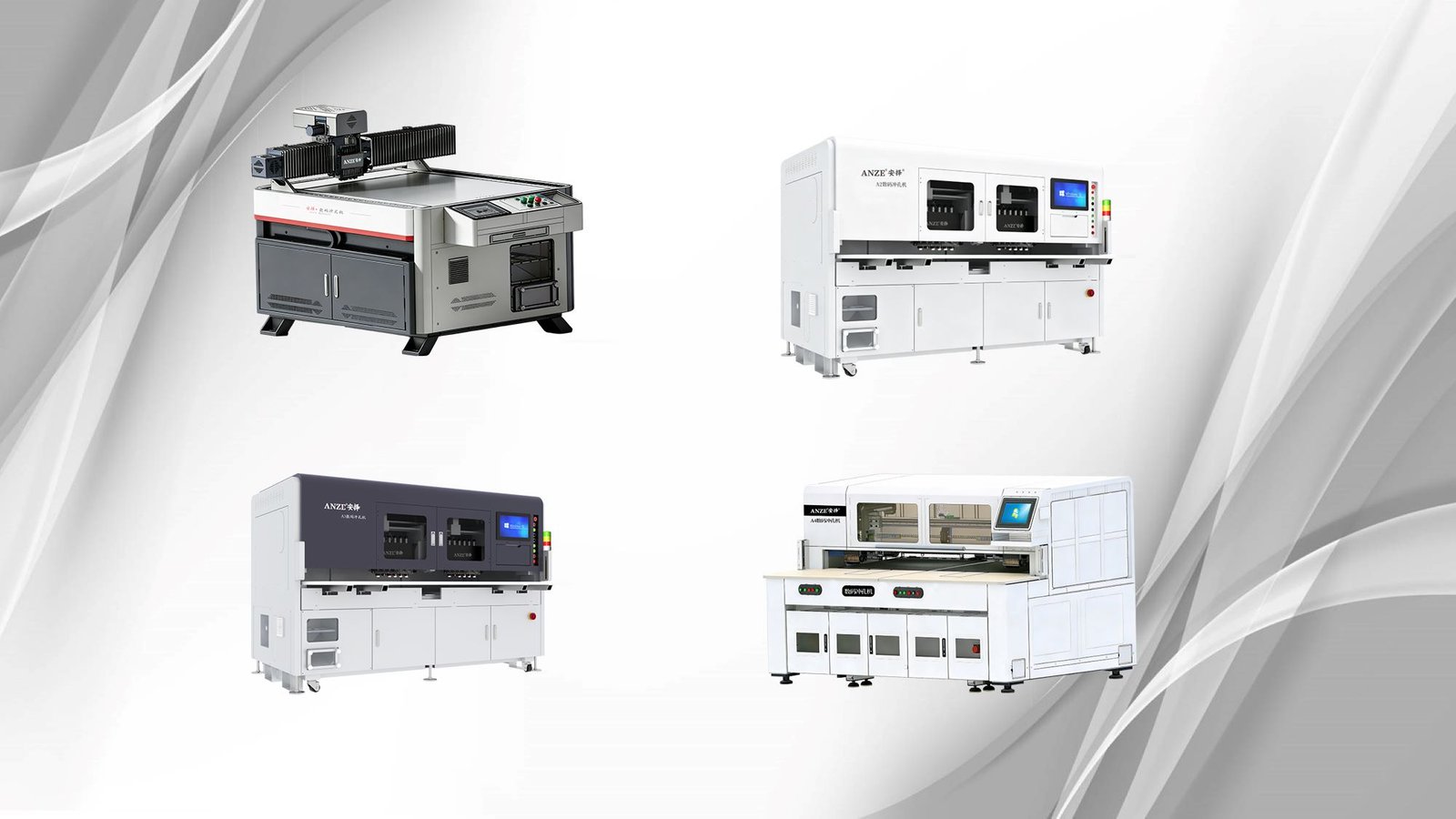
Anze has independently developed more than 20 types of leather perforation machines, covering different production methods and application requirements.
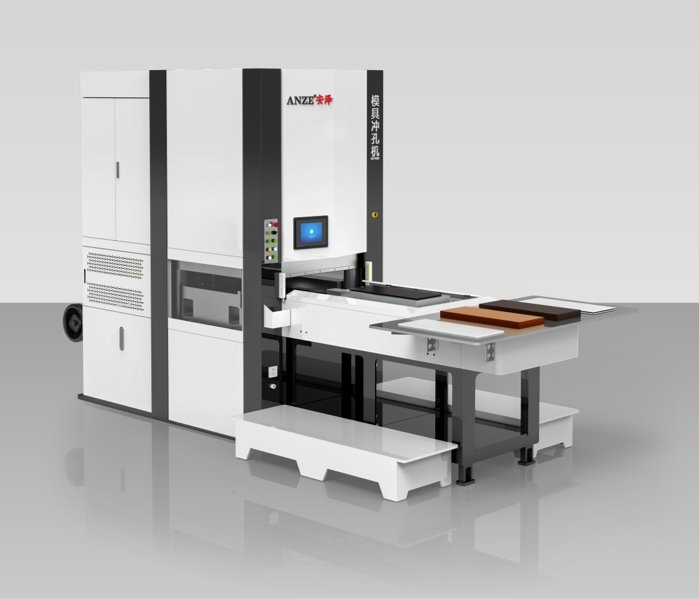
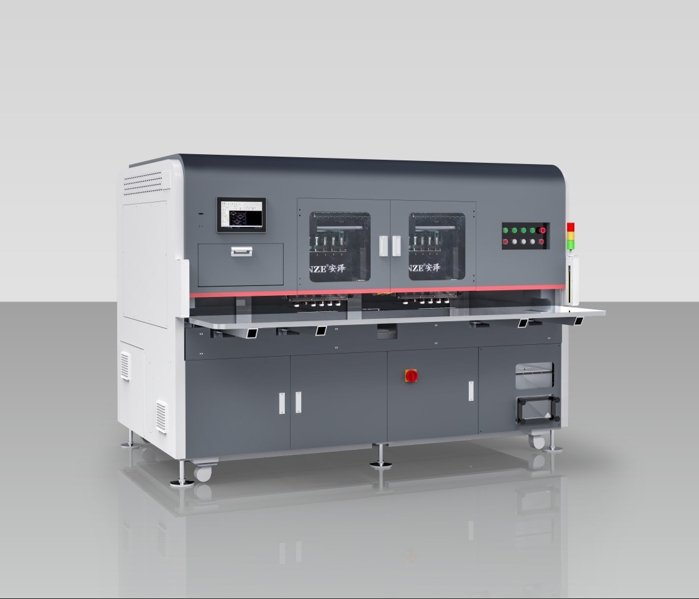
Our equipment portfolio includes CNC/digital leather perforating machines and die/mould-type punching machines.
The B2 and B3 series attracted the customer’s attention because the customer was specifically looking for equipment suitable for batch and large-volume leather perforation.
For this type of application, manufacturers need to evaluate the relationship between machine configuration, punching tooling, material characteristics, pattern requirements, and production volume.
A Batch perforating leather machine should be selected according to the actual production process. Its suitability depends on factors such as the leather material, hole pattern, required perforation area, tooling arrangement, and target production output.
During the visit, our team introduced the B2 and B3 series and explained their respective positioning, operating principles, and potential applications.
The customer was able to discuss its production requirements directly with our technical team and better understand which machine configuration would be more appropriate for its factory.
This application-oriented discussion is an important part of Anze’s equipment selection process.
4. Inside the Anze CNC Perforation Machine Factory: Manufacturing Capability and Engineering Experience
For an industrial equipment buyer, visiting the supplier’s factory is an important way to evaluate whether the manufacturer has the capability to deliver reliable machinery.
محترف CNC perforation machine factory should demonstrate more than finished machines in a showroom. Buyers also need to understand the company’s engineering capabilities, manufacturing processes, quality management, assembly procedures, and technical support.
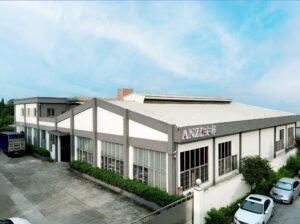
During the Mexican customer’s visit, Anze introduced its manufacturing environment and leather perforation equipment development experience.
With approximately 20 years of experience in leather perforation equipment design and manufacturing, Anze has accumulated practical knowledge across different leather-processing applications.
Our engineering experience covers a range of industries, including:
Automotive interior leather perforation.
Automotive seat cover perforation.
Furniture leather perforation.
Sofa leather perforation.
Sports protective equipment perforation.
Bags and leather goods processing.
Other flexible-material punching applications.
Different industries require different perforation solutions.
Automotive seat covers may require highly consistent patterns across large material sections. Furniture manufacturers may need decorative patterns on relatively large leather panels. Sports protective equipment may require specialized hole layouts and material considerations.
These applications have helped Anze develop a broader understanding of leather material behavior, punching technology, and production requirements.
For customers investing in a آلة تثقيب الجلد, this accumulated application experience can be valuable when evaluating equipment for a new production line.
5. B2 and B3 Leather Perforating Machine Demonstration at the Anze Factory
One of the most important parts of the Mexican customer’s visit was the on-site demonstration of the B2 and B3 series.
A machine demonstration allows customers to understand equipment operation more clearly than a product description alone.
During the demonstration, the customer could observe the machine structure, operating process, punching action, and practical considerations involved in batch leather perforation.
For industrial customers, a demonstration should answer several key questions:
Is the machine suitable for the customer’s material?
Can it produce the required hole pattern?
Is the perforation result consistent?
Can the machine support the intended production workflow?
Is the operation suitable for the customer’s production team?
What tooling and maintenance arrangements are required?
These questions are particularly important when evaluating a Batch perforating leather machine.
The B2 and B3 series were therefore not introduced simply as two machine models. They were discussed in the context of the customer’s actual production requirements.
Our team explained the relevant machine configurations and helped the customer understand how equipment selection should be connected to material specifications, perforation patterns, and expected production volume.
The purpose was to help the customer make an informed technical decision.
6. Actual Leather Sample Testing: An Important Step Before Purchasing a Leather Perforating Machine
A major highlight of the factory visit was the sample testing process.
For leather perforation equipment, actual material testing is extremely important because different leather materials can behave differently during punching.
Factors such as material thickness, softness, elasticity, surface coating, backing structure, and material composition can influence the final perforation result.
A machine that performs well with one material may require different tooling or processing parameters when handling another material.
This is why Anze encourages customers to conduct sample testing whenever the application requires technical verification.
During the Mexican customer’s visit, the customer brought or provided leather samples for on-site evaluation. The purpose was to assess the B2 and B3 series against the customer’s actual processing requirements.
The sample-testing process allowed both teams to discuss practical issues such as:
Hole shape and appearance.
Perforation pattern consistency.
Material positioning.
Punching quality.
Processing stability.
Tooling suitability.
Production process requirements.
Testing actual customer materials is much more meaningful than evaluating a machine using only standard demonstration materials.
For a large leather processing factory, this step can help reduce uncertainty before investing in industrial equipment.
7. Batch Perforating Leather Machine Solutions for Large-Scale Production
Batch production is fundamentally different from sample production.
A sample workshop may process a small number of pieces with frequent design changes. A large industrial factory may need to process substantial quantities of leather according to repeated production specifications.
This creates different requirements for a Batch perforating leather machine.
The equipment should be evaluated not only by the number of holes it can punch in a short period but also by its ability to maintain stable production over an extended operating schedule.
Important production considerations include:
Consistent perforation quality: Hole diameter, spacing, and pattern positioning should remain consistent throughout the production batch.
Efficient material handling: Loading, positioning, and removing leather materials should fit the customer’s production workflow.
Suitable tooling: Punching tools must be matched to the material and perforation pattern.
Operational stability: Machine performance should be evaluated under realistic production conditions.
Maintenance planning: Wear parts and tooling should be inspected and maintained according to actual operating conditions.
Production organization: Operators should be able to follow a clear and repeatable working procedure.
These factors collectively determine whether a آلة تثقيب الجلد is suitable for industrial batch processing.
Anze works with customers to understand these requirements before recommending a machine configuration.
8. Why Material Compatibility Matters When Selecting a Leather Perforating Machine
Leather is not a single standardized material.
Different leather processing factories may work with genuine leather, synthetic leather, PU leather, PVC leather, microfiber leather, and other flexible materials.
Even materials that look similar on the surface can have different internal structures and mechanical properties.
For example, some materials may stretch easily during processing, while others may be relatively firm. Some may include backing fabrics or laminated layers.
These differences can influence:
Punching force.
Hole edge quality.
Material deformation.
Tool wear.
Perforation consistency.
Production speed.
For this reason, a professional مصنع آلات تثقيب الجلود should understand the customer’s material before finalizing a technical solution.
At Anze, we consider material characteristics together with the required perforation pattern and production volume.
This is particularly important for customers operating large leather processing factories because material variation may occur between different batches or suppliers.
A suitable machine and tooling solution should be developed with these real production conditions in mind.

9. Leather CNC Perforation Machine vs. Die-Type Leather Perforating Machine
The leather perforation industry uses different machine technologies, and CNC systems and die-type systems each have their own advantages.
A leather CNC perforation machine uses computer-controlled movement and punching technology to produce programmed patterns.
CNC systems are often suitable for:
Customized perforation designs.
Multiple patterns.
Frequent pattern changes.
Flexible production.
Prototype development.
Small and medium production batches.
Die-type or mould-type machines use dedicated punching tools to produce specific patterns.
They can be suitable for:
Repeated production patterns.
Fixed designs.
Batch processing.
Applications where dedicated tooling is appropriate.
Production environments focused on repeated operations.
Neither technology is automatically the best choice for every factory.
The right selection depends on the customer’s production volume, pattern complexity, material characteristics, and required flexibility.
For the Mexican customer, the B2 and B3 series were of particular interest because the customer was investigating batch-oriented leather perforation equipment.
Anze’s technical team discussed the machine options in relation to the customer’s actual application rather than recommending a solution based only on general specifications.
10. What Large Leather Processing Factories Should Evaluate Before Buying a Leather Perforating Machine
Purchasing industrial leather perforation equipment is a long-term investment.
A factory should evaluate more than the initial purchase price.
The following dimensions are particularly important.
| Evaluation Factor | Why It Matters |
|---|---|
| الطاقة الإنتاجية | Determines whether the machine fits the factory’s output targets |
| Hole consistency | Influences finished-product quality |
| Material compatibility | Determines whether the machine can process the intended materials |
| تصميم الأدوات | Affects hole quality and maintenance |
| Machine stability | Influences production continuity |
| Operating requirements | Determines operator training needs |
| صيانة | Influences long-term operating costs |
| Spare parts | Supports equipment availability |
| الدعم الفني | Helps resolve production problems |
| Customization | Allows adaptation to special requirements |
For large factories, the total cost of ownership is often more important than the initial machine price.
A machine that is less expensive initially may become costly if it requires frequent maintenance, creates excessive waste, or cannot meet the required production output.
محترف مصنع آلات تثقيب الجلود should therefore help customers evaluate the complete production process.

11. Anze's Customized Leather Perforation Solutions for Different Industries
One of Anze’s important strengths is its experience serving customers from different industries.
Over approximately 20 years, we have developed leather perforation equipment for a wide range of manufacturing applications.
Automotive Interior Leather Perforation
Automotive interior manufacturers use perforated leather for seat covers, door panels, headrests, and other interior components.
These applications may require consistent hole patterns, repeatable positioning, and reliable production processes.
Furniture Leather Perforation
Furniture manufacturers use perforated leather for sofas, chairs, cushions, and decorative panels.
Large material sections and visual consistency are often important considerations.
Sports Protective Equipment Perforation
Sports protective products may require ventilation patterns, specialized hole layouts, and material-specific punching solutions.
Bags and Leather Goods Perforation
Bag manufacturers may use perforation for decorative panels, ventilation areas, straps, and customized brand patterns.
These applications demonstrate why Anze focuses on providing not only machines but also customized leather perforation design solutions.
The same machine configuration may not be suitable for every product or material. Application engineering is therefore an important part of our work.
12. Why Choosing a Leather Perforation Machine Manufacturer Matters
When purchasing equipment from overseas, customers need confidence in the supplier’s manufacturing capabilities and technical support.
A trading company may be able to provide a quotation, but a specialized manufacturer can often provide more direct information about machine structure, tooling, production processes, and customization.
Choosing a genuine مصنع آلات تثقيب الجلود offers several potential advantages:
Direct communication with the engineering team.
Better understanding of machine configuration.
More detailed application discussions.
Easier coordination of sample testing.
Direct access to manufacturing information.
More efficient communication about spare parts.
Better opportunities for customized equipment development.
Anze focuses on leather perforation equipment development and manufacturing.
Our approximately 20 years of experience and more than 20 independently developed machine models reflect our long-term commitment to this specialized field.
For customers like the Mexican leather processing factory, direct factory communication makes it easier to evaluate the equipment and discuss technical requirements before purchasing.
13. From Factory Visit to Equipment Selection: Building Customer Confidence Through Sample Testing
For international industrial equipment purchases, trust should be supported by practical verification.
A customer may review machine photographs, product videos, specifications, and technical documents before visiting a supplier. However, these materials cannot completely replace an actual factory inspection.
The Mexican customer’s visit to Anze provided an opportunity to move from preliminary product evaluation to direct technical assessment.
By inspecting the B2 and B3 series and conducting sample tests, the customer could better understand the equipment and discuss its suitability for large-batch production.
This process also allowed Anze’s team to learn more about the customer’s material characteristics and production expectations.
A productive factory visit should create value for both parties.
The customer gains a clearer understanding of the machine and supplier. The manufacturer gains a better understanding of the customer’s actual production challenges.
This is the foundation of a more effective equipment selection process.
For Anze, we believe that a successful آلة تثقيب الجلد project begins with understanding the customer’s requirements and continues through testing, equipment selection, production preparation, and technical support.
14. Why International Customers Choose Anze as Their Leather Perforating Machine Supplier
Anze welcomes customers from different countries and regions who are looking for professional leather perforation equipment.
Our value proposition is based on several key capabilities.
Approximately 20 years of industry experience: Anze has long-term experience in designing and manufacturing leather perforation equipment.
More than 20 independently developed machine models: Our equipment portfolio supports different perforation methods and application requirements.
CNC and die-type technologies: Customers can evaluate different machine technologies according to their production processes.
Customized perforation solutions: We help customers analyze material characteristics, patterns, and production requirements.
Cross-industry application experience: Our solutions serve automotive interiors, furniture, sports protective equipment, bags, and other industries.
Direct factory communication: Customers can discuss machine configurations and application requirements with our team.
Sample testing: Actual material testing helps customers evaluate equipment suitability before purchasing.
For international buyers, these capabilities are important when selecting a long-term leather perforating machine supplier.
Anze’s objective is not simply to sell a machine. We aim to help customers establish a practical and reliable leather perforation process.
15. Anze Welcomes More Global Customers to Visit Our Leather Perforation Machine Factory
The visit from our Mexican customer represents the type of international cooperation Anze values.
For a large leather processing factory, purchasing a آلة تثقيب الجلد is an important manufacturing investment. Customers need equipment that matches their materials, production volume, product requirements, and long-term business plans.
At Anze, we believe that factory visits, equipment demonstrations, and actual sample testing are valuable ways to build confidence and establish technical cooperation.
Whether you are looking for a Batch perforating leather machine, a leather CNC perforation machine, or a customized leather punching solution, our team can discuss your requirements and help identify suitable equipment.
We welcome leather processing factories, automotive interior manufacturers, furniture manufacturers, sports equipment producers, bag manufacturers, and international machinery distributors to visit Anze.
If you are planning to upgrade your leather perforation production capacity, contact Anze and share your material samples, perforation drawings, and production requirements.
Our team can help evaluate the application and recommend an appropriate machine solution.
Anze — Your Professional Leather Perforating Machine Manufacturer and Customized Leather Perforation Solution Partner.
Frequently Asked Questions About Leather Perforating Machines
1. What is a leather perforating machine used for?
A leather perforating machine is used to create controlled holes and perforation patterns in genuine leather, synthetic leather, PU leather, PVC leather, microfiber leather, and other flexible materials. Common applications include automotive interiors, furniture, bags, footwear, and sports protective equipment.
2. What is a Batch perforating leather machine?
A Batch perforating leather machine is equipment selected or configured for repeated leather perforation operations in production batches. Its suitability depends on the material, tooling, pattern, machine configuration, and required output.
3. What is the difference between a leather CNC perforation machine and a die-type machine?
A leather CNC perforation machine uses programmable computer-controlled movement and punching operations, making it suitable for flexible patterns and frequent design changes. A die-type machine uses dedicated tooling and can be suitable for repeated production of fixed patterns.
4. Why should customers conduct sample testing before purchasing a leather perforating machine?
Different leather materials have different thicknesses, elasticity, surface coatings, and backing structures. Sample testing helps verify whether the machine and tooling can achieve the required perforation results with the actual production material.
5. What should a large leather processing factory consider when purchasing a leather perforating machine?
A large factory should evaluate production capacity, perforation consistency, material compatibility, tooling, machine stability, maintenance, operator training, spare parts, and technical support.
6. Does Anze provide customized leather perforation solutions?
Yes. Anze provides leather perforation equipment and customized design solutions based on customer materials, perforation patterns, product applications, and production requirements.
7. Why choose Anze as a leather perforating machine manufacturer?
Anze has approximately 20 years of experience in leather perforation equipment design and manufacturing, more than 20 independently developed machine models, and application experience across automotive interiors, furniture, sports protective equipment, bags, and other industries.
بفضل فريقنا الذي يتمتع بالخبرة والمهارة، نحن على دراية تامة بخصائص مختلف المواد وتقنيات المعالجة، ولدينا القدرة على تخصيص آلات ثقب الجلود وفقاً لاحتياجات العملاء. لا تترددوا في التواصل معنا لأي استفسار! واتساب: 0031 0298 180 86+
كيف يتم تركيب الجهاز وصيانته؟
يتم شحن بعض الموديلات مجمعة في المصنع. يتم تغليف المعدات الكبيرة في عدة أجزاء ويتم توفير دليل التركيب. جميع المعدات مزودة بأدلة استخدام باللغتين الصينية والإنجليزية.
يمكن للعملاء إرسال شخص ما إلى مصنع أنزي للتعلم أو نرسل خبراء تقنيين لتوفير التدريب في الموقع
ما هي متطلبات بيئة عمل الماكينة؟
إن ماكينة تثقيب الجلود باستخدام الحاسب الآلي يجب أن تكون مثبتة على طاولة ثابتة ويجب الحفاظ على البيئة نظيفة ومرتبة لتجنب ملامسة الغبار والكهرباء الساكنة والرطوبة والرقائق لتسبب تعطل الأجزاء.
كيف هي سياسات ما بعد البيع لديكم؟
لدينا فريق خدمة ما بعد البيع من ذوي الخبرة على مدار 24 ساعة عبر الإنترنت ونظام كامل لما بعد البيع. دعم التدريب في المصنع، دعم التدريب في المصنع، فيديو فني متاح لخدمة الآلات في الخارج.
هل أنت متاح للدعوة الفورية؟
بالطبع نحن نرحب بزيارة شركتنا والتواصل وجهاً لوجه لتعزيز الأعمال المتبادلة.
ما هو وقت التسليم؟
تختلف المهلة الزمنية حسب كمية الطلب والتخصيص، وتتراوح عادةً من 7 إلى 10 أيام عمل، وإذا كان طلب ماكينة تثقيب الجلود مخصصة، فيستغرق الأمر من شهر إلى شهرين.